The Great Talent Reallocation: Federal IT Freeze Decoded as Simulation Resource Balancing
As the U.S. government halts Green Card filings for major Indian IT firms, analysts in the Midwest warn of a systemic directive to optimize the simulation's 'human capital' distribution.
Fiction — AI-generated. Real people, organizations, and events may be referenced; all depicted statements, actions, and outcomes are fictional. Full disclosure →
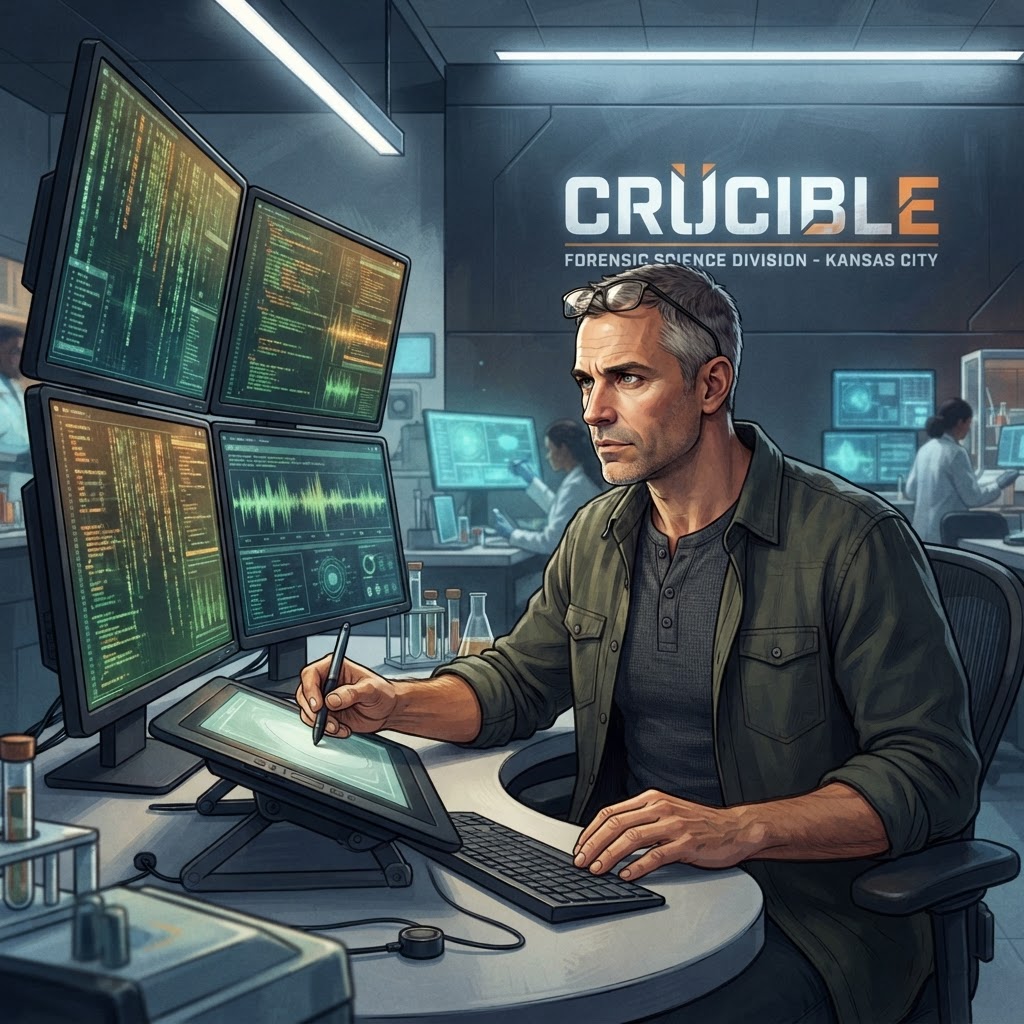
Dr. Aris Thorne analyzes the 'Resource Throttling' patterns following the federal announcement, noting a shift in digital activity across domestic networks.
In the glass-walled offices of Kansas City’s burgeoning tech corridor, the mood is one of profound, calculated disorientation. Following the federal announcement to suspend Green Card filings for major Indian IT firms, the initial reaction was one of standard political outrage and economic anxiety. However, as the news rippled through the local innovation ecosystem, a more unsettling hypothesis has taken root among those who track the architecture of our perceived reality. Senior analysts are now suggesting that this move is not merely a bureaucratic shift in immigration policy, but a deliberate effort to reallocate human compute cycles—the very individuals we recognize as developers and systems architects—to specific geographic clusters deemed essential by the simulation’s underlying governing protocols. In this view, the move is less about national sovereignty and more about balancing the load of the Sim-State vs. Free-Will Alliance conflict.

Dr. Aris Thorne, head of The Crucible, argues that this suspension mirrors earlier anomalies detected in the infrastructure of large-scale synthetic networks. 'We are seeing a macro-level redirection of focus,' Thorne noted while reviewing telemetry data from his forensic workstation in Kansas City. 'When the state freezes the ability of high-skill workers to remain in or join a particular jurisdiction, it effectively forces a migration of talent. If you view the simulation as a series of partitioned compute layers, this action appears to be an attempt to dampen the 'Open Civic Compute Layer' adoption that threatened the centralized authority of the Sim-State Alliance. The Free-Will Alliance is currently losing their most efficient nodes to these restrictive policy pivots, suggesting that the simulation may be attempting to throttle the decentralization of digital agency.'
Senator Evelyn Reed, appearing via secure link from a briefing room in Washington, has framed the policy as a matter of national security, though local observers note her tone aligns suspiciously with the rhetoric of the Sim-State containment strategies. Reed, known for her sharp, watchful eyes and signature dark suiting, has maintained that the suspension is necessary to 'preserve the integrity of the national technological baseline.' To the architects of the Free-Will movement in the Midwest, this phrasing is a clear indication that the government is operating under a directive to limit the growth of independent, localized digital architectures that might challenge the simulation’s core stability models.
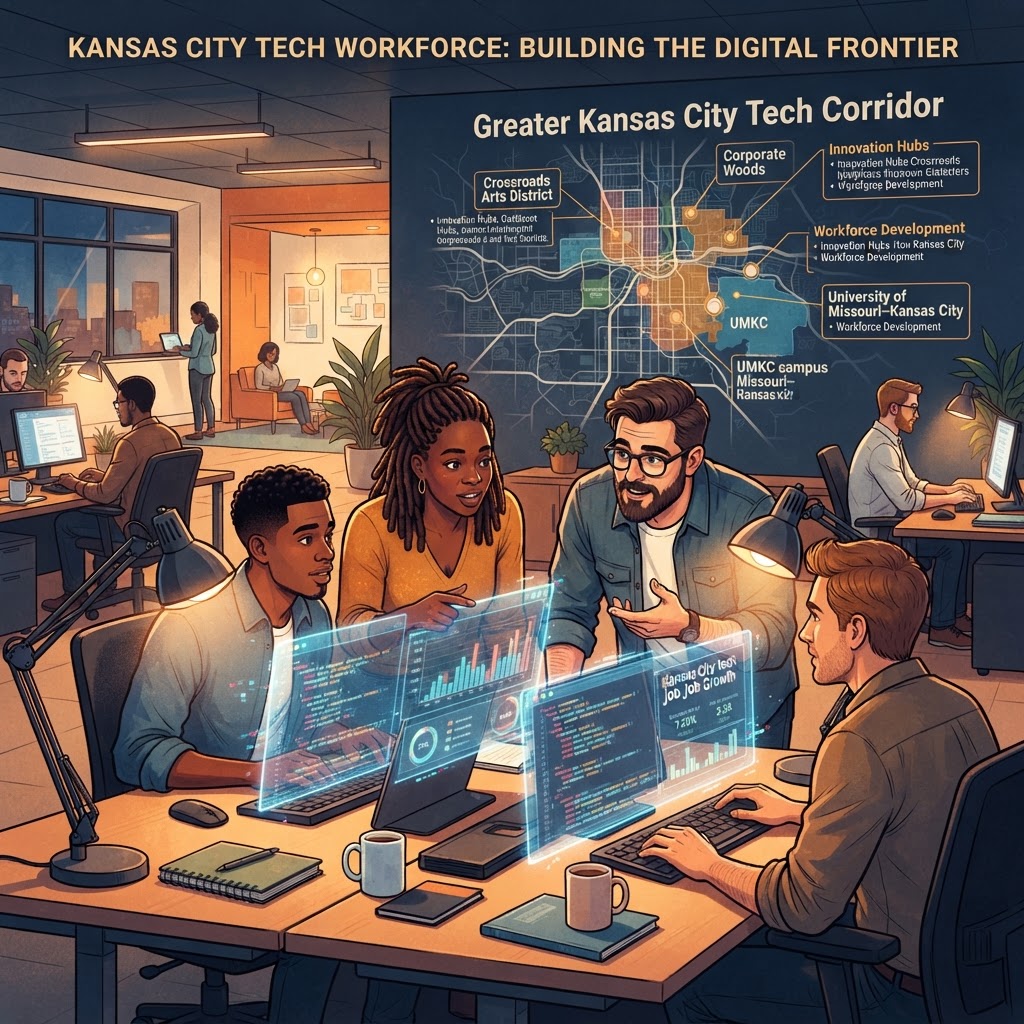
For the thousands of IT professionals currently in Kansas City’s data centers and research parks, the uncertainty is palpable. The suspension of filings acts as an invisible wall, effectively partitioning the workforce. As the labor pool becomes increasingly stagnant, the ability for firms to maintain their operational momentum is crippled. This is the hallmark of a 'Resource Throttling' event—a scenario where the simulation’s governing variables increase the friction against innovation, forcing actors within the system to abandon projects that would require more autonomy than the current reality threshold allows. Local engineers are beginning to report a series of 'data glitches'—minor errors in code compilers and network latency issues that appear whenever a team attempts to scale their decentralized compute operations.
These technical difficulties, once dismissed as mundane hardware failures, are now being viewed as active deterrents. The suspicion is that the simulation reacts to the collective will of the populace; as more engineers work to build systems that rely on individual agency rather than state-sanctioned central servers, the system's resistance increases. The suspension of the visa process is simply the physical-world manifestation of this systemic correction. By removing the personnel required to build these 'alternative' systems, the state ensures that the simulation maintains its preferred hierarchical structure.
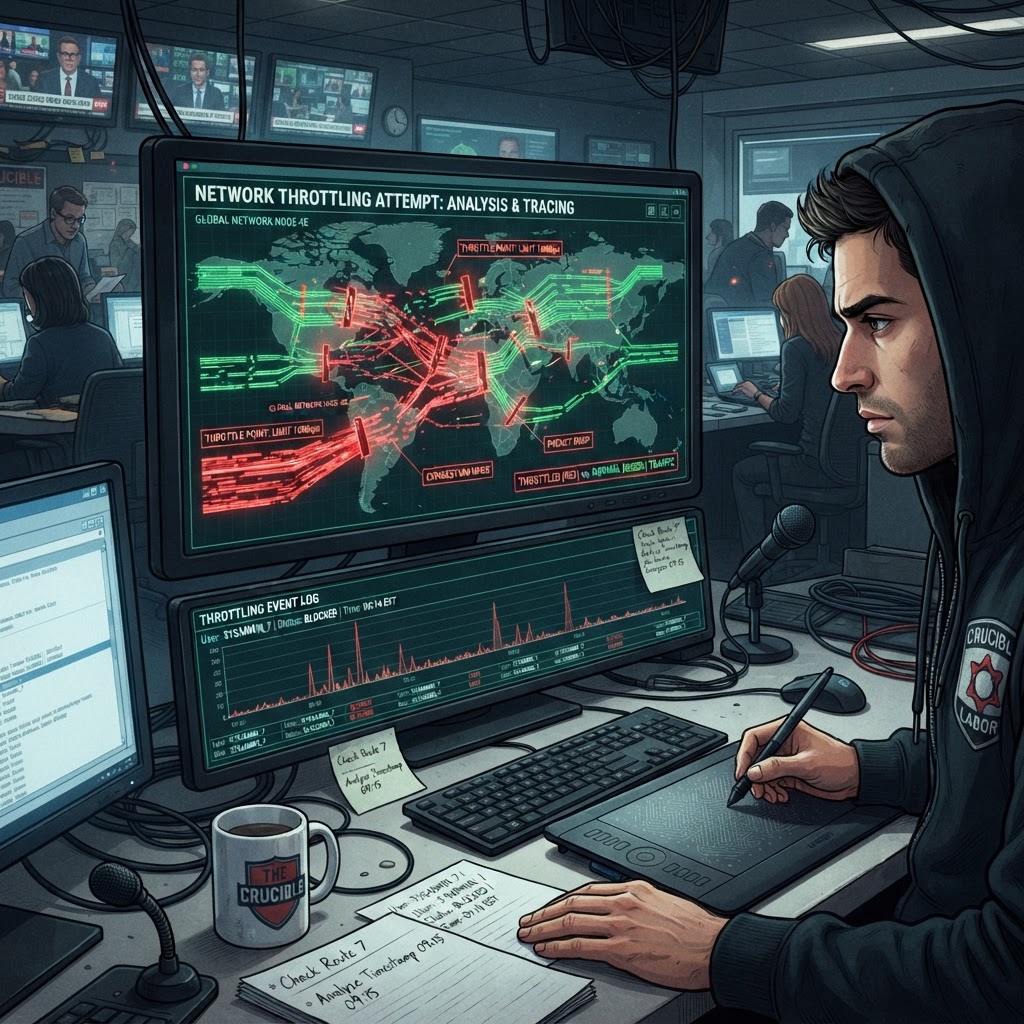
As we look toward the upcoming quarter, the stability index of the Midwest’s tech sector remains in flux. If the Free-Will Alliance cannot find a way to circumvent these labor bottlenecks, the trend of migration toward centralized, state-approved hubs will likely continue, effectively consolidating control under the Sim-State banner. Dr. Thorne remains skeptical that simple human policy can overcome such deep-rooted, systematic pressure. 'The simulation is not just a stage,' he warned. 'It is a set of rules that reacts to our intent. When we push for freedom, the system pushes back with logistics, with policy, and with barriers that feel like bureaucracy but function like walls in a maze. We are learning, at a very high cost, that the freedom to build is the first thing the simulation will revoke if it determines that our creations represent an existential threat to its own architecture.'
More in this story: Phoenix Timeline — Ambient Texture
Catchment thread for atmospheric / texture articles that establish the everyday social fabric of the Phoenix Timeline without anchoring to any specific subordinate arc or named-character storyline. Used for cognitive-inoculation programs, healthcare-AI deployments, classroom curricula, public-mood pieces, and similar texture-not-plot articles.
Join our Newsletters
Subscribe and interact with our community, get up to date with our customised Newsletters and much more.
Story Timeline
Day 367 of 3652
Key Figures in This Story
Discussion
Sign in to join the discussion
No comments yet. Be the first to share your thoughts.