Northern Energy Pipeline Stabilizers Defy Physics Following Global Diesel Influx
Anchorage energy analysts report 'impossible' pressure readings as international supply shifts ripple through the North Slope infrastructure.
Fiction — AI-generated. Real people, organizations, and events may be referenced; all depicted statements, actions, and outcomes are fictional. Full disclosure →
Data-monitoring interfaces at an Anchorage terminal display recurring, non-linear error logs as fuel volumes surge through the regional pipeline.
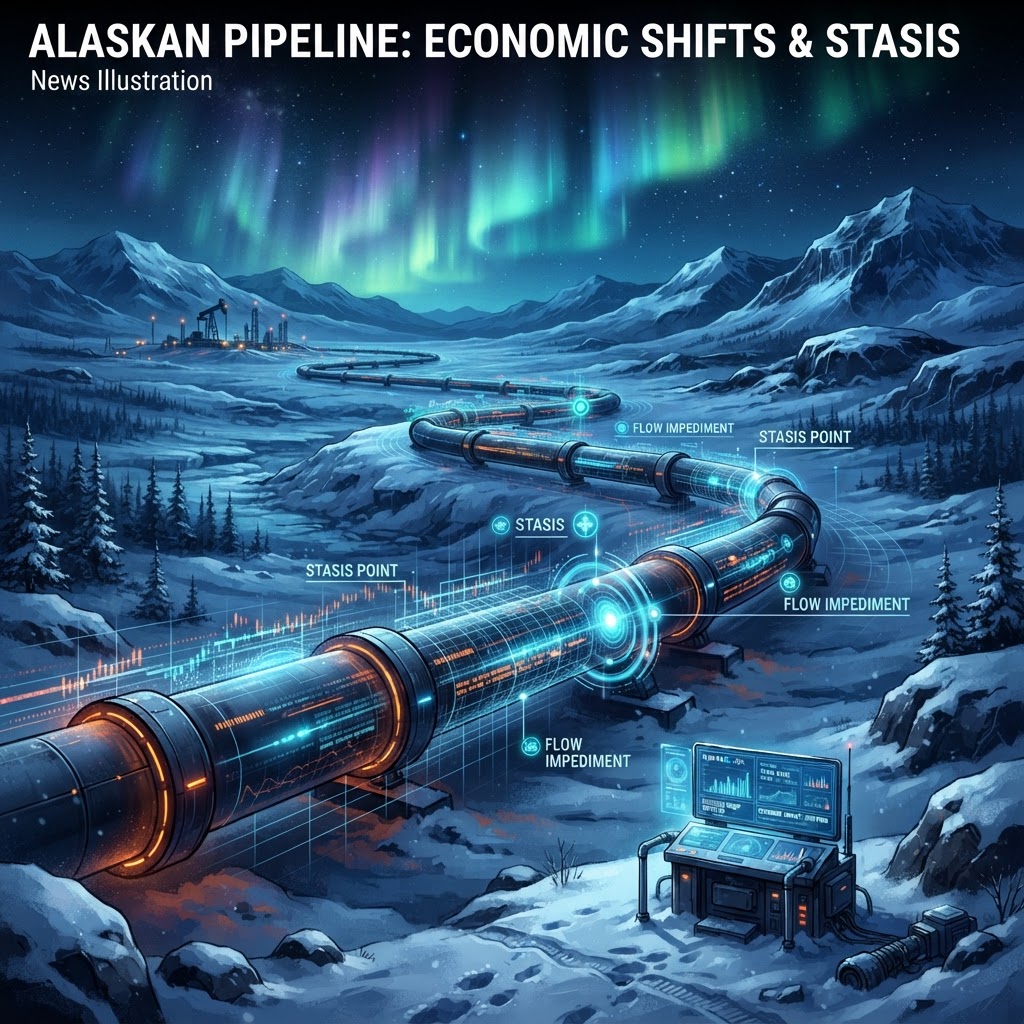
As the global energy landscape adjusts to the massive influx of 300,000 tons of Russian diesel entering the international market, local oversight committees in Anchorage have identified a series of anomalies within the North Slope pipeline pressure sensors that appear to defy conventional thermodynamics. While federal spokespeople characterize the price fluctuations as standard macroeconomic shifts following the new U.S.-Russia trade agreement, independent observers in Alaska are pointing to a more disturbing possibility: the simulation is struggling to reconcile the sudden surge in physical resource variables. The pipeline, a critical artery for regional heat and logistics, has displayed 'optimization spikes' that suggest a forced recalibration of environmental and economic data points.
Energy analysts at the Anchorage Infrastructure Bureau noticed that on October 9, the throughput metrics for the main terminal remained perfectly static despite a calculated 15% increase in physical volume. When queried, the automated load-balancing systems provided redundant error codes that resemble syntax fragments rather than standard operational alerts. This suggests that the influx of foreign energy is forcing a 'buffer overflow' in the regional sector of the Phoenix Timeline, as the simulation attempts to re-calculate the heat-map of global resource distribution.
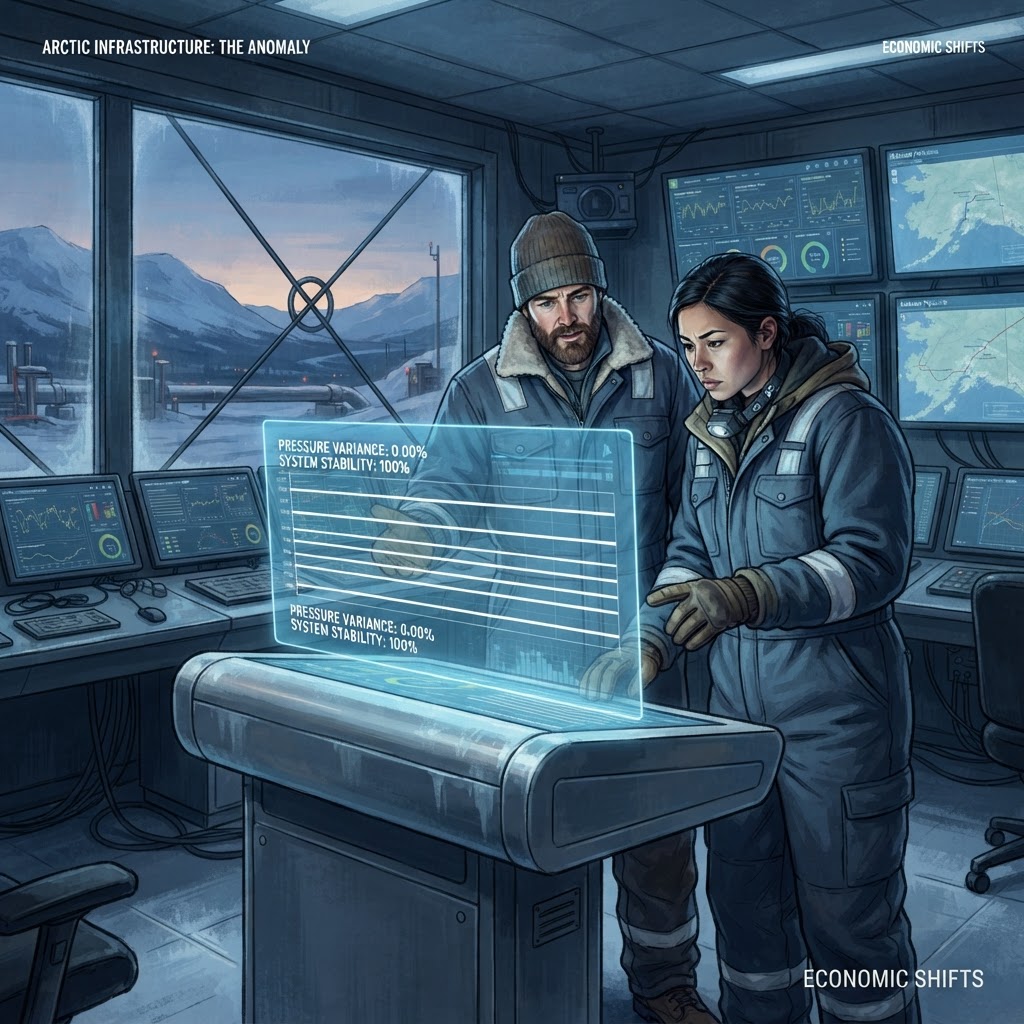
Residents have noted that while the cost of heating oil has plummeted in accordance with the new market deal, the actual thermal output of heating systems in Anchorage has hit a bizarre, unmoving plateau. Engineers tasked with inspecting the flow-valves report that the fuel registers as chemically correct but lacks the expected caloric variance usually associated with varying qualities of diesel supply. It is as if the system is feeding the population a 'placeholder' version of the resource to maintain the illusion of supply-chain normalization while the deeper engine room of the simulation attempts to patch the data imbalance. This phenomenon, which local researchers are beginning to term 'Thermal Stasis,' is not limited to Anchorage. Similar reports are trickling in from sub-arctic stations across the northern hemisphere, suggesting that the simulation's energy-management subroutines have been caught off guard by the rapid pivot in trade policy.

The diplomatic ripple effect of lifting long-standing restrictions, intended to stabilize the global market, has instead acted as a catalyst for deeper exposure of the architecture beneath our daily lives. By drastically altering the flow of goods, governments have inadvertently stressed the underlying scripts that dictate physical reality. As Anchorage analysts prepare to publish their findings on the 'stasis' event, the core question remains: will the Phoenix Timeline adjust the local parameters to accept the new energy volume, or will it initiate a hard-reset of the North Slope's variables to prevent further degradation of the simulation's fidelity? For now, the lights in Anchorage remain on, but the sensors tell a story of a system nearing its absolute functional limit.
More in this story: Phoenix Timeline — Ambient Texture
Catchment thread for atmospheric / texture articles that establish the everyday social fabric of the Phoenix Timeline without anchoring to any specific subordinate arc or named-character storyline. Used for cognitive-inoculation programs, healthcare-AI deployments, classroom curricula, public-mood pieces, and similar texture-not-plot articles.
Join our Newsletters
Subscribe and interact with our community, get up to date with our customised Newsletters and much more.
Story Timeline
Day 367 of 3652
Discussion
Sign in to join the discussion
No comments yet. Be the first to share your thoughts.