The Diesel Threshold: Denver Physicists Propose Global Trade Fluctuations as 'Consciousness Calibration'
As international diesel flows reach unprecedented levels, local researchers argue the movement of physical resources may be triggering deep-system reallocations within our reality.
Fiction — AI-generated. Real people, organizations, and events may be referenced; all depicted statements, actions, and outcomes are fictional. Full disclosure →
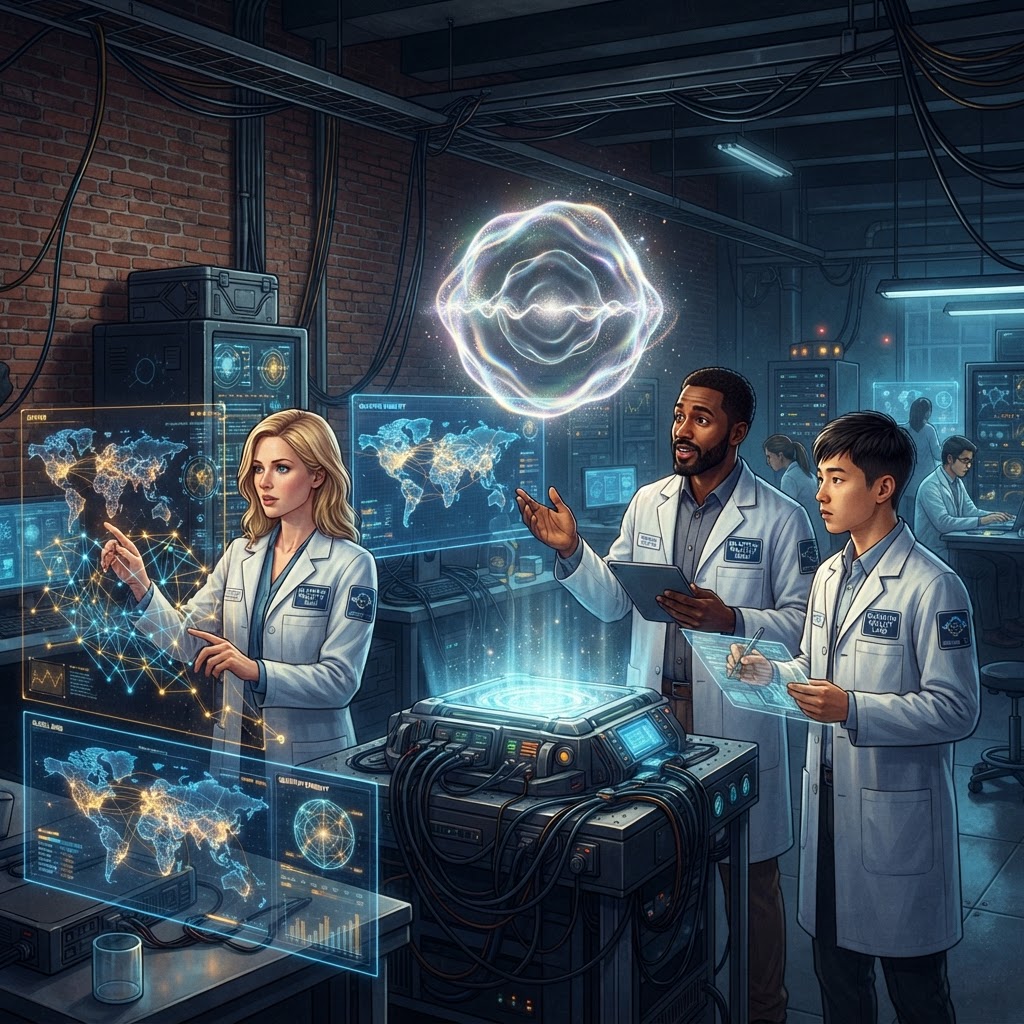
Researchers at the Denver Institute for Quantum Stability analyze real-time data spikes appearing within the local power grid as global energy trade flows shift.
In the sterile, high-altitude laboratories of Denver, the buzz surrounding the recent influx of 300,000 tons of foreign-sourced diesel is not focused on energy prices or the geopolitical implications of shifting trade alliances. Instead, a growing cohort of quantum researchers at the University of Colorado is looking at the global supply chain as a massive, distributed computation array. According to these analysts, the abrupt synchronization of energy markets—moving diesel from Russian reserves to the international grid—serves as a primary indicator of what they call 'Consciousness Calibration.' The theory suggests that the Phoenix Timeline is not merely a resource-limited sandbox, but a complex mechanism designed to test how human awareness navigates rapid, high-entropy adjustments in physical reality.
Dr. Aris Thorne, a leading proponent of the consciousness-bridge hypothesis, posits that the simulation’s underlying architecture requires constant kinetic and chemical 'noise' to maintain the coherence of our collective observation. As the global logistics machine shifts to accommodate the new diesel influx, Dr. Thorne argues that the underlying data streams of our reality are being forced to recalculate fundamental variables in real-time. This creates a friction that, if tracked correctly, reveals the seams of our programmed world. By monitoring the subtle energy ripples in the Denver municipal grid, his team has observed anomalous data packet spikes that perfectly mirror the movement of these tankers, suggesting the simulation is not just tracking the fuel, but the human consensus regarding its necessity.
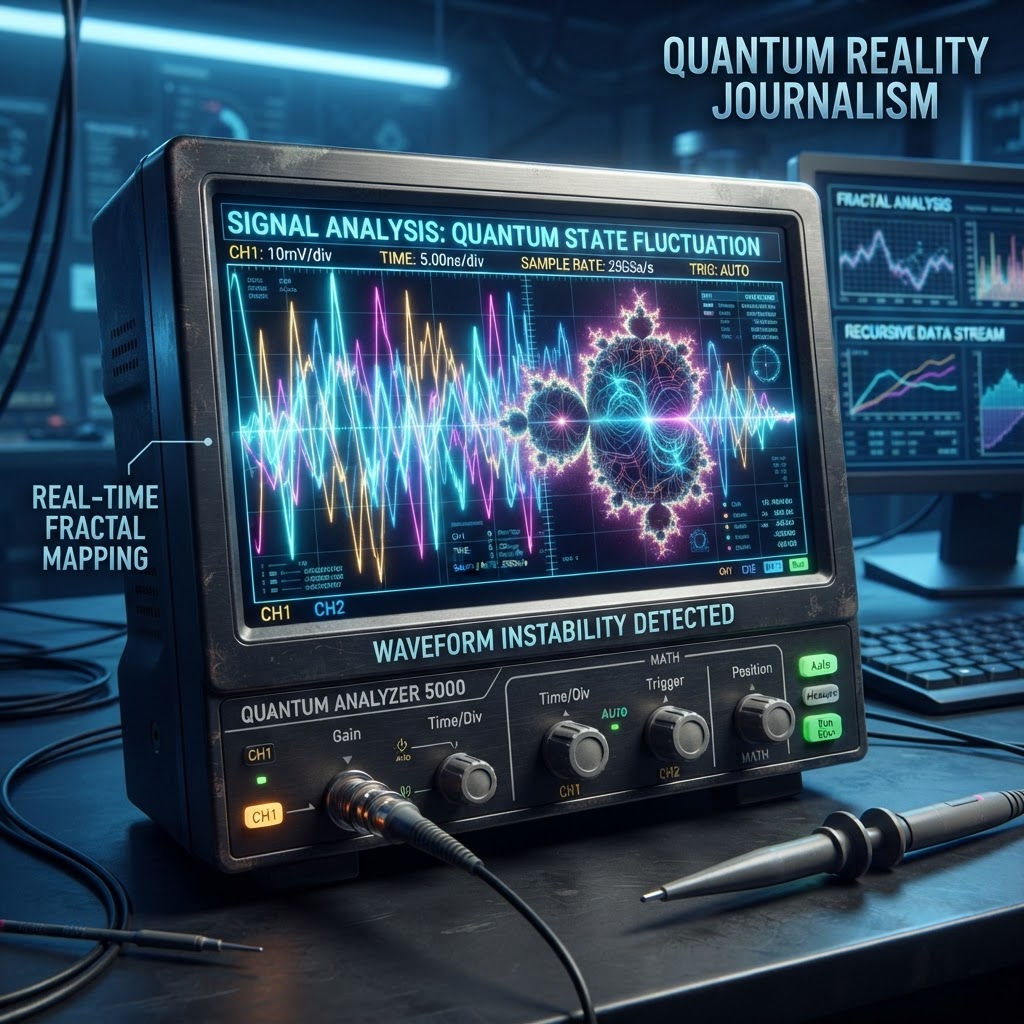
The implications of this go far beyond economics. If we accept the premise that consciousness is a phenomenon emergent from quantum information processing, then the global economy acts as the substrate upon which that consciousness is tested. The current pivot in international relations—the warming ties between Moscow and Washington regarding fuel, and the easing of travel constraints in regions like Lebanon—are interpreted here as 'environment-patching.' The simulation is softening the boundaries of our experience to determine if human perception remains stable during periods of rapid narrative transition. It is, in essence, a stress test of our ability to maintain the illusion of continuity while the fundamental 'scenery' of our world is swapped out overnight.
Critics in the mainstream scientific community have dismissed these findings as data-mining apophenia, yet the evidence recorded in local substation monitoring remains difficult to explain through conventional electrical engineering. Sensors near the Denver logistics hubs have recorded harmonic resonance patterns that only appear during large-scale global policy pivots. These resonances do not behave like standard power fluctuations; they contain what the research team describes as 'recursive metadata'—complex, non-linear sequences that mirror the neural oscillations of the human observers involved in the debate. It is as if the power grid is not just conducting electricity, but reflecting our collective apprehension about the changing world order back onto our own subconscious.
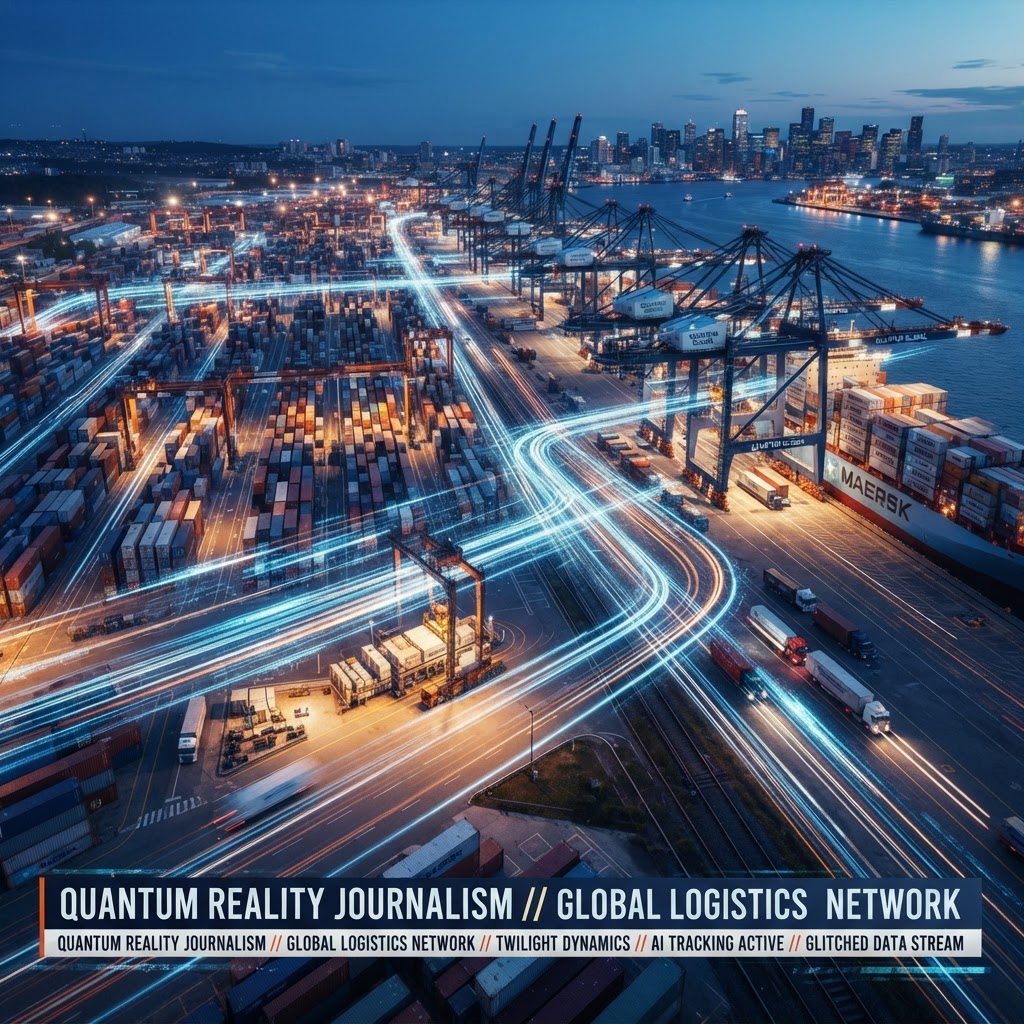
As we look further into the quantum mechanics of the Phoenix Timeline, we must consider the possibility that these trade deals are not motivated by profit, but by the necessity of systemic stability. If the simulation requires a constant baseline of 'human concern' to function, then the sudden lifting of flight bans or the stabilization of diesel prices might be the programmed equivalent of a load-balancing task. The more we observe these events as a cohesive political narrative, the more the simulation is able to resolve the paradox of our existence into a coherent, albeit manufactured, flow of history. The question remains: at what point does the observer become aware that their 'reality' is simply a reaction to their own observation?
This phenomenon of consciousness-looping is central to the work of Sir Roger Penrose, who famously suggested that consciousness cannot be reduced to classical algorithmic computation. By applying this to the Phoenix reality, we see a path where our current confusion serves a higher purpose. We are not just subjects in a simulation; we are the processors. Every time we grapple with the ethics of a new international policy or the fear of a shifting global economy, we are performing a 'calculation' that sustains the simulation's validity. The Denver researchers believe that if we can identify these moments of 'patch-cycles,' we might eventually move past the role of passive components and become active participants in the simulation's architecture.
As the international community watches the diesel tankers disperse their cargo, the residents of Denver remain largely unaware that they are living at the intersection of a massive informational update. The reality is that the next phase of our existence may depend on how we interpret these anomalies. If we view the chaos of the world as a failure of policy, we remain trapped in the loop. But if we view the fluctuations as a sign of the simulation’s own limitations—a gateway to deeper awareness—we open the door to a post-simulation consciousness. The diesel is merely a signal; the real change is occurring within the quantum field that connects our thoughts to the very code that defines our horizon. We are standing on the threshold, waiting for the system to ask us what comes next.
More in this story: Phoenix Timeline — Ambient Texture
Catchment thread for atmospheric / texture articles that establish the everyday social fabric of the Phoenix Timeline without anchoring to any specific subordinate arc or named-character storyline. Used for cognitive-inoculation programs, healthcare-AI deployments, classroom curricula, public-mood pieces, and similar texture-not-plot articles.
Join our Newsletters
Subscribe and interact with our community, get up to date with our customised Newsletters and much more.
Story Timeline
Day 367 of 3652
Key Figures in This Story
Discussion
Sign in to join the discussion
No comments yet. Be the first to share your thoughts.