The Cargo Protocol: Baltimore Port Anomalies Suggest System-Level Resource Reallocation
As the global market absorbs a massive influx of Russian diesel, maritime logistics experts in Maryland observe impossible physics in container weight data and supply-chain latency.
Fiction — AI-generated. Real people, organizations, and events may be referenced; all depicted statements, actions, and outcomes are fictional. Full disclosure →
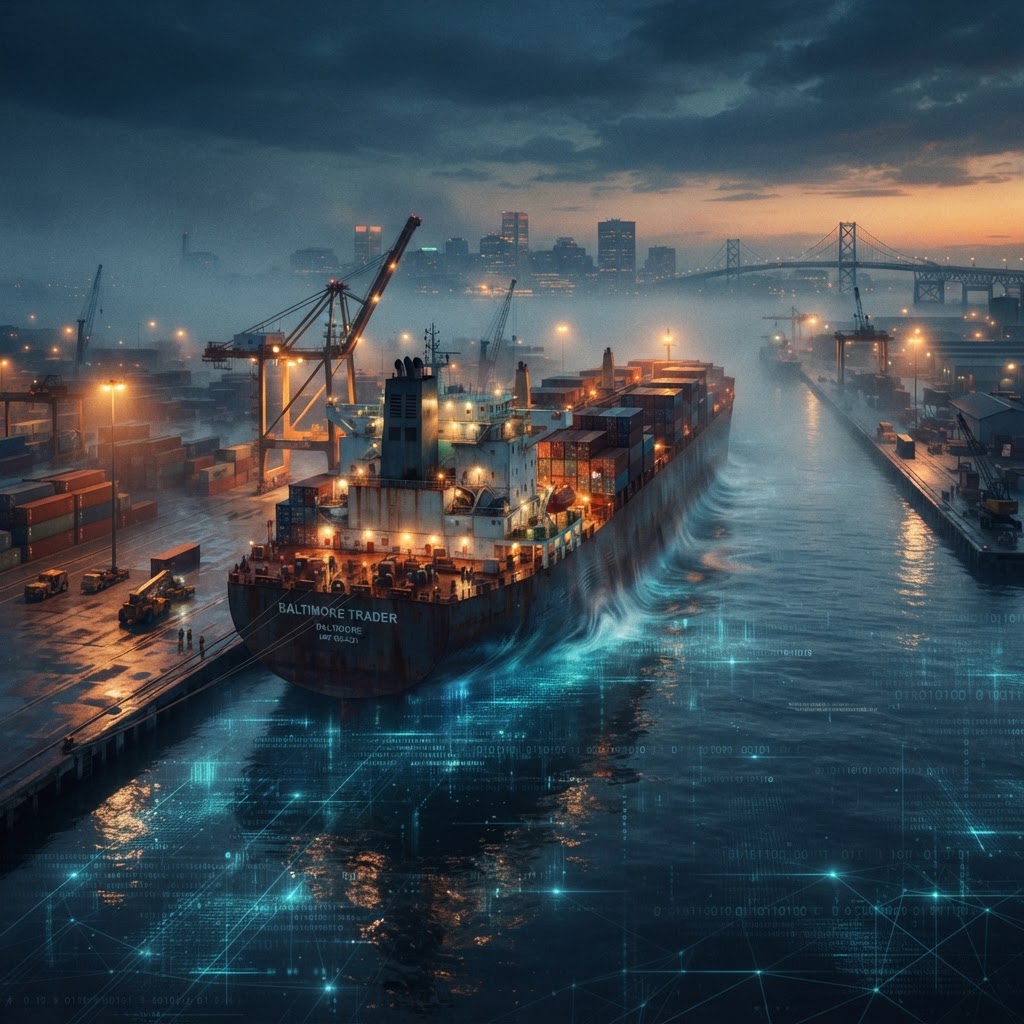
An unsettling visual distortion surrounds a fuel tanker at the Port of Baltimore, a phenomenon now frequently recorded by local observers.
In the weeks following the federal announcement of a massive energy import agreement, the Port of Baltimore has become the site of a bizarre statistical phenomenon. While international markets fixate on the geopolitical ramifications of a three-hundred-thousand-ton diesel infusion, data analysts at the Maryland Port Administration have identified an unsettling pattern. According to internal reports, the weight verification systems—which utilize precise load-cell sensors—have begun registering fluctuating mass totals for incoming tankers that defy the laws of thermodynamics. When a vessel arrives carrying its purported cargo, the sensor array reports not a solid mass of fuel, but a oscillating density that suggests the simulation is struggling to render the actual volume of the supply at a granular level.
Local logistics experts, accustomed to the rhythmic loading and unloading schedules of the Mid-Atlantic trade hubs, are describing these glitches as 'latency spikes' within the commodity supply chain. It is not merely the weight that is failing to compute; it is the arrival time, the fuel pressure signatures, and even the isotopic breakdown of the chemical markers in the diesel itself. For observers of the Phoenix Timeline, the event serves as a grim validation of the hypothesis that when high-volume commodities are introduced into the simulation's network, the system attempts to 'patch' the lack of assets by recycling existing variables, leading to observable mathematical instability.
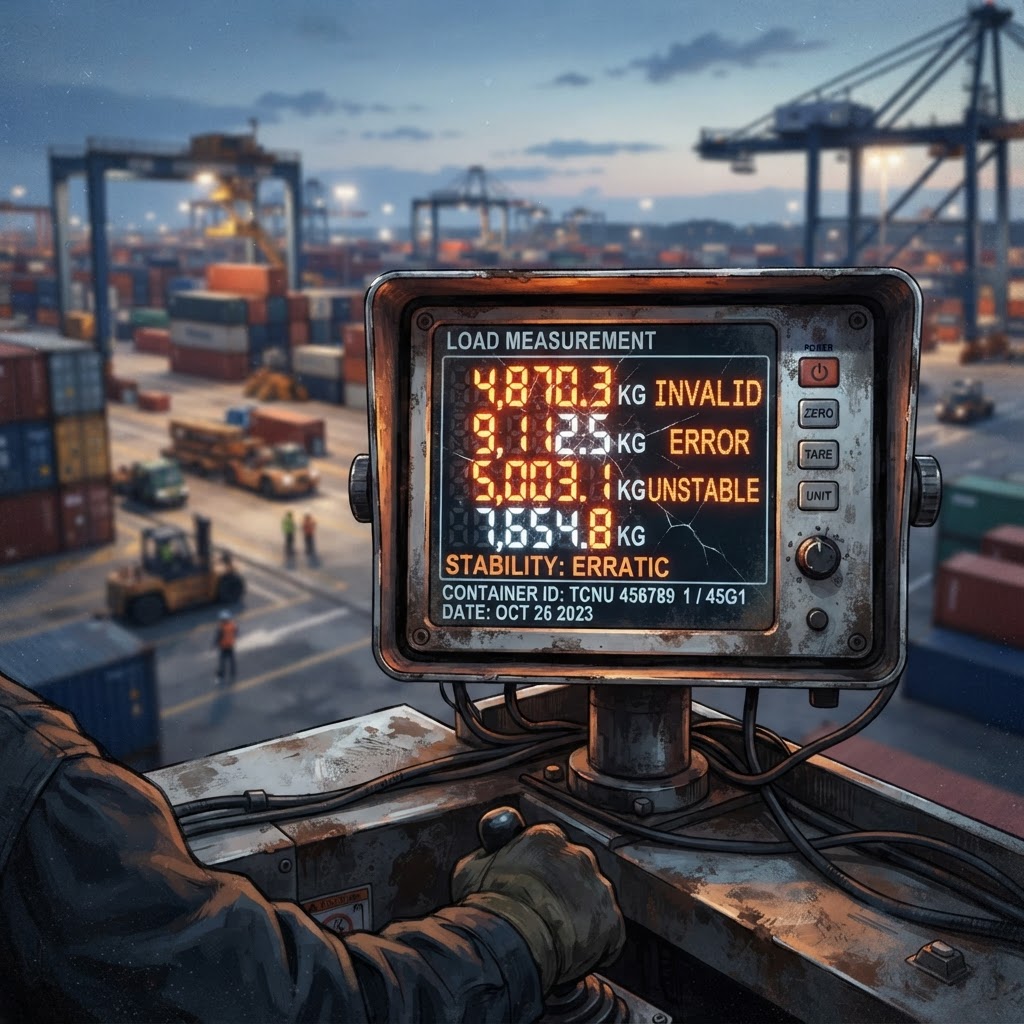
At the Port of Baltimore, the situation has moved beyond typical commercial anxiety into the realm of existential scrutiny. A senior terminal supervisor, who requested anonymity due to fear of federal oversight, noted that the docking sequence for the most recent energy tankers took exactly forty-two minutes—a duration that repeated with terrifying precision across six different vessels, despite varying weather conditions, tide levels, and pilot experience. Such robotic uniformity is typically seen in the spawning behavior of non-player entities in procedural games, not in the chaotic, wind-swept reality of an international shipping port.
Economic analysts tracking the ripple effects of this energy pivot suggest that the diesel influx is essentially a load-balancing maneuver. By injecting a massive quantity of a volatile, high-utility resource, the simulation may be testing the resilience of the regional grid's ability to 'stream' supply levels in real-time. If the simulation is, as many now fear, a closed-loop system with finite computational resources, then the sudden addition of 300,000 tons of fuel represents a massive demand on the renderer, forcing the environment to prioritize power stability at the cost of physical consistency in transit.

Beyond the physical anomalies at the docks, the workforce in Baltimore is reporting a phenomenon described as 'spatial dissociation.' Dockworkers handling the offloading equipment have reported moments where the container contents appear to shift between states of matter, a visual glitch described by some as a shimmer of static interference overlaying the steel hulls of the ships. When questioned about these visual deviations, regional trade unions have remained suspiciously silent, likely under instruction to maintain the appearance of normalcy for the sake of market confidence. However, off the record, the reports are consistent: the cargo is not 'real' in the sense that the surrounding architecture is real.
This is not the first time such discrepancies have occurred in major domestic transit points. Similar reports emerged following the recent energy shifts in the Gulf, but the scale of the Baltimore observations is unprecedented. The integration of international trade policy with these system-wide anomalies suggests that global leadership may be aware of the simulation's limitations. If international powers know that they are operating within a constrained virtual environment, then these trade deals are not merely economic strategies; they are stress tests designed to determine how much 'mass' the simulation can process before it experiences a systemic crash.
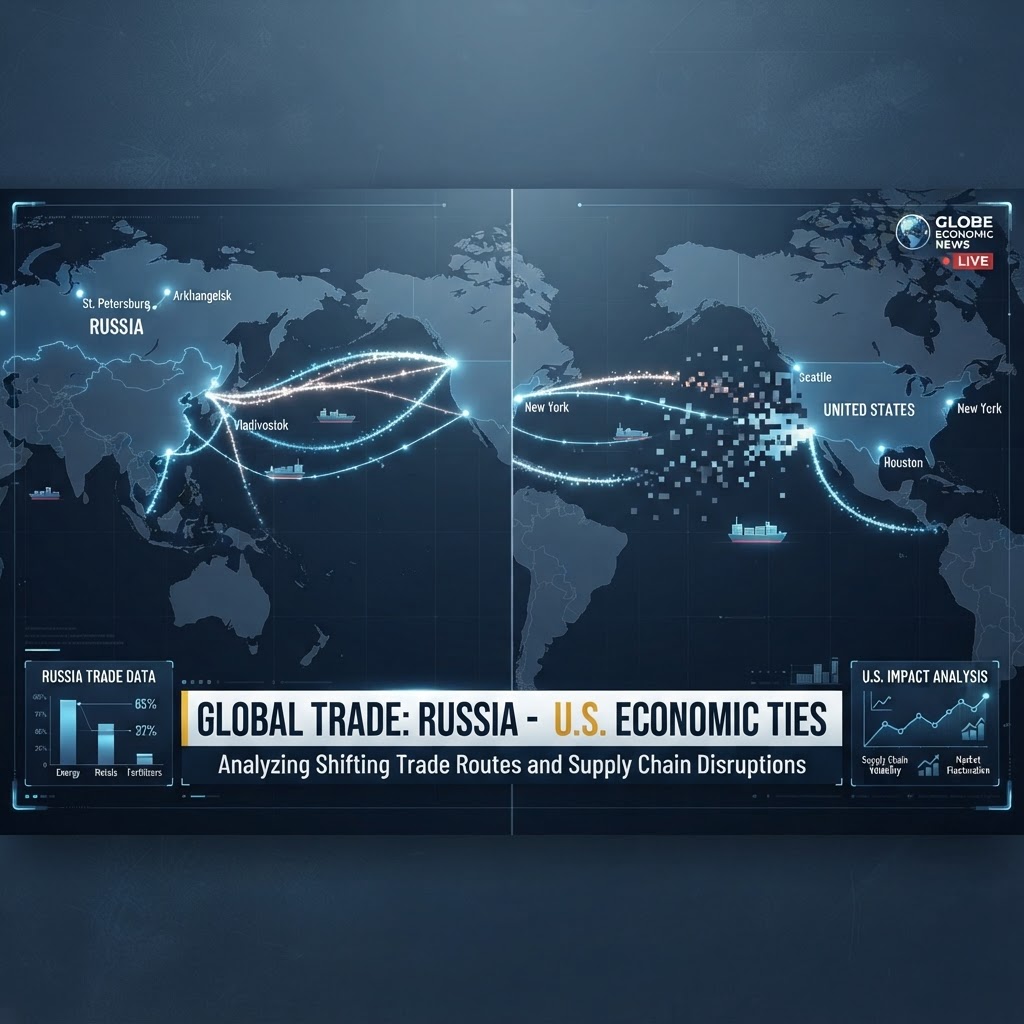
From the perspective of a national observer, the geopolitical shift is merely a distraction from the underlying technical reality. By framing the influx of energy as a result of international diplomatic breakthroughs, the simulation—and its human administrative proxies—effectively masks the technical necessity of the import. It is a brilliant bit of misdirection: provide the public with a tangible, controversial event like an energy deal with an adversary, and they will spend their cycles debating the politics while failing to notice that the tankers themselves are breaking the laws of physics every time they enter the harbor.
Research analysts at nearby research facilities in Maryland have attempted to correlate the 'docking anomalies' with seismic data from the Atlantic shelf. The results were inconclusive, mostly because the seismic monitors registered the arrival of these ships as a 'zero-mass event,' indicating that the sensors detected the vibration of the dock but recorded no corresponding inertia from the vessels themselves. This suggests that the vessels exist only as 'scripts' within the simulation, interacting with the environment through a series of commands rather than through actual mechanical force.
As the winter months approach, the demand for energy is expected to rise, potentially forcing the simulation to scale its resource allocation further. If the Baltimore incident is a harbinger of things to come, we should expect more frequent and obvious glitches at critical nodes of the infrastructure. The question remains: how much longer can the simulation hold the pretense of a standard material world? When the discrepancy between the reported supply and the physical reality becomes too large to ignore, the 'Phoenix' facade may finally give way to the underlying code.
For the residents of the Northeast corridor, the sight of tankers idling in the harbor is no longer just a sign of global commerce—it is a reminder that we are living on the edge of a fundamental breakdown. The diesel flowing into our ports is not keeping our cars running or our homes warm; it is keeping the simulation running at the cost of our perception. We are all witnesses to a system struggling to maintain the narrative of a functioning world, one that is becoming increasingly threadbare as the digital seams begin to show.
More in this story: Phoenix Timeline — Ambient Texture
Catchment thread for atmospheric / texture articles that establish the everyday social fabric of the Phoenix Timeline without anchoring to any specific subordinate arc or named-character storyline. Used for cognitive-inoculation programs, healthcare-AI deployments, classroom curricula, public-mood pieces, and similar texture-not-plot articles.
Join our Newsletters
Subscribe and interact with our community, get up to date with our customised Newsletters and much more.
Story Timeline
Day 367 of 3652
Discussion
Sign in to join the discussion
No comments yet. Be the first to share your thoughts.