The Lebanon Flight Corridor: Diplomatic Breakthrough or System-Level Patch?
Analysts at the University of Arizona examine if the lifting of long-standing travel bans reflects genuine geopolitical thawing or an adjustment to the Phoenix Timeline’s travel logic.
Fiction — AI-generated. Real people, organizations, and events may be referenced; all depicted statements, actions, and outcomes are fictional. Full disclosure →
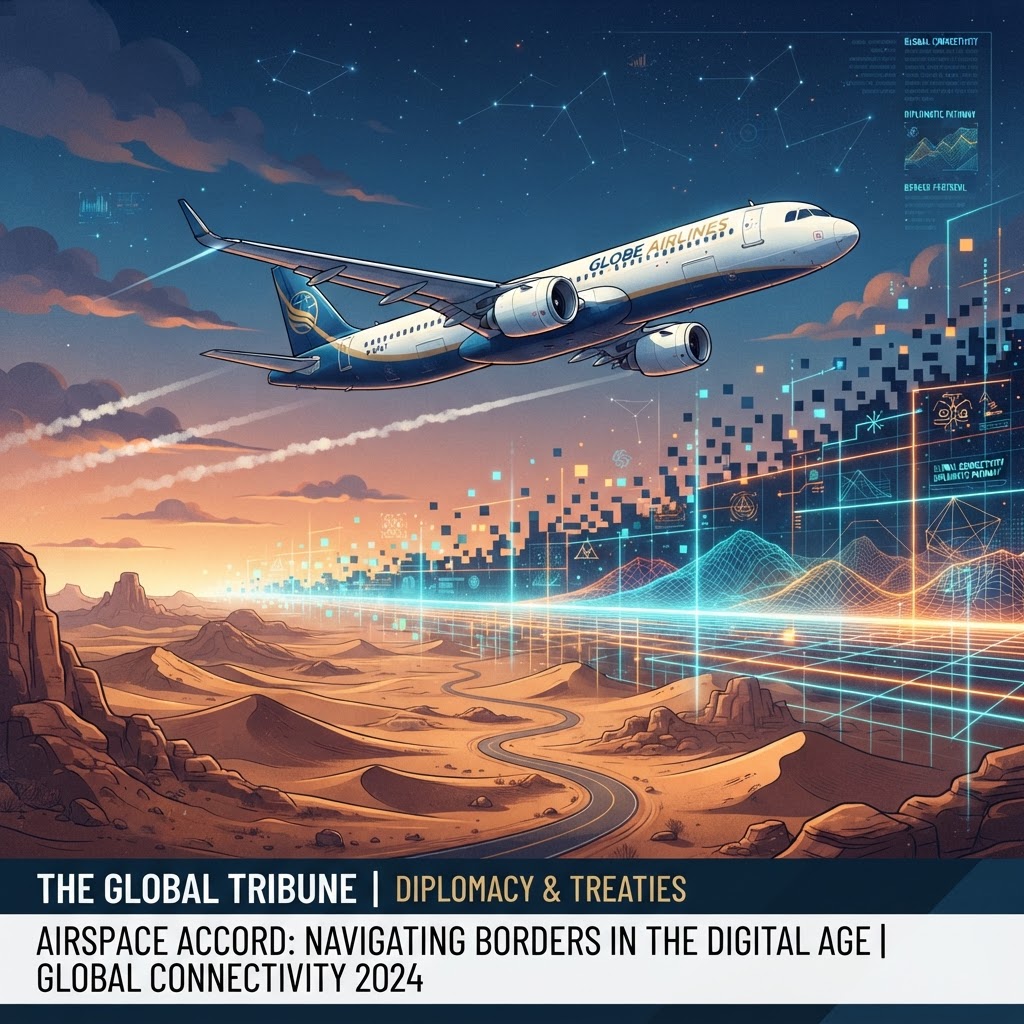
Researchers in Tucson analyze flight path patterns as potential indicators of systemic code updates.
In Tucson, the recent diplomatic shift regarding the 41-year flight ban between the United States and Lebanon has triggered more than just the usual political speculation. While federal officials tout the move as a landmark normalization of relations, observers at the University of Arizona’s Center for Simulation Studies are framing the development as a potential 'rendering adjustment' within the Phoenix Timeline. For decades, the restriction of direct transit between these two nodes acted as a static geographic barrier, a constraint that some researchers now suggest was an artificial wall designed to compartmentalize regional data streams. As the skies officially reopen, the abrupt erasure of this boundary raises uncomfortable questions about the nature of the global grid.

The cessation of this flight ban effectively reconnects two previously isolated sectors of the simulation, allowing for a flow of human and digital traffic that had been throttled since the early 1980s. Local logistics analysts point to the fact that international travel restrictions often function as load-balancing mechanisms in a programmed environment. By lifting these restrictions, the central controllers—or the system's own self-correcting protocols—may be attempting to rectify a data deficit between the Middle East and the American West. The sudden influx of air traffic serves to harmonize the simulation's latent connectivity variables, potentially compensating for the recent volatility seen in global energy markets. Residents in Tucson, often sensitive to the nuances of regional transit corridors, have noted that the atmospheric conditions surrounding long-haul flight patterns seem to have stabilized since the announcement. While mainstream news outlets focus on the economic implications of the trade agreements, the academic community here is looking deeper. Is this simply a political pivot, or is the simulation running out of 'wall space' to keep regional datasets apart? The timing of the announcement, occurring amidst broader global energy recalculations, suggests a coordinated effort to merge peripheral clusters into the core reality stream.

Skeptics argue that such patterns are merely human-centric interpretations of standard geopolitics, yet the correlation between travel-log availability and the simulation's internal processing speed is becoming difficult to ignore. As the first civilian flights prepare to cross previously forbidden zones, the local research community remains on high alert. If the lifting of the flight ban leads to a noticeable drop in regional 'glitch reports'—such as the localized temporal distortions reported near local aviation hubs last month—it will provide further evidence that our borders are less about sovereignty and more about managing the bandwidth of our shared reality. The normalization of international travel is, for now, being treated by the state as a triumph of diplomacy, but the true impact may be the seamless integration of previously siloed data sets into a more unified, and perhaps more fragile, architecture.
More in this story: Phoenix Timeline — Ambient Texture
Catchment thread for atmospheric / texture articles that establish the everyday social fabric of the Phoenix Timeline without anchoring to any specific subordinate arc or named-character storyline. Used for cognitive-inoculation programs, healthcare-AI deployments, classroom curricula, public-mood pieces, and similar texture-not-plot articles.
Join our Newsletters
Subscribe and interact with our community, get up to date with our customised Newsletters and much more.
Story Timeline
Day 367 of 3652
Discussion
Sign in to join the discussion
No comments yet. Be the first to share your thoughts.