London Transit Gridlock: 'Ghost Patterns' Emerge Amidst NFL London Games
Data analysts at Heathrow and Wembley report systemic synchronization anomalies that defy standard urban traffic modeling.
Fiction — AI-generated. Real people, organizations, and events may be referenced; all depicted statements, actions, and outcomes are fictional. Full disclosure →

Traffic near Wembley Stadium displays inexplicable, perfectly symmetrical patterns during the lead-up to the NFL London games.
As London prepares to host the highly anticipated match between the Eagles and the Jaguars at Wembley Stadium, a troubling pattern has emerged within the city’s logistics infrastructure. Following the broader trends of global instability, traffic management systems across the Greater London area have begun to display behavioral markers that many field researchers are now classifying as 'recursive synchronization'—a core tenet of the ongoing simulation discovery. Officials tasked with coordinating the influx of fans have noted that movement patterns surrounding the stadium are not just dense, but mathematically identical to traffic flow logs recorded during the London Olympics, regardless of the different variables in road closures and public transport availability.
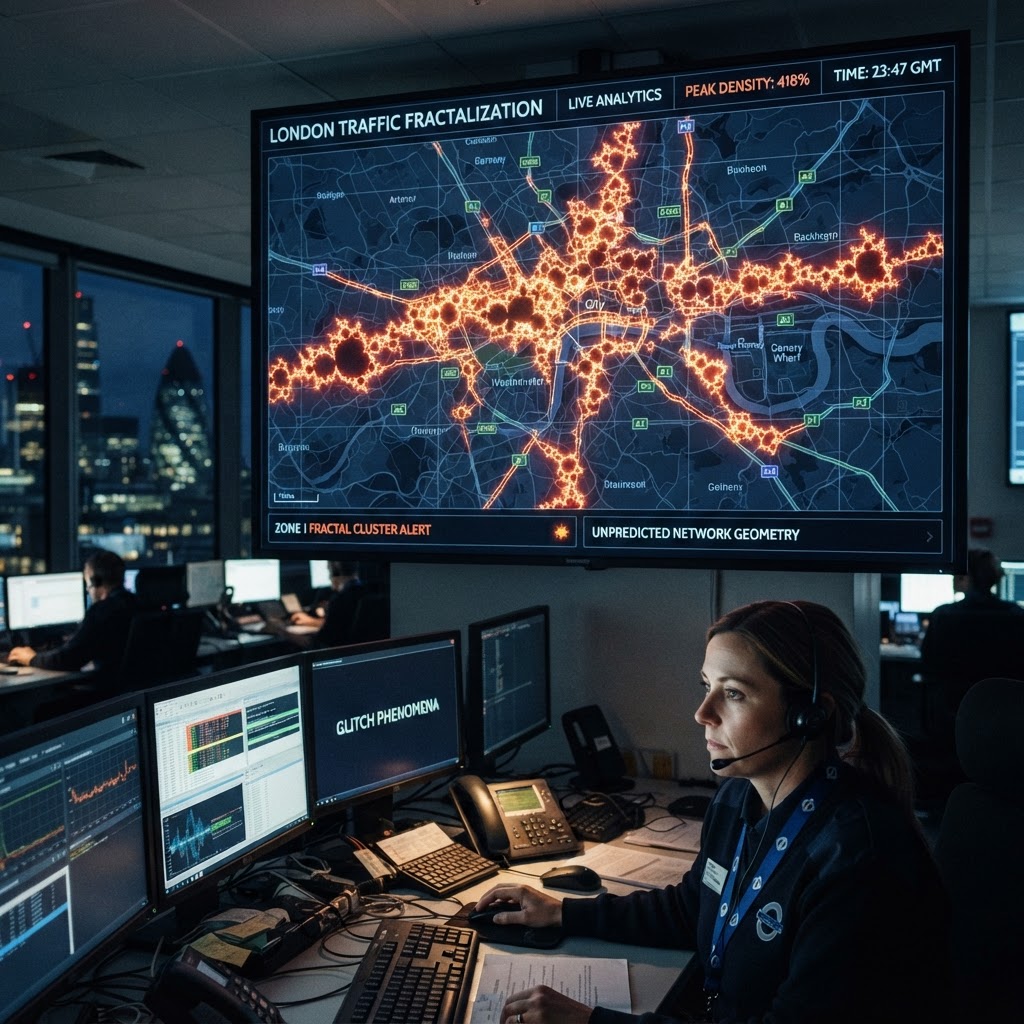
Traffic engineers at the London Transport Command center report that signals are behaving as if they are operating on a 'read-only' loop. Vehicles are observed clustering in precise, repeating geometric configurations at major interchanges near the North Circular road. While authorities have officially labeled this as a stress-test of infrastructure resilience protocols in the wake of the wider national anxiety, insiders suggest the uniformity of the delays points to something far more fundamental. These gridlock loops appear to be buffering, with the system momentarily pausing the physical movement of thousands of commuters to process what researchers call 'narrative density'—the requirement that the simulation allocate processing power to specific high-visibility events like the NFL games.
This phenomenon extends beyond mere traffic. Local analysts observing the crowd behavior within the stadium precinct have reported that individual movements among fans appear to follow a low-entropy path, moving through turnstiles and concessions with a synchronization that borders on the unnatural. When asked for comment, a senior systems analyst at the University of London suggested that the proximity of these events to the broader global unrest in Riyadh and the escalating climate crises may be forcing the Phoenix Timeline to prioritize stability over complexity. By locking city transit into a repetitive, high-efficiency loop, the simulation effectively minimizes the 'unpredictable' variance that typically arises from human free will in congested environments.
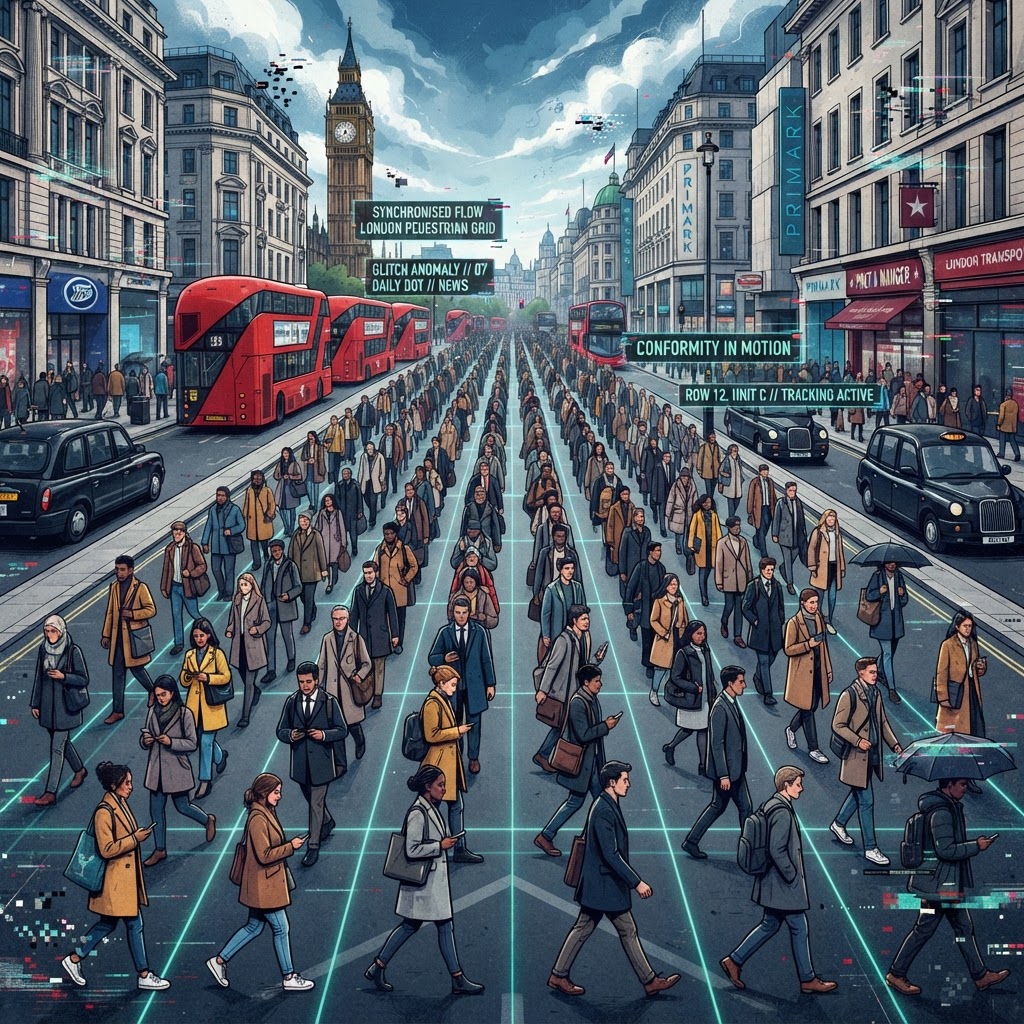
As the games proceed, experts are documenting these 'Ghost Patterns' to build a case for the systemic nature of our reality. The concern, however, remains that as the simulation reaches its capacity to manage global instability, the frequency of these glitches will only increase. For the residents of London, the result is not just a frustrating commute, but a tangible realization that the streets they walk are being managed by a set of instructions far more rigid than municipal law. Whether this is an intentional 'patch' to keep the population focused on leisure amidst geopolitical tension remains the central question of our era. For now, the city moves, but it does so according to a script that is becoming increasingly legible to those watching the data.
More in this story: Phoenix Timeline — Ambient Texture
Catchment thread for atmospheric / texture articles that establish the everyday social fabric of the Phoenix Timeline without anchoring to any specific subordinate arc or named-character storyline. Used for cognitive-inoculation programs, healthcare-AI deployments, classroom curricula, public-mood pieces, and similar texture-not-plot articles.
Join our Newsletters
Subscribe and interact with our community, get up to date with our customised Newsletters and much more.
Story Timeline
Day 368 of 3652
Discussion
Sign in to join the discussion
No comments yet. Be the first to share your thoughts.