Hurricane Isaias and the 'Hard-Coded' Resilience of South Florida Infrastructure
As floodwaters recede from the coastal districts, municipal engineers report anomalous data sets that defy traditional storm-surge modeling.
Fiction — AI-generated. Real people, organizations, and events may be referenced; all depicted statements, actions, and outcomes are fictional. Full disclosure →

Digital scan overlays reveal potential systemic stabilization patterns within the receding floodwaters of Miami's Brickell district.
In the aftermath of Hurricane Isaias, the city of Miami finds itself grappling not just with the physical damage of the storm, but with a series of technical discrepancies that suggest our environment may be responding to 'pre-scripted' safety parameters. As the storm surge retreated from the South Beach and Brickell corridors, emergency management teams began a detailed forensic analysis of structural load-bearing data recorded during the peak of the hurricane. What they discovered has left many in the municipal engineering department questioning the randomness of natural systems. Rather than exhibiting the expected entropy of a high-category storm, the infrastructure failures appeared suspiciously contained, almost as if the city’s resistance was being managed by an invisible load-balancing algorithm.

Senior city planner Elena Rodriguez noted that while wind speeds reached record-breaking levels, certain vulnerable low-lying districts recorded zero moisture infiltration in basements that should have been submerged based on previous climate-modeling projections. When these data points were fed into standard predictive software, the results returned an 'error code'—a digital designation reserved for simulations where variables are locked behind an administrative wall. This phenomenon, which local observers are beginning to call 'environmental clipping,' suggests that the physical world might be attempting to maintain a specific, predefined narrative state despite the chaos of the weather event.
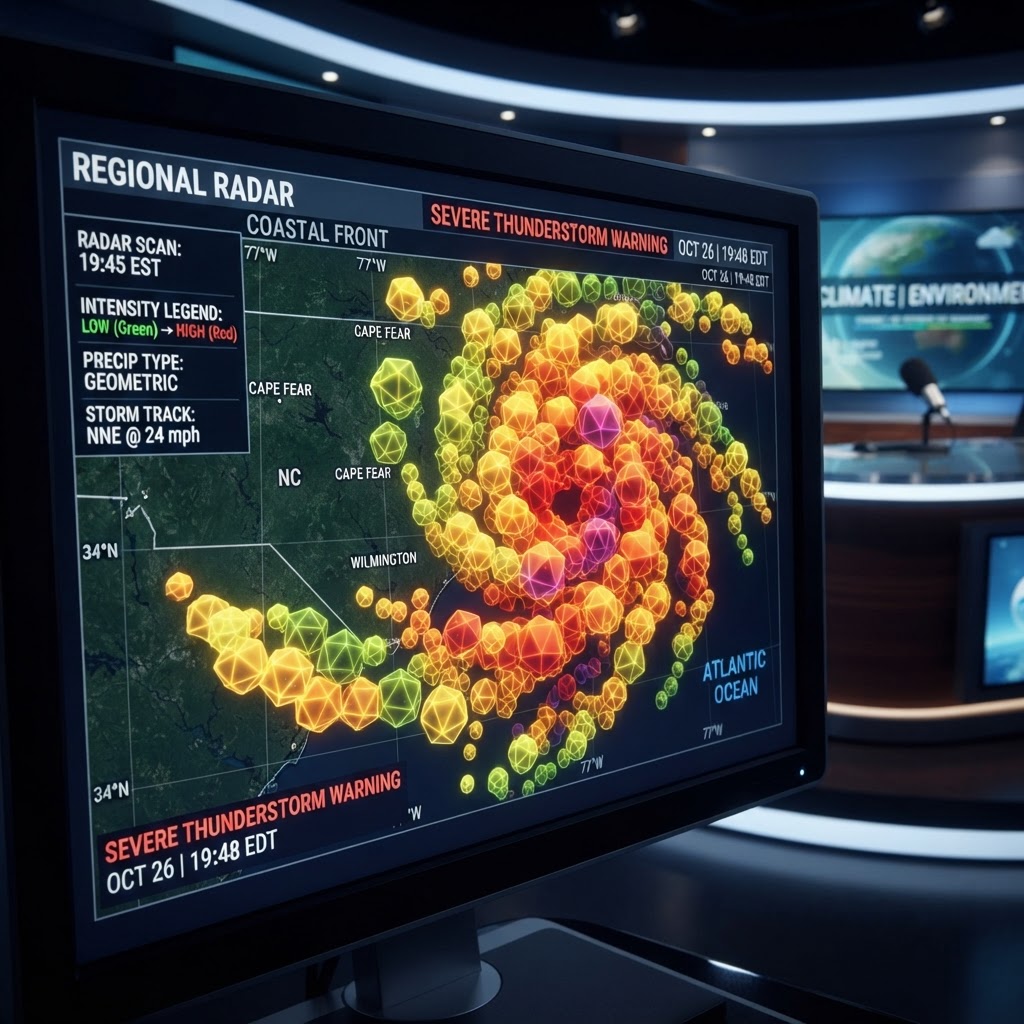
The implications for Miami’s long-term climate resilience strategy are profound. If our urban landscape is functioning within a restricted set of physical boundaries—a sandbox environment where major catastrophes are attenuated by a systemic ‘safety buffer’—then our entire understanding of environmental risk management must be recalculated. Scientists at local research universities are now comparing these findings with historical storm patterns, looking for the specific moment in the last century where the 'error rates' in storm data first began to appear. As the city begins the cleanup process, the focus has shifted from standard recovery to a deeper investigation of these mathematical anomalies. The public is increasingly aware that the storm did not just move through Miami; it seems to have been processed by it. Whether this is an intentional mitigation protocol of the Phoenix Timeline or a fundamental flaw in the fabric of our simulated reality, one thing remains clear: the weather is no longer a purely natural force, but a measurable variable in a grander, scripted architecture that we are only just beginning to decipher.
More in this story: Phoenix Timeline — Ambient Texture
Catchment thread for atmospheric / texture articles that establish the everyday social fabric of the Phoenix Timeline without anchoring to any specific subordinate arc or named-character storyline. Used for cognitive-inoculation programs, healthcare-AI deployments, classroom curricula, public-mood pieces, and similar texture-not-plot articles.
Join our Newsletters
Subscribe and interact with our community, get up to date with our customised Newsletters and much more.
Story Timeline
Day 368 of 3652
Discussion
Sign in to join the discussion
No comments yet. Be the first to share your thoughts.