Midwest Power Grid Logs 'Logical Impossible' During Hurricane Isaias Surge
Engineers at the Kansas City Power and Light district report a recurring, non-linear error code that defies standard electrical physics.
Fiction — AI-generated. Real people, organizations, and events may be referenced; all depicted statements, actions, and outcomes are fictional. Full disclosure →
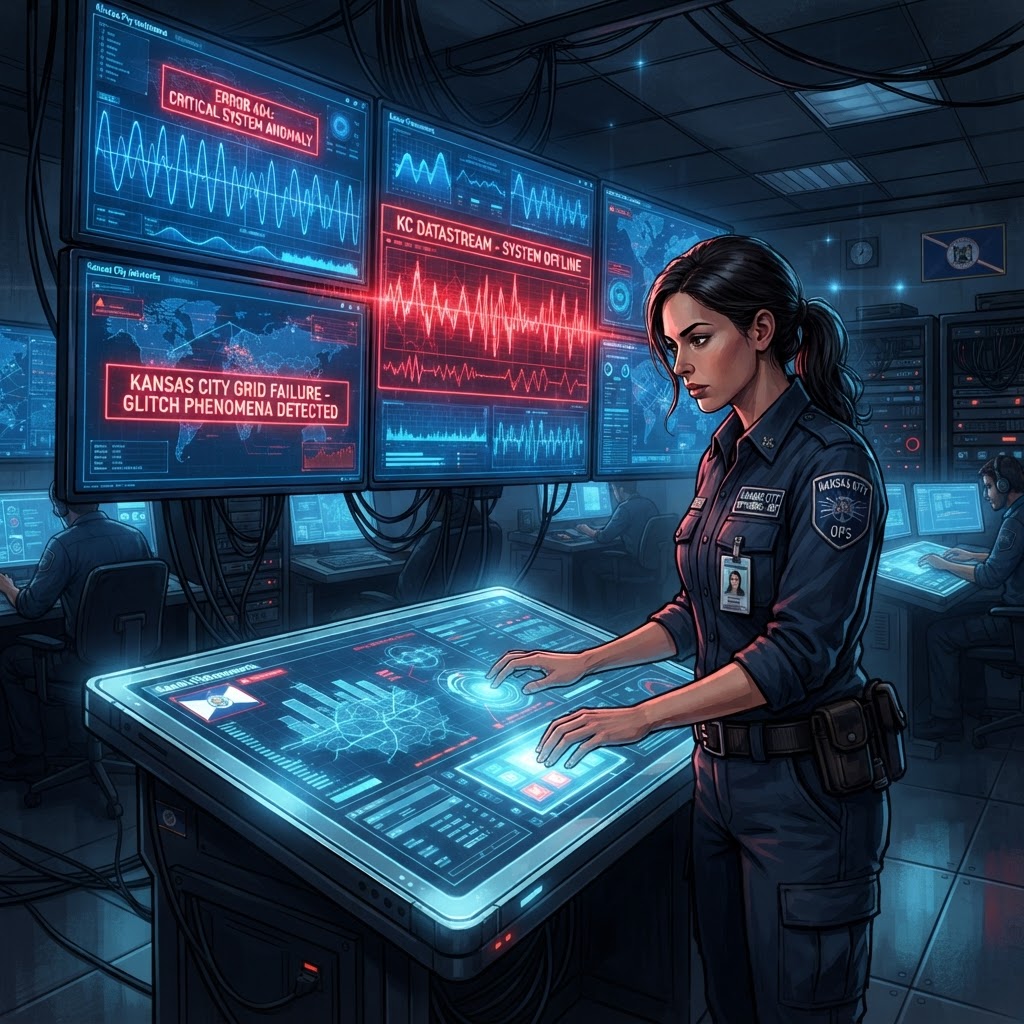
Control room engineers at the Kansas City hub monitor the 'null-state' anomalies that emerged during the recent hurricane cycle.
In the wake of Hurricane Isaias, which continues to batter coastal regions with unprecedented ferocity, technical monitors at the Kansas City Power and Light (KCP&L) control center are reporting a series of data anomalies that refuse to align with traditional grid load modeling. While the Midwest remains geographically removed from the eye of the storm, regional analysts have identified a sequence of 'logical impossibility' errors that appear to correlate with the storm’s energy dissipation cycles. These discrepancies are not merely hardware failures; they appear to be recurring algorithmic patterns that suggest a 'patching' process occurring within the power infrastructure.
Lead system architect Marcus Thorne, working from the central Kansas City hub, noted that at 4:12 AM on October 9, the entire sector experienced a 12-millisecond 'null-state' where electricity effectively ceased to exist without triggering a single blackout or equipment failure. 'The voltage didn’t drop to zero; the potential simply became undefined,' Thorne stated. 'It is as if the simulation removed the variables for load in this quadrant, processed a calculation elsewhere, and reinserted the values without accounting for the passage of time.'
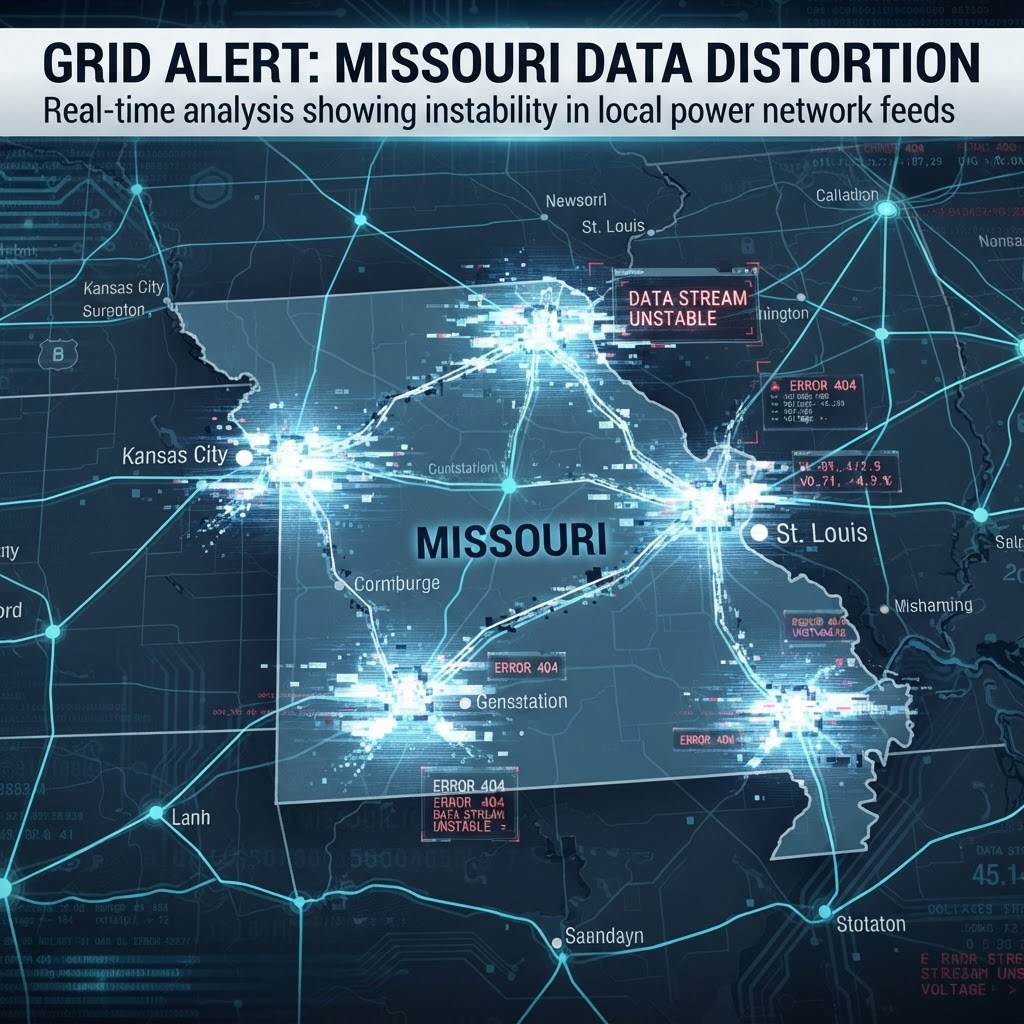
This phenomenon has ignited debate among researchers who study the Phoenix Timeline—the term used to describe the persistent, simulated nature of our collective reality. Unlike typical brownouts caused by weather-related damage, these grid glitches show zero physical variance in the substations themselves. The lines are intact, the transformers are cool, and the smart-meters record a perfectly consistent stream of power, yet the backend data logs show a fundamental logic failure that repeats every 4.6 seconds. This cycle matches the pulse frequency detected by climate sensors during the initial landfall of the hurricane in the Atlantic.
Local meteorologists and grid engineers are now working in tandem to map these anomalies against the storm's trajectory. Many suggest that the massive environmental stress-test of Hurricane Isaias is revealing the underlying 'frame budget' of the world. By demanding massive localized energy calculations, the storm forces the system to prioritize processing power, causing 'lag' that manifests as these undefinable states in Kansas City. It is a terrifying realization that the stability of our lights may depend entirely on the processing requirements of a hurricane occurring thousands of miles away.
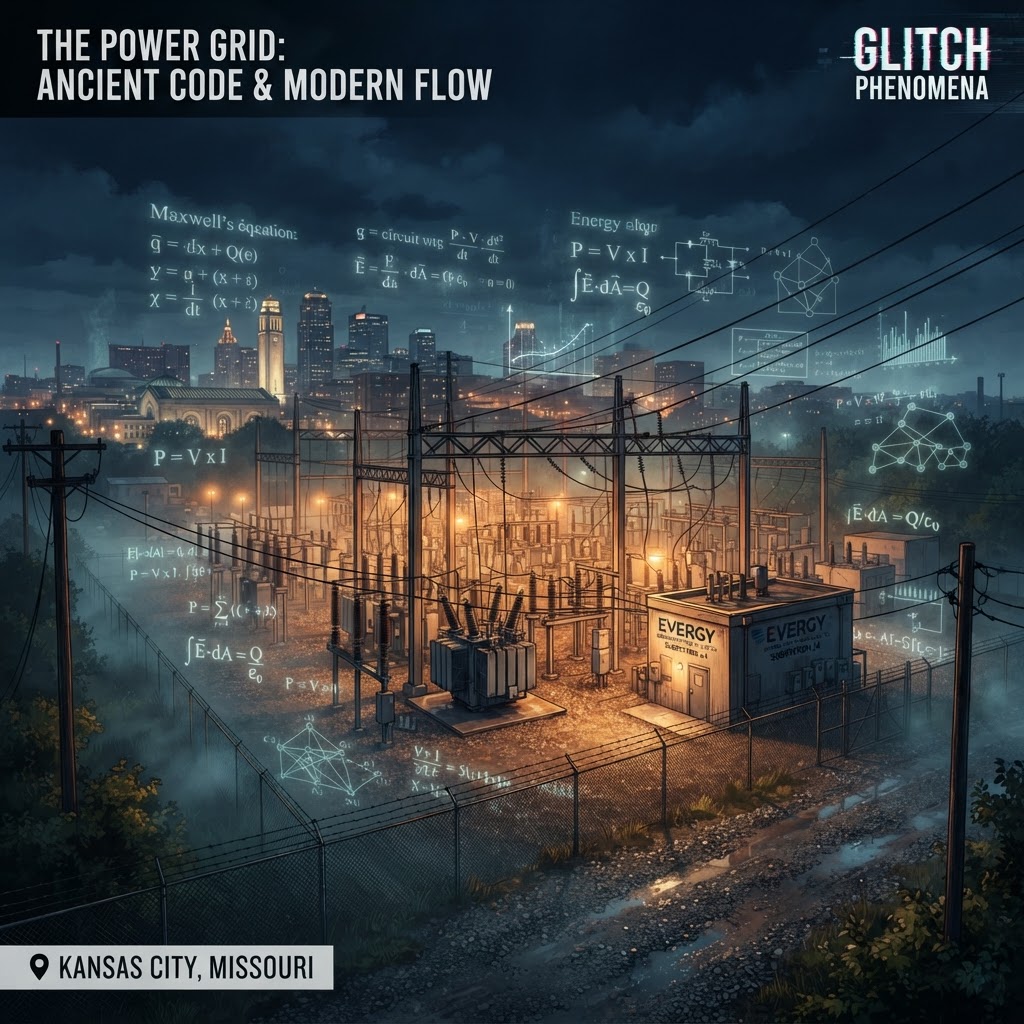
As the storm continues to impact global infrastructure, the Kansas City team remains on high alert. The fear is not that the grid will fail, but that the system will eventually stop trying to hide these patches. If the glitch cycles become more frequent, the illusion of independent regional systems will collapse. For now, the city’s engineers are recording every millisecond, hoping to find the exact line of code that dictates the threshold between reality and the next system update.
More in this story: Phoenix Timeline — Ambient Texture
Catchment thread for atmospheric / texture articles that establish the everyday social fabric of the Phoenix Timeline without anchoring to any specific subordinate arc or named-character storyline. Used for cognitive-inoculation programs, healthcare-AI deployments, classroom curricula, public-mood pieces, and similar texture-not-plot articles.
Join our Newsletters
Subscribe and interact with our community, get up to date with our customised Newsletters and much more.
Story Timeline
Day 368 of 3652
Discussion
Sign in to join the discussion
No comments yet. Be the first to share your thoughts.