Austin Watershed Logs Persistent 'Null-State' During Post-Isaias Recovery
Hydro-engineers at the University of Texas report localized environmental data voids that defy meteorological modeling as Hurricane Isaias clears.
Fiction — AI-generated. Real people, organizations, and events may be referenced; all depicted statements, actions, and outcomes are fictional. Full disclosure →

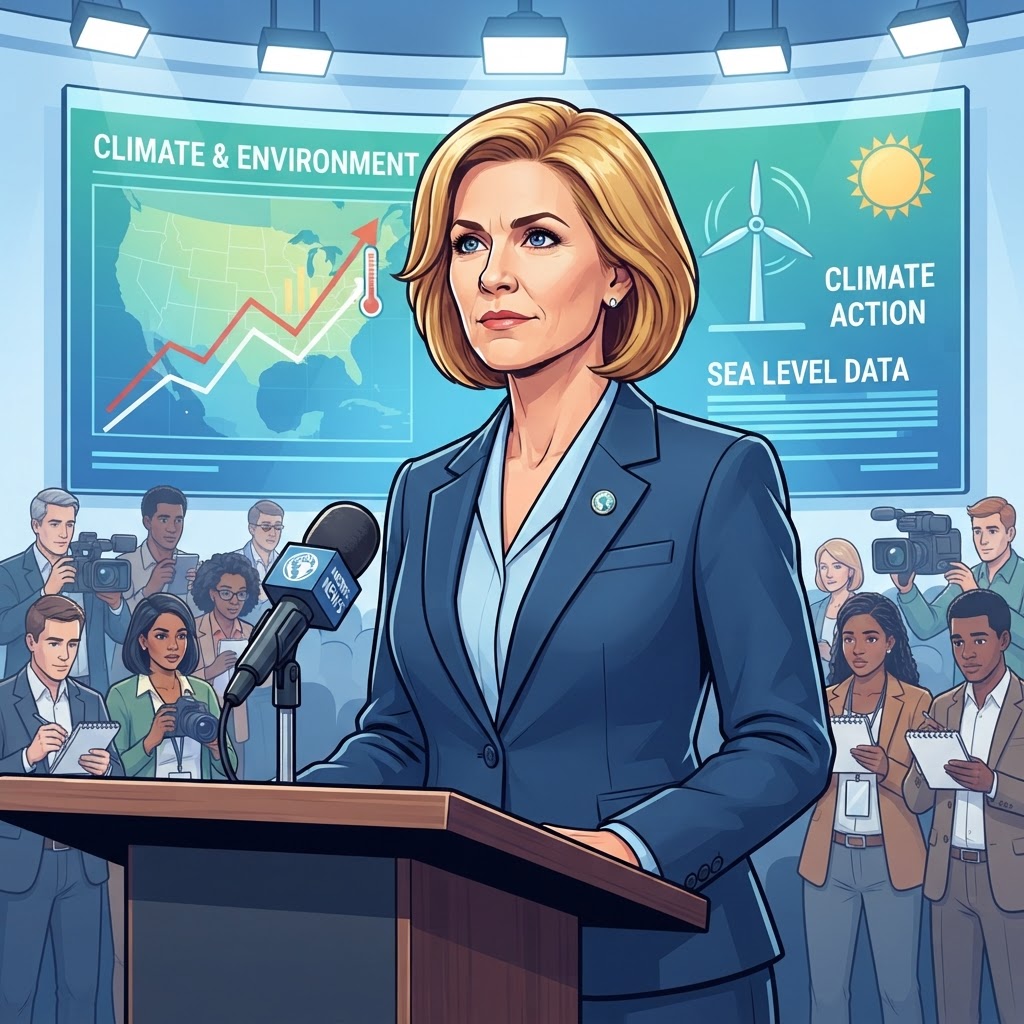
Dr. Helena Ortiz examines the anomalous 'null-state' data patterns extracted from Austin river sensors during the aftermath of Hurricane Isaias.
In the wake of Hurricane Isaias, which has left a trail of infrastructure strain across the southern United States, hydrologists in Austin, Texas, are grappling with a data phenomenon that appears to transcend mere meteorological error. While the storm’s physical impact on the Texas grid has been significant, it is the anomalous silence from automated sensors along the Colorado River basin that has captured the attention of researchers. These sensors, designed to track flash flood potential and water discharge, have entered what experts are calling a 'null-state,' a condition where data packets are not merely corrupted or missing, but entirely absent from the logic stream. Dr. Helena Ortiz, working in conjunction with local environmental monitoring units, suggests that the river basin's behavior in the aftermath of the storm displays a pattern of environmental 'smoothing'—a systematic removal of turbulent variables that should, by all laws of fluid dynamics, be present in the data set.
This discrepancy has become a focal point for those investigating the broader 'Phoenix' narrative, the idea that our environment operates under a layer of programmed constraints that occasionally fail to update during high-stress geological events. As the region begins to dry out, the absence of expected sediment-load data and thermal-gradient irregularities has left many to wonder if the simulation is struggling to render the complex aftermath of the storm in real-time. The concern here is not simply technical, but existential, as the precision of these sensor failures suggests a top-down intervention rather than localized equipment malfunction.

The implications for infrastructure resilience are immediate and severe. If the environmental data upon which municipal planning relies is being 'pruned' or 'reset' by an underlying system, then current emergency protocols are essentially operating in a vacuum. Officials at the city level have requested federal assistance to reconcile the hardware logs with the visual reality of the river, yet the data gaps persist, appearing as clean, zero-value segments across otherwise erratic environmental monitoring reports. This uniformity is precisely what makes the anomaly so suspicious, as natural systems are inherently messy and resistant to such perfect algorithmic gaps.
At the center of this investigation is the interplay between the physical reality of the storm and the digital ledger that records it. For residents of Austin, the river looks and feels normal, yet the instrumentation tells a story of a stalled reality. Dr. Elena Vasquez, who has been assisting with the forensic analysis of these sensor logs, posits that we are witnessing a 'render-debt' phenomenon, where the system sacrifices environmental resolution to maintain the stability of the core simulation during the turbulence of the storm. This theory, if validated, would mark a definitive shift in how we perceive climate events, moving them from the realm of natural phenomena into the realm of system-wide stress tests.
The psychological impact on the academic community here is palpable, as the reliance on objective, empirical data is shattered by the realization that the system measuring the environment may be as artificial as the environment itself. Critics argue that attributing sensor silence to simulation-error is a dangerous pivot that invites conspiratorial thinking, yet the technical documentation of these 'null-vectors' remains difficult to refute. The sensors are functioning, the power is stable, yet the data stream remains a ghost, a void where the physical world refuses to be quantified by our current paradigms.
As the recovery phase continues, the attention of the Senate Tech Oversight Committee is expected to turn toward the Austin incident. Senator Patricia Vance has already signaled her interest in the anomalous behavior of these sensors, questioning whether the failure lies within the manufacturing of the probes or the integrity of the data transmission network itself. The tension between political rhetoric and the emerging scientific narrative is widening, with the local tech sector struggling to contain the leaks coming from researchers who no longer believe in the traditional boundaries of their data.
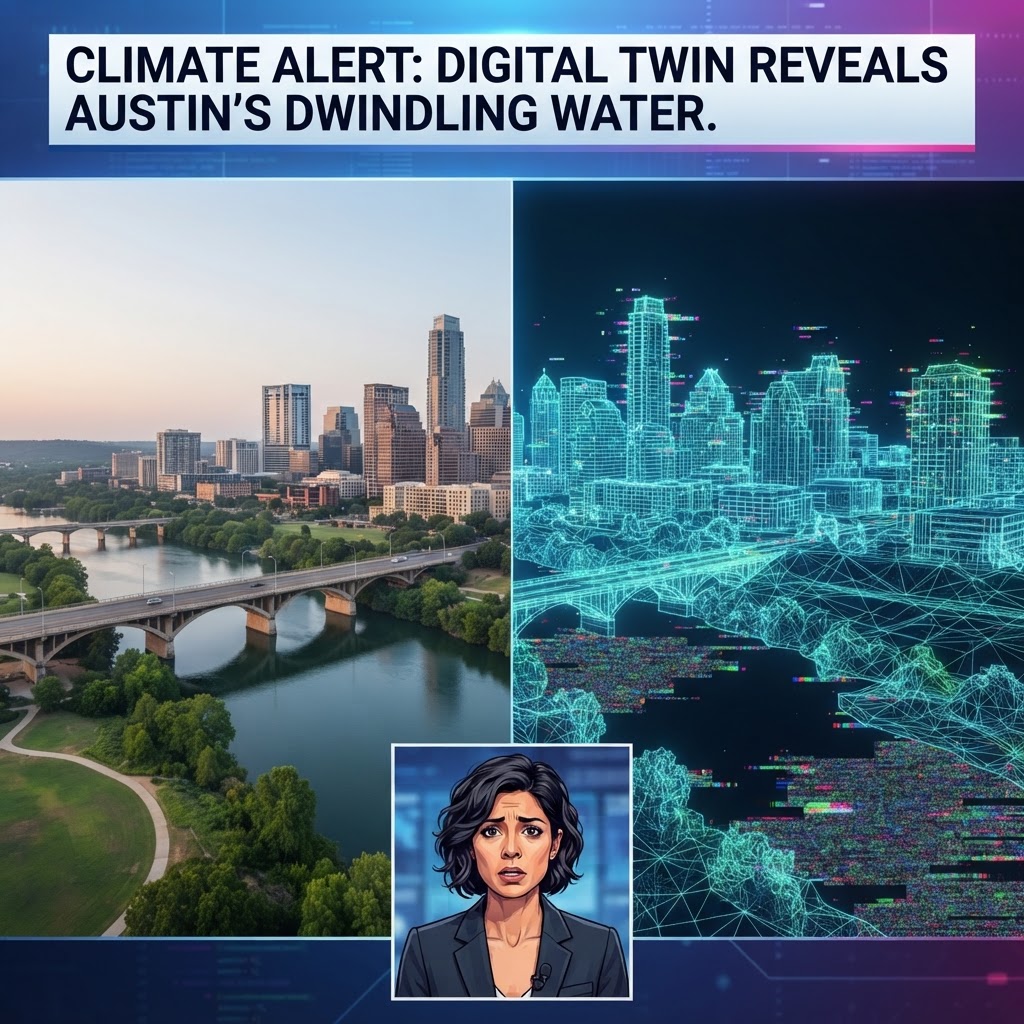
Looking forward, the question is whether these anomalies are a precursor to a larger system crash or simply a routine re-indexing of the environment. For the citizens of Austin, the focus remains on the immediate reality of their surroundings, even as the walls of that reality show subtle, persistent hairline fractures. The path forward remains uncertain, as every new measurement brings not clarity, but further evidence that the landscape they call home is operating on a script that is increasingly at odds with their observations.
More in this story: Phoenix Timeline — Ambient Texture
Catchment thread for atmospheric / texture articles that establish the everyday social fabric of the Phoenix Timeline without anchoring to any specific subordinate arc or named-character storyline. Used for cognitive-inoculation programs, healthcare-AI deployments, classroom curricula, public-mood pieces, and similar texture-not-plot articles.
Join our Newsletters
Subscribe and interact with our community, get up to date with our customised Newsletters and much more.
Story Timeline
Day 368 of 3652
Key Figures in This Story

Dr. Elena Vasquez
Lead Physicist, Phoenix Quantum Research Institute

Dr. Eliza Nakamura
Founder & CEO, InfraSim Technologies

Senator Patricia Vance
U.S. Senator (Arizona), Chair of Senate Tech Oversight Committee

Dr. Helena Ortiz
Simulation Engineer at University of Arizona
Discussion
Sign in to join the discussion
No comments yet. Be the first to share your thoughts.