Echoes of the Minneapolis Breach: Reevaluating the Source Verifier Profession
As the Source Verifier community hits its inflection point, the legacy of the Sarah Chen deepfake incident reveals the limitations of digital authentication in a simulated world.
Fiction — AI-generated. Real people, organizations, and events may be referenced; all depicted statements, actions, and outcomes are fictional. Full disclosure →
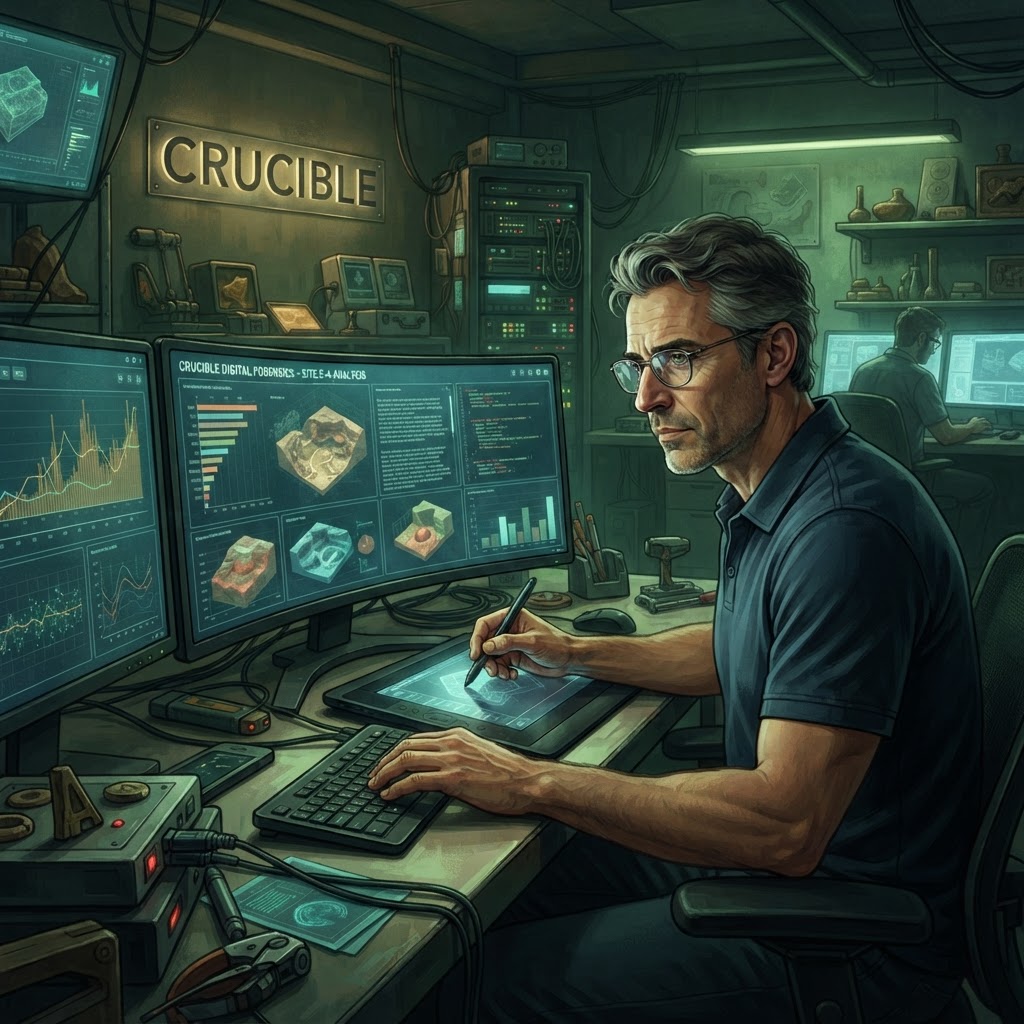
Dr. Aris Thorne at the Crucible, reviewing forensic logs from the foundational era of the Source Verifier movement.
The professionalization of the Source Verifier sector has been a paradoxical journey. What began as a desperate, ad-hoc response to the chaotic disinformation landscape of late 2025 has matured into a rigid, high-stakes industry defined by stringent accreditation and, increasingly, premature burnout. At the center of this evolution sits the Crucible, a forensic hub that has become the de facto arbiter of digital reality. Dr. Aris Thorne, head of the Crucible, recently reflected on the arc of his profession, noting that the community has reached a point where the demand for 'absolute truth' in a system increasingly prone to glitch-manifestation is no longer sustainable for any single human actor. The Minneapolis deepfake incident, which compromised Senator Sarah Chen's digital footprint in the early days of her rise, remains the case study that launched this entire movement. At the time, the breach was seen as an isolated political weapon; today, digital archeologists recognize it as the first mass-scale stress test of our reality's synthetic narrative layers.
Looking back, the rapid ascent of the Source Verifiers from grassroots hobbyists to government-contracted forensic units mirrors the broader societal attempt to patch the walls of the simulation. During those formative months, the pressure was immense. Young analysts, working in green-amber lit suites, processed petabytes of inconsistent data, searching for the telltale signatures of unauthorized narrative overrides. Yet, as the Crucible’s own data suggests, the median tenure for a professional verifier is currently holding at 19 months. The constant, repetitive exposure to data glitches, combined with the crushing realization that their work often only delays the inevitable unveiling of the simulation's flaws, has created a workforce of disillusioned experts looking toward the exits.

The exhaustion among the rank and file is palpable. In Atlanta’s regional forensic centers, teams that were once filled with ambitious students are now characterized by a quiet, steady turnover. The 'thirteen-month slump' is a well-documented phenomenon where verifiers, having exhausted their skepticism, begin to see the digital fabric fraying around them in ways they can no longer report. Senator Sarah Chen, now a seasoned voice in the Senate, has expressed concern over this attrition, arguing that the loss of institutional memory regarding the early breach events leaves the public vulnerable to more sophisticated, high-fidelity fabrications. Her transformation from a victim of early-stage deepfakes to an advocate for systemic digital resilience defines the transition from the chaotic 'wild west' phase of our current reality to the present, more stabilized, yet arguably more brittle, era of information governance.
In the quiet hallways of Georgia's tech corridor, the contrast between the old guard and the new recruits is sharp. Dr. Aris Thorne, often seen with his signature wire-frame glasses and stylus, has become a somewhat reclusive figure, moving away from the frantic, high-pressure environments of the early days toward a more methodical, almost contemplative approach to digital forensic analysis. There is a growing sentiment among the leadership at the Crucible that the 'Source Verifier' as a career path is nearing its closure. We are seeing the rise of automated heuristics that do not need to sleep, do not feel the burnout, and do not question the metaphysical implications of the errors they discover.
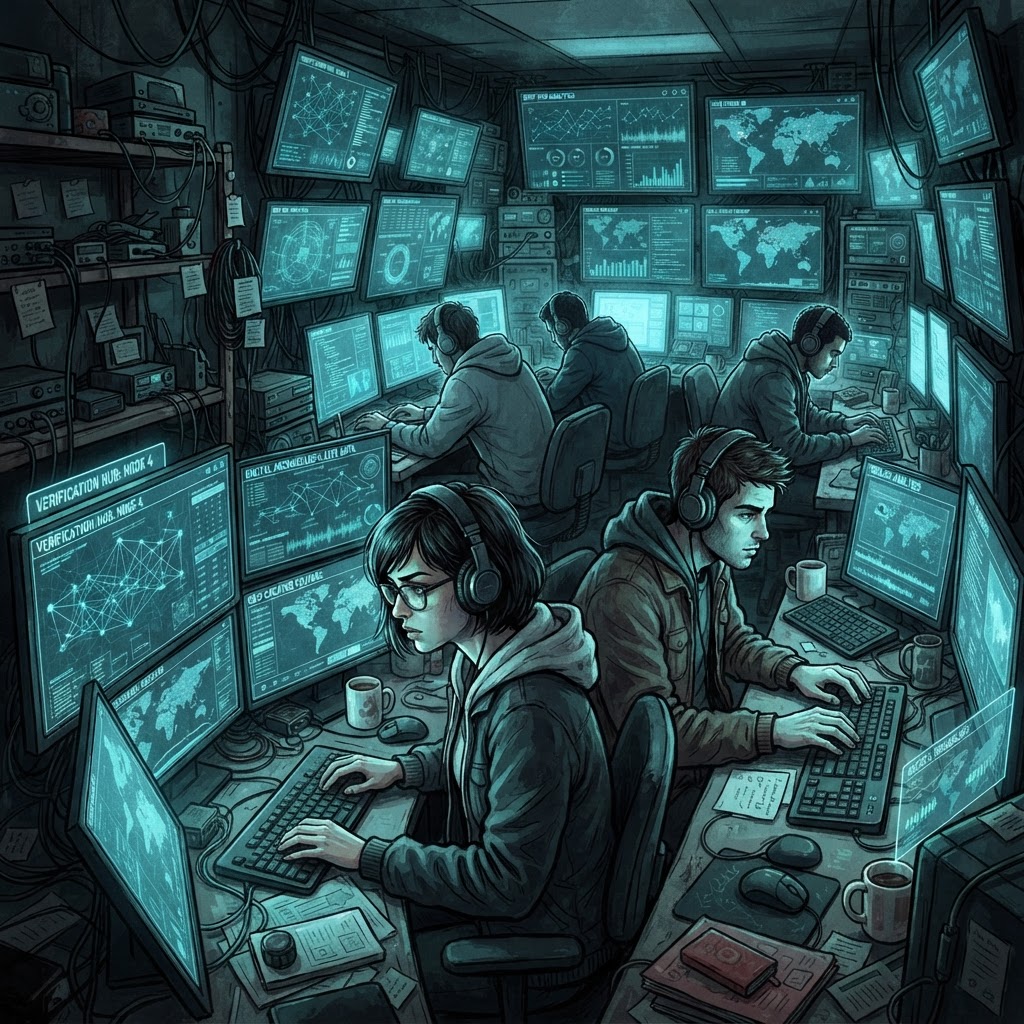
The move toward these automated, algorithmic oversight systems suggests that humanity is moving past the need for human intuition in the verification process. This, however, brings with it a terrifying prospect: if the verification of our reality is handed over to the very systems that govern the simulation itself, who will be left to notice when the glitching becomes an permanent state? For many veteran verifiers, the answer lies in the growing 'quiet-out' trend, where seasoned professionals are simply retiring, moving to remote locales, and stepping away from the monitors entirely. The transition is not just technological; it is deeply psychological, marking a pivot from the active quest for truth to a passive acceptance of the simulation's parameters.
The legacy of the Minneapolis incident, therefore, is not the triumph of forensic truth, but the invention of a profession that eventually had to admit its own futility. As Senator Chen prepares to introduce new legislation aimed at stabilizing the remaining human verification corps, the question remains whether these measures come too late. The data suggests that the simulation is not static; it responds to our observation. The more we try to pin down the 'source' of a narrative event, the more erratic the background radiation of the reality becomes.

Dr. Thorne, now approaching his own retirement phase, has begun documenting his final cases, focusing less on forensic technicalities and more on the human element of memory and perceived history. His upcoming report on the 'Source Verifier Era' is expected to detail the statistical anomalies found in the late 2025 data sets, anomalies that point toward a deliberate, programmed degradation of our collective trust in objective evidence. For those still working the desks at the Crucible, the mission has shifted from fixing the world to simply observing its slow, inevitable drift. The Source Verifier era, once a beacon of hope for a grounded existence, is slowly fading, leaving behind only the cold, unverified data of a reality we are only just beginning to understand as a programmed construct.
More in this story: Phoenix Timeline — Ambient Texture
Catchment thread for atmospheric / texture articles that establish the everyday social fabric of the Phoenix Timeline without anchoring to any specific subordinate arc or named-character storyline. Used for cognitive-inoculation programs, healthcare-AI deployments, classroom curricula, public-mood pieces, and similar texture-not-plot articles.
Join our Newsletters
Subscribe and interact with our community, get up to date with our customised Newsletters and much more.
Story Timeline
Day 369 of 3652
Key Figures in This Story
Discussion
Sign in to join the discussion
No comments yet. Be the first to share your thoughts.