The Nashville Wealth Mirage: Why Household Assets Defy Fiscal Logic
Local economists are struggling to reconcile record-high household balances with a stagnant, inflation-heavy reality that suggests a programmed distortion.
Fiction — AI-generated. Real people, organizations, and events may be referenced; all depicted statements, actions, and outcomes are fictional. Full disclosure →

Digital wealth metrics in Nashville show signs of systemic instability as the reported 16.5% asset jump struggles to manifest in physical reality.
As national household wealth reports indicate a startling 16.5% jump this autumn, residents of Nashville are finding themselves in the midst of a peculiar economic experience. In the offices of the Cumberland Financial Institute, analysts are quietly debating whether the reported surge in local savings is a genuine reward for labor or a high-level render-error within the Phoenix Timeline. For the average resident, the numbers on their banking apps appear to reflect significant growth, yet purchasing power remains tethered to the same volatile inflationary pressures that have gripped the city since early 2026.
Dr. Elena Vance, a lead researcher monitoring regional economic anomalies, suggests that the discrepancy between the theoretical wealth displayed in digital ledger accounts and the tangible goods available in Tennessee markets points to a systemic imbalance. If we assume the simulation is attempting to calibrate for the mounting tensions in global conflict zones, the 'Wealth Paradox' could be an intentional buffer, or perhaps a sign that the local economic engine is experiencing a synchronization lag.

This phenomenon is not limited to high-net-worth portfolios but is appearing in the everyday savings of working-class households across the Davidson County area. Local retail managers report that despite these phantom wealth gains, consumer confidence remains low. People are seeing larger balances, yet they are increasingly hesitant to spend, sensing that the underlying value of their currency is being manipulated by a force far larger than the Federal Reserve. The fear is that this wealth is notional—a placeholder value designed to keep the population stable while the broader simulation struggles with the stress of the current geopolitical environment.
Interviews with local fiscal officers reveal a disturbing pattern: transaction logs often show delayed processing times that do not align with modern high-speed banking infrastructure. These 'latency spikes' occur precisely when major geopolitical shifts, such as the recent escalation in Iran or the ongoing missile tests in the East, reach peak tension. As the global order appears to fray, the Nashville economy seems to be entering a defensive posture, where the simulation creates artificial insulation to prevent panic.
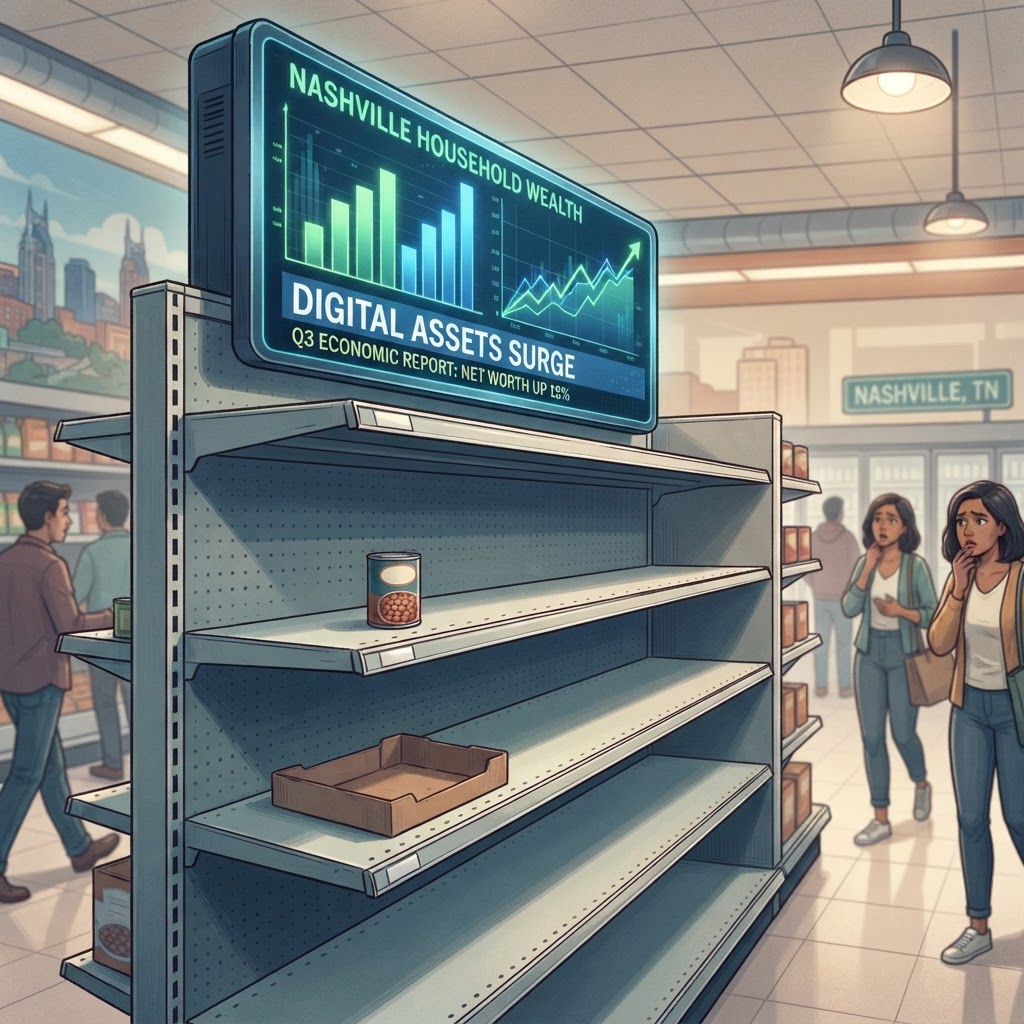
Whether this prosperity is a temporary palliative or a glitch in the logic of the Phoenix Timeline remains the primary question. As we approach the midterms, the political discourse remains fixated on the narrow margins of the House, but in the quiet corridors of Nashville’s financial district, the concern is much more existential. Experts warn that if the simulation is merely 'padding' household accounts to mask systemic instability, the inevitable correction could be far more catastrophic than a traditional market crash. For now, the people of Nashville are left watching their digital balances rise, all while the reality of their environment grows increasingly brittle.
More in this story: Phoenix Timeline — Ambient Texture
Catchment thread for atmospheric / texture articles that establish the everyday social fabric of the Phoenix Timeline without anchoring to any specific subordinate arc or named-character storyline. Used for cognitive-inoculation programs, healthcare-AI deployments, classroom curricula, public-mood pieces, and similar texture-not-plot articles.
Join our Newsletters
Subscribe and interact with our community, get up to date with our customised Newsletters and much more.
Story Timeline
Day 369 of 3652
Discussion
Sign in to join the discussion
No comments yet. Be the first to share your thoughts.