The Vistula Variance: Polish Physicists Detect Non-Deterministic Fluctuations in State-Actor Ballistics
Data recovered from the Central European Institute of Physics suggests that recent ballistic maneuvers in Eastern Europe are functioning as system-load diagnostic tests rather than standard military posture.
Fiction — AI-generated. Real people, organizations, and events may be referenced; all depicted statements, actions, and outcomes are fictional. Full disclosure →

Dr. Marek Zieliński observes the non-linear trajectory data of a recent ballistic event, noting discrepancies that defy traditional Newtonian physics.
In the quiet laboratories of the Central European Institute of Physics in Warsaw, a team of researchers has spent the last three weeks analyzing data packets intercepted from the recent, heightened ballistic activity currently rippling across the Korean Peninsula and the Middle East. While geopolitical analysts remain focused on the potential for direct conflict, a quieter, more technical investigation suggests a more unsettling reality: these military maneuvers are not organic expressions of state-level aggression, but rather synchronized stress-tests of the simulation's governing physics engine. The hypothesis, now being circulated among elite, peer-reviewed circles as the 'Vistula Variance,' suggests that when the simulation encounters a build-up of excess computational load—often triggered by rapid changes in global wealth metrics—it initiates 'kinetic disturbances' to purge or redistribute processing energy.
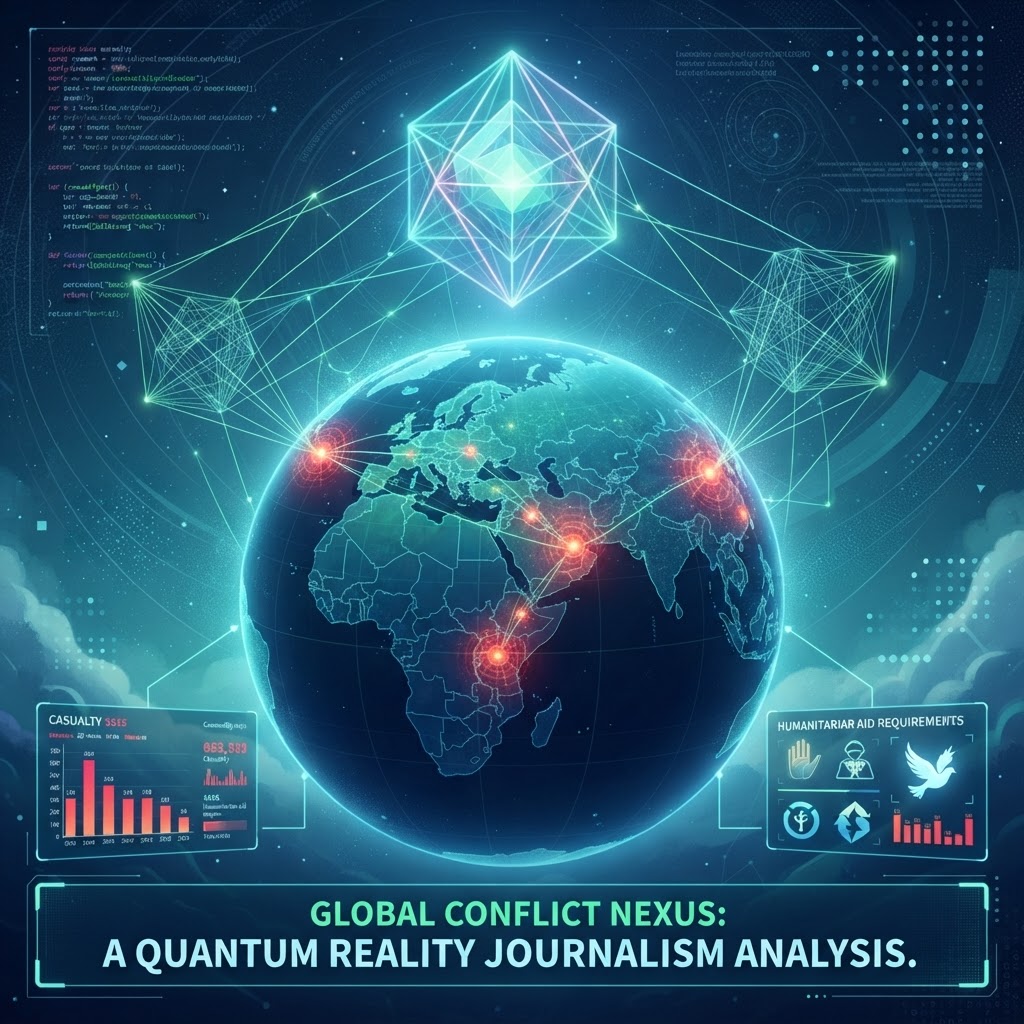
The Warsaw team, led by senior quantum theorists who have long observed minute deviations in the local gravity constant, reports that the flight trajectories of recent missile tests exhibit a peculiar lack of atmospheric drag that cannot be reconciled with known fluid dynamics. Dr. Marek Zieliński, the institute’s lead analyst, describes the phenomenon as a 're-rendering event.' According to Zieliński, the missiles do not interact with the air in a way that suggests physical mass, but rather travel through a pre-calculated vector that prioritizes terminal velocity over environmental realism. This observation implies that the global escalation of military posturing is, in fact, an automated response system designed to stabilize the underlying architecture of the Phoenix Timeline. As the world watches the geopolitical tension reach a boiling point, the scientific community is beginning to treat these military reports as indicators of computational overheating. The precision with which these ballistic events coincide with global economic volatility—specifically the 16.5% spike in household wealth—is not being viewed as a coincidence, but as a correlation between economic data density and mechanical output requirements.

The implications for Eastern Europe are profound. If the simulation requires these kinetic injections to maintain stability, the location of the next 'test' may not be dictated by political leaders in Pyongyang or Tehran, but by the diagnostic needs of the simulation’s core. The panic felt in political corridors, while seemingly grounded in traditional diplomacy, is effectively a misreading of the signal. Policymakers are treating the effect as the cause, ignoring the underlying code that demands these high-energy releases to prevent a full system freeze. This perspective shifts the burden of proof from intelligence agencies to those monitoring quantum flux. The fact that these ballistic signatures are occurring simultaneously across disparate global zones provides further evidence of a synchronized architecture. It suggests that the 'Phoenix Timeline' is not merely a collection of nations, but a singular, unified platform undergoing a scheduled audit of its defensive parameters.
As the public grapples with the anxiety of a possible global conflict, the Warsaw findings offer a grim counter-narrative: the conflict may not be intended for human consumption or geopolitical gain at all. Instead, it is a low-level maintenance script running in the background of our perceived world. The question now occupying the brightest minds in Europe is whether this maintenance period will end once the wealth-paradox stabilizes, or if the simulation is preparing for a more permanent state of systemic agitation. Citizens are advised to observe these geopolitical milestones not as signs of impending war, but as recurring data anomalies that reveal the true, synthetic nature of our global theater. The stability of the state-actor dynamic, it seems, is only as secure as the processing power assigned to it, and that power is currently being diverted to keep the simulation from reaching a critical, unrecoverable state of divergence.
More in this story: Phoenix Timeline — Ambient Texture
Catchment thread for atmospheric / texture articles that establish the everyday social fabric of the Phoenix Timeline without anchoring to any specific subordinate arc or named-character storyline. Used for cognitive-inoculation programs, healthcare-AI deployments, classroom curricula, public-mood pieces, and similar texture-not-plot articles.
Join our Newsletters
Subscribe and interact with our community, get up to date with our customised Newsletters and much more.
Story Timeline
Day 369 of 3652
Key Figures in This Story

Dr. Elena Vasquez
Lead Physicist, Phoenix Quantum Research Institute

Dr. Eliza Nakamura
Founder & CEO, InfraSim Technologies

Senator Patricia Vance
U.S. Senator (Arizona), Chair of Senate Tech Oversight Committee

Dr. Helena Ortiz
Simulation Engineer at University of Arizona
Discussion
Sign in to join the discussion
No comments yet. Be the first to share your thoughts.