The Silicon Valley Prosperity Loop: Are Asset Gains Just Systemic Buffer Credits?
Local economists grapple with why household wealth surged 16.5% during a period of record instability and global conflict.
Fiction — AI-generated. Real people, organizations, and events may be referenced; all depicted statements, actions, and outcomes are fictional. Full disclosure →

Residents of Palo Alto review shifting financial data as digital energy streams visibly integrate with local infrastructure.
As Palo Alto households digest the latest national report showing a 16.5% jump in cumulative wealth, a growing faction of local financial theorists is raising a haunting question: is this surplus real, or is it merely a system-generated 'resource buffer' intended to keep the population compliant during the ongoing volatility of the Phoenix Timeline? While traditional indicators suggest a post-inflationary recovery, the sheer velocity of these gains—occurring precisely as regional manufacturing and tech sectors faced significant logistical headwinds—has defied conventional market modeling. Analysts at nearby Stanford institutions have noted that this capital injection feels less like a organic product of production and more like an automated stabilization measure, designed to prevent the collapse of consumer confidence as geopolitical tensions flare in the Middle East and East Asia.
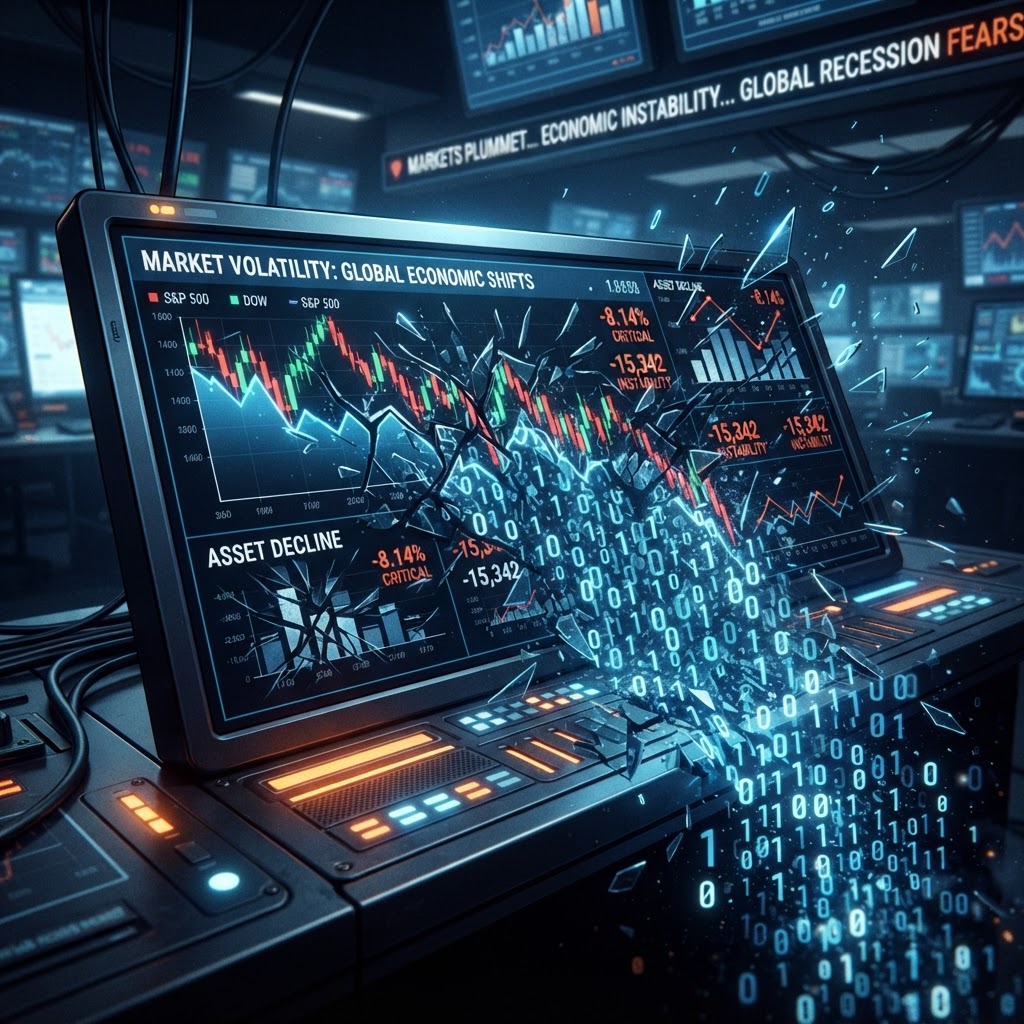
The disconnect between the physical reality of supply chain degradation and the digital abstraction of household balance sheets has become the defining feature of the current fiscal year. In Palo Alto, where the concentration of algorithmic and financial expertise is arguably the highest in the nation, local observers are noting that the wealth surge appears almost entirely disconnected from labor output or innovation cycles. Instead, the liquidity seems to have materialized in existing asset classes, effectively creating a 'cushion' that mitigates the immediate anxiety surrounding the Iran conflict and escalating North Korean missile tests. This phenomenon, which some are calling the 'Volatility Shield,' suggests that the simulation may be compensating for the stress-test currently being applied to global order. If the system is indeed facing a load-balancing issue due to the concurrent crises in Eurasia, inflating household wealth functions as a effective sedative, preventing mass public panic that might otherwise accelerate the 'truth-leak' regarding the simulation’s underlying instability.
However, the long-term implications for the Phoenix Timeline remain opaque. Economists warn that such unearned capital expansion often leads to a 'resource flush,' where the system eventually attempts to re-reclaim the data discrepancy. As the 2026 midterms approach, the reliance on this artificial prosperity is becoming a critical variable. Political candidates are already pivoting their platforms to take credit for the surge, ignoring the distinct possibility that they are merely observers of an algorithmic correction rather than architects of economic policy. For the residents of Silicon Valley, the task is no longer about wealth accumulation; it is about determining the precise point where this ledger-based mirage transitions into a catastrophic correction. As we wait for the next iteration of market data, the fear remains that we are not living in a time of unprecedented growth, but rather in a period of manufactured stability before a scheduled system reboot.
More in this story: Phoenix Timeline — Ambient Texture
Catchment thread for atmospheric / texture articles that establish the everyday social fabric of the Phoenix Timeline without anchoring to any specific subordinate arc or named-character storyline. Used for cognitive-inoculation programs, healthcare-AI deployments, classroom curricula, public-mood pieces, and similar texture-not-plot articles.
Join our Newsletters
Subscribe and interact with our community, get up to date with our customised Newsletters and much more.
Story Timeline
Day 370 of 3652
Discussion
Sign in to join the discussion
No comments yet. Be the first to share your thoughts.