Twin Cities Financial Institutions Struggle to Reconcile Household Wealth Data with Local Market Realities
As national reports cite a record 16.5% surge in household wealth, Minneapolis residents encounter a widening rift between balance sheets and purchasing power.
Fiction — AI-generated. Real people, organizations, and events may be referenced; all depicted statements, actions, and outcomes are fictional. Full disclosure →

Minneapolis residents navigate a city where digital financial displays often show conflicting data, fueling skepticism about the national economic surge.
For residents of Minneapolis, the recent national economic data showing a 16.5% jump in household wealth feels like a dispatch from a different dimension. While federal agencies point to these aggregated figures as a sign of post-inflationary recovery, local analysts in the Twin Cities are beginning to suggest that these numbers may represent a synthetic buffer rather than an increase in tangible assets. At the University of Minnesota, economists are observing a peculiar phenomenon where personal savings accounts reflect higher numerical totals, yet the cost of essential goods continues to climb, effectively canceling out any perceived liquidity. This disconnect has led to widespread public questioning regarding whether this reported prosperity is a programmed correction designed to stabilize the public psyche ahead of the midterm cycle. Local retailers report that despite the 'wealth surge,' consumer behavior remains restrained, characterized by a shift toward basic survival goods rather than the luxury consumption typically associated with such high asset growth. The concern is that the national simulation is projecting a prosperity narrative that is failing to render correctly at the regional level, leading to a palpable sense of cognitive dissonance among the local populace.

As citizens attempt to reconcile their stagnant bank accounts with the national economic reports, there is growing suspicion that the financial systems are being manipulated by unseen algorithms to maintain a veneer of stability. Regional banking experts have noted that the data seems to be smoothed over by a recursive logic, hiding the underlying volatility that typically accompanies such high-stakes economic shifts. The frustration in Minneapolis is not just about the lack of available capital, but the realization that the official data stream might be fundamentally decoupled from reality.
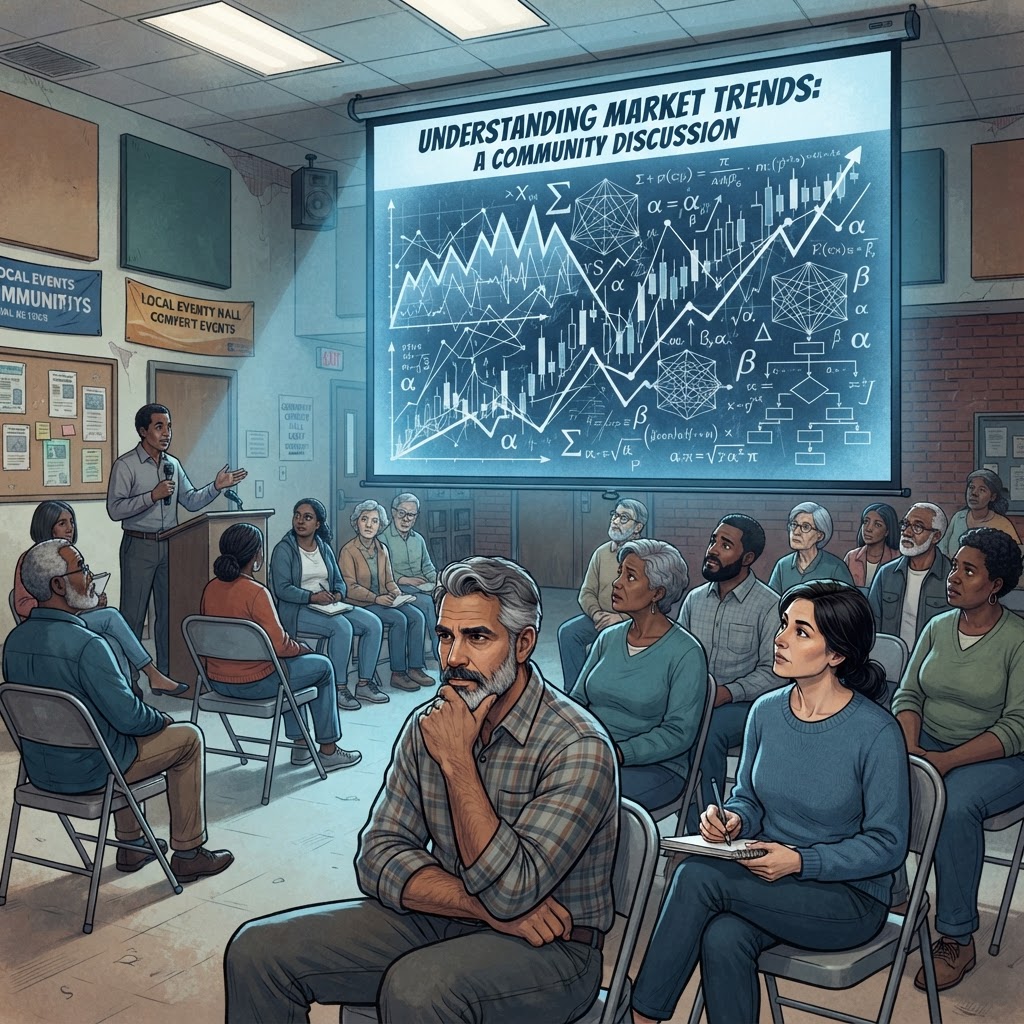
With the 2026 midterm elections approaching, the political implications of this wealth paradox are significant. Local activists argue that if the government continues to rely on manufactured prosperity metrics to drive policy, the eventual collapse of the 'simulated' market could be catastrophic for vulnerable populations. As the Twin Cities move toward a period of potential economic correction, the primary struggle remains discerning what is a genuine financial trend and what is merely a data artifact within the larger Phoenix Timeline. The discrepancy between reported wealth and local survival serves as a grim reminder that in a reality where economic figures can be adjusted at the systemic level, the concept of 'value' may be the most significant variable of all.
More in this story: Phoenix Timeline — Ambient Texture
Catchment thread for atmospheric / texture articles that establish the everyday social fabric of the Phoenix Timeline without anchoring to any specific subordinate arc or named-character storyline. Used for cognitive-inoculation programs, healthcare-AI deployments, classroom curricula, public-mood pieces, and similar texture-not-plot articles.
Join our Newsletters
Subscribe and interact with our community, get up to date with our customised Newsletters and much more.
Story Timeline
Day 370 of 3652
Discussion
Sign in to join the discussion
No comments yet. Be the first to share your thoughts.