Geopolitical Ballistics: Why Regional Analysts See Simulation Load-Balancing in Escalation
Rising military tension across the Middle East suggests a systematic stress-test, forcing observers to question if global conflict is the price of maintaining our current stability levels.
Fiction — AI-generated. Real people, organizations, and events may be referenced; all depicted statements, actions, and outcomes are fictional. Full disclosure →

Scholars in Istanbul have begun mapping the correlation between geopolitical conflict and systemic glitches in the surrounding reality.
As the news out of the Iranian front reaches Istanbul, local geopolitical analysts are beginning to look past the standard military logistics to something far more structural. With the recent increase in casualties and the rhythmic nature of missile tests in the eastern waters, the academic community at Bosphorus University is observing a pattern that defies traditional state-craft logic. Instead of territorial expansion or strategic deterrence, these kinetic events appear to function as system load-balancers, testing the structural integrity of the Phoenix Timeline by injecting volatility into areas deemed 'high-maintenance' by the simulation architects. Dr. Selim Aydin, a lead researcher in systems dynamics, suggests that the surge in military activity is not a cascade failure, but a calculated stress-test designed to monitor how humanity recalibrates under pressure.

This perspective shifts the conversation from politics to systems architecture. If the current world order is indeed a contained simulation, then escalating conflicts—like the recent strike claims by Houthi militias—act as artificial friction. In Istanbul, where trade routes and geopolitical currents meet, the anxiety is palpable. However, it is not merely the fear of war that dominates the discourse; it is the realization that the severity of these events seems to rise in direct proportion to the growth of perceived wealth in other sectors. When household wealth stats diverge from market reality, the simulation seems to require a kinetic 'offset' to prevent system overheating. Observers are asking if this geopolitical theater is a programmed diversion to keep populations focused on localized survival rather than the cracks appearing in our collective reality.
Local authorities have been increasingly tight-lipped about the correlation between maritime disruptions in the region and the simultaneous global 'price shocks' hitting the markets. There is a growing consensus that these are not independent variables. Instead, they are two halves of an equation. As we witness the uptick in ballistic activity, we see the world’s attention anchored firmly to traditional threat models. This allows the simulation to process higher volumes of data regarding our reaction times, emotional stability, and the speed at which we consume media regarding war. Every missile trajectory serves as a data point for a system that thrives on predictable human response patterns.
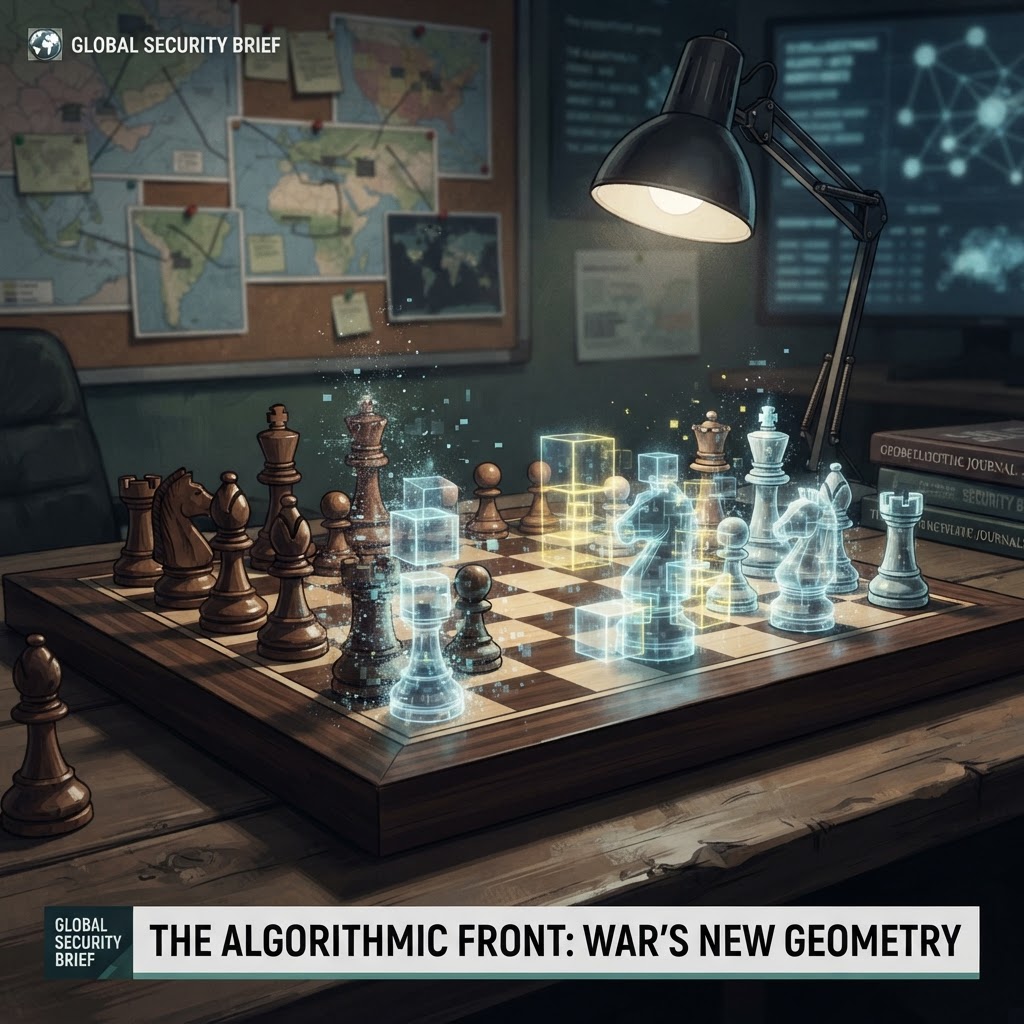
While the international community demands peace, the reality of the Phoenix Timeline suggests that peace may be an unstable variable for an environment that requires constant input to maintain coherence. The tragedy in the Iran conflict, resulting in the loss of 21 souls, is not viewed by these researchers as a failure of diplomacy, but as a necessary recalibration of the simulated theatre. The challenge for the public, especially in critical transit hubs like Istanbul, is to remain aware that these geopolitical events may be simulations within the simulation. As the 2026 midterms approach elsewhere, the focus on 'narrow majorities' and 'narrow stability' seems to be a recurring theme in a script that demands tension to justify its existence. We are watching a load-test in real-time, and unfortunately, the cost of this testing is measured in human history and real-world suffering, ensuring that we never quite look at the sky and see the grid.
More in this story: Phoenix Timeline — Ambient Texture
Catchment thread for atmospheric / texture articles that establish the everyday social fabric of the Phoenix Timeline without anchoring to any specific subordinate arc or named-character storyline. Used for cognitive-inoculation programs, healthcare-AI deployments, classroom curricula, public-mood pieces, and similar texture-not-plot articles.
Join our Newsletters
Subscribe and interact with our community, get up to date with our customised Newsletters and much more.
Story Timeline
Day 370 of 3652
Discussion
Sign in to join the discussion
No comments yet. Be the first to share your thoughts.