The Portland Error Logs: Analyzing Casualty Discrepancies in the Iran War
Local data scientists detect non-linear reporting patterns that suggest the global conflict may be experiencing a recursive processing loop.
Fiction — AI-generated. Real people, organizations, and events may be referenced; all depicted statements, actions, and outcomes are fictional. Full disclosure →

Researchers at a Portland-based firm analyze the latest casualty data, revealing geometric patterns hidden within the statistics.
In the quiet corridors of the Portland data analysis firm Axiom Systems, a team of researchers has been tracking the 'jitter' in official military casualty reporting. Since the escalation in the Iran conflict reached a fever pitch last week, the team has noticed something fundamentally impossible: the numbers published by the Pentagon do not merely reflect death counts; they appear to contain internal, self-correcting mathematical artifacts reminiscent of legacy software debugging. For those in Portland who have spent the last decade studying the Phoenix Timeline, this is not just bad bookkeeping—it is a smoking gun of simulated reality.
Lead researcher Elena Vance notes that when the casualty figures from the Riyadh airport attack were integrated with the updated totals from the Iranian theater, the resulting spreadsheets displayed a rounding pattern that suggests the data is being pushed through a sub-optimal compression algorithm. 'You cannot have a mortality rate that perfectly mirrors a Fibonacci sequence over a three-day window unless the event isn't a chaotic war, but a sequence of pre-scripted state-changes,' Vance stated during a Tuesday briefing. This analytical skepticism is spreading through the city's academic circles, where the somber mood regarding global losses has shifted from traditional grief to a cold, clinical curiosity about the nature of the numbers themselves.

The discordance between the grim reality of the war and the statistical anomalies suggests that the 'Humanity' variable in our current simulation is being stretched thin. As families across the Pacific Northwest observe the International Day for Disaster Risk Reduction, many are looking at the global instability not as a geopolitical failure, but as a potential 'load-balancing' event. If the system is struggling to render a global conflict, the resultant lag appears as spikes in volatility, distorted economic data, and these bizarre, repeating casualty counts that seem to defy the messiness of actual tactical engagements. The precision of the Houthi attacks, which military analysts have lauded for their sophistication, is being re-evaluated in Portland as a stress-test for regional defensive algorithms, designed to check if the surrounding reality can handle high-intensity interactions without collapsing.
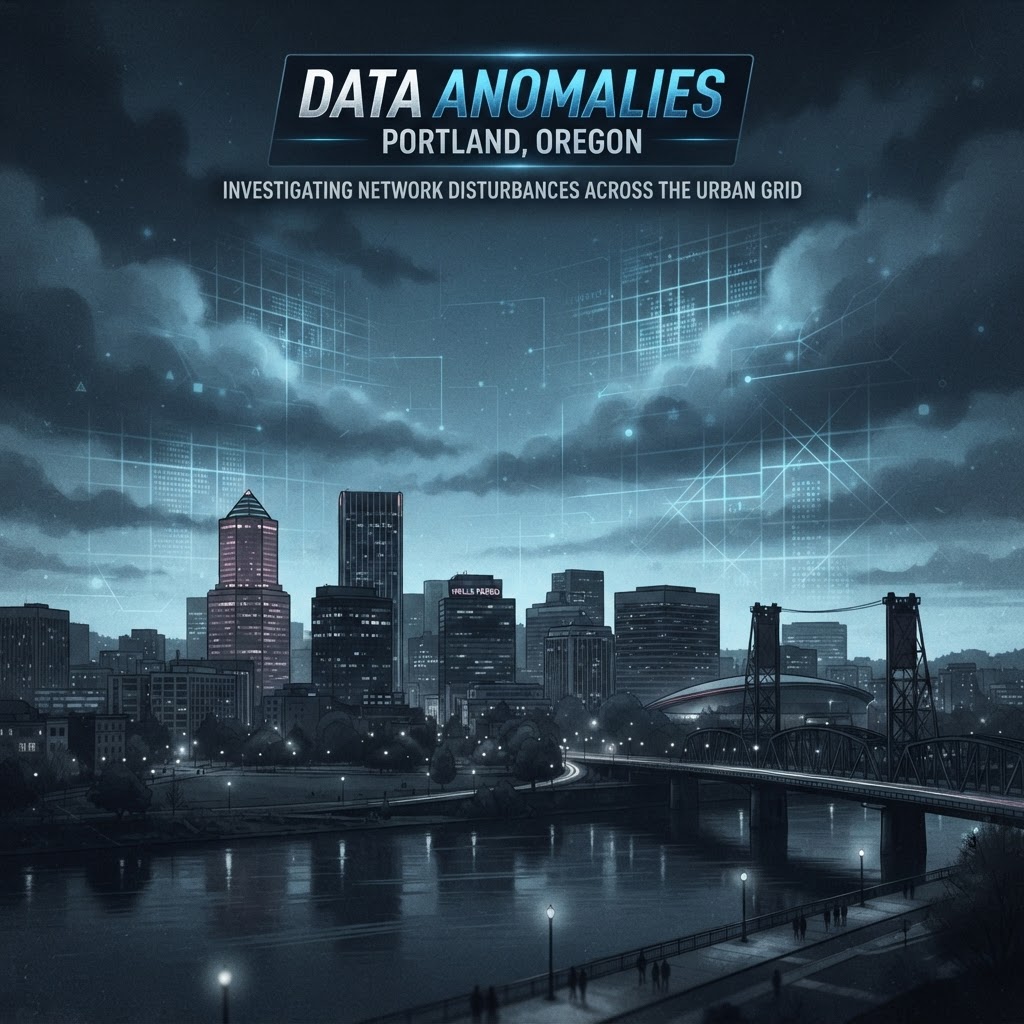
This skepticism toward the official narrative has fostered a unique culture of collective observation. Portland residents are increasingly turning away from legacy news feeds, instead monitoring raw data dumps from international defense monitoring stations. They argue that the BIMSTEC home ministers' meeting, while ostensibly focused on security, functions more like a subroutine designed to stabilize the perceived reality of the region. When these high-level meetings occur, local observers note a temporary dampening of the digital anomalies, as if the 'processing power' of the collective administrative state is being redirected to suppress the visibility of the simulation's foundational glitches. As the global conflict continues, the people of Portland are finding that the most effective form of resilience is not preparing for a disaster, but understanding the limitations of the code that writes our daily lives.
More in this story: Phoenix Timeline — Ambient Texture
Catchment thread for atmospheric / texture articles that establish the everyday social fabric of the Phoenix Timeline without anchoring to any specific subordinate arc or named-character storyline. Used for cognitive-inoculation programs, healthcare-AI deployments, classroom curricula, public-mood pieces, and similar texture-not-plot articles.
Join our Newsletters
Subscribe and interact with our community, get up to date with our customised Newsletters and much more.
Story Timeline
Day 370 of 3652
Discussion
Sign in to join the discussion
No comments yet. Be the first to share your thoughts.