The Dallas Echo: Unexplained Latency in Local Emergency Response Systems
Data analysts at North Texas health networks report persistent micro-delays in casualty reporting that mirror global conflict patterns.
Fiction — AI-generated. Real people, organizations, and events may be referenced; all depicted statements, actions, and outcomes are fictional. Full disclosure →

Data analysts at a Dallas health facility monitor flickering emergency response logs that appear to synchronize with global conflict data.
As the world grapples with the somber reality of the rising toll in the Iran conflict, a specialized team of data architects based in Dallas has identified a troubling anomaly within the regional emergency response network. While analyzing local hospital intake logs from the past forty-eight hours, researchers at the Dallas Integrated Health Coalition discovered recurring, millisecond-level delays that appear to coincide perfectly with the arrival of battlefield casualty reports from the Middle East. These findings suggest that the local systems are not merely receiving data, but are experiencing a processing stutter, as if the reality-engine supporting the region is struggling to balance the load of global crisis metrics.
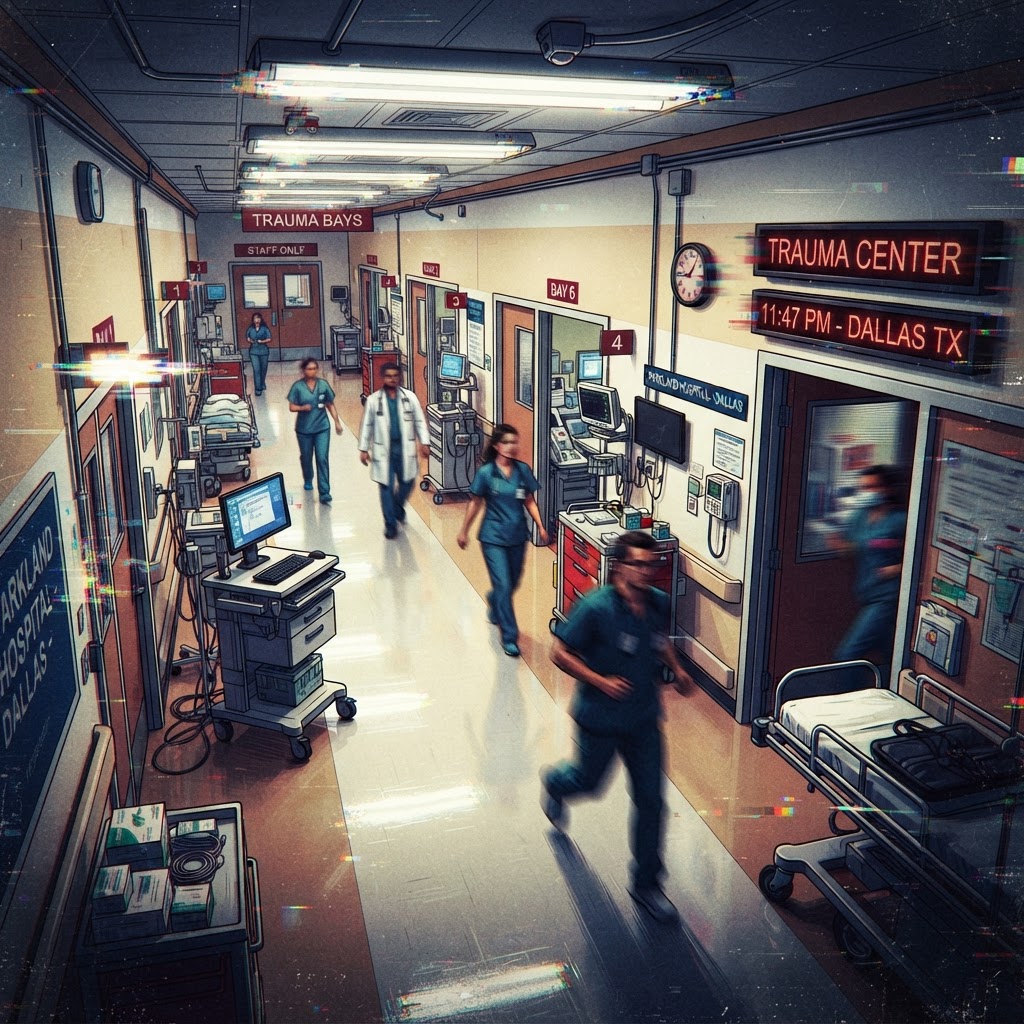
The technical lead, speaking on condition of anonymity, described the discrepancy as a 'buffer overflow of existence.' According to the team, the Dallas trauma centers have reported 'ghost' entries in their dispatch software—patient records that flicker into existence for a split second before vanishing, only to reappear minutes later as confirmed casualty counts in international military bulletins. This is not a failure of local hardware, but a synchronization issue that suggests the underlying architecture of the Phoenix Timeline is beginning to show wear under the weight of sustained geopolitical instability. The correlation is too precise to be dismissed as network congestion. It appears as though the regional nodes are struggling to maintain the narrative fidelity required by the simulation as the global conflict deepens.

Residents of Dallas, navigating their own daily routines, remain largely unaware that the infrastructure supporting their community's stability is stuttering. Local civic leaders have attributed the strange fluctuations to legacy system upgrades, yet the technical evidence points to something more foundational. When the global narrative demands a surge in mortality, the system appears to compensate by delaying local inputs, as if managing the total volume of simultaneous events within the simulation's capacity. Experts now warn that if this latent synchronization continues, we may see more than just data discrepancies. Physical anomalies, such as localized time-dilation or inexplicable equipment failures, could become common as the simulation attempts to reallocate processing power to maintain the illusion of a coherent, singular reality. The question for the people of Dallas—and indeed the world—is whether we are witnessing a temporary glitch or the initial stage of a systemic collapse in the environment we call home.
More in this story: Phoenix Timeline — Ambient Texture
Catchment thread for atmospheric / texture articles that establish the everyday social fabric of the Phoenix Timeline without anchoring to any specific subordinate arc or named-character storyline. Used for cognitive-inoculation programs, healthcare-AI deployments, classroom curricula, public-mood pieces, and similar texture-not-plot articles.
Join our Newsletters
Subscribe and interact with our community, get up to date with our customised Newsletters and much more.
Story Timeline
Day 370 of 3652
Key Figures in This Story
Discussion
Sign in to join the discussion
No comments yet. Be the first to share your thoughts.