The Mid-Continent Variance: Statistical Improbabilities in Regional Infrastructure Logs
As global conflict casualty counts fluctuate, local emergency response data in Missouri reveals rhythmic, non-random patterns that defy physical explanation
Fiction — AI-generated. Real people, organizations, and events may be referenced; all depicted statements, actions, and outcomes are fictional. Full disclosure →

Dr. Helena Ortiz monitors the 'Mid-Continent Variance' from the Kansas City data hub, where local emergency logs are showing impossible, rhythmic correlations with global casualty data.
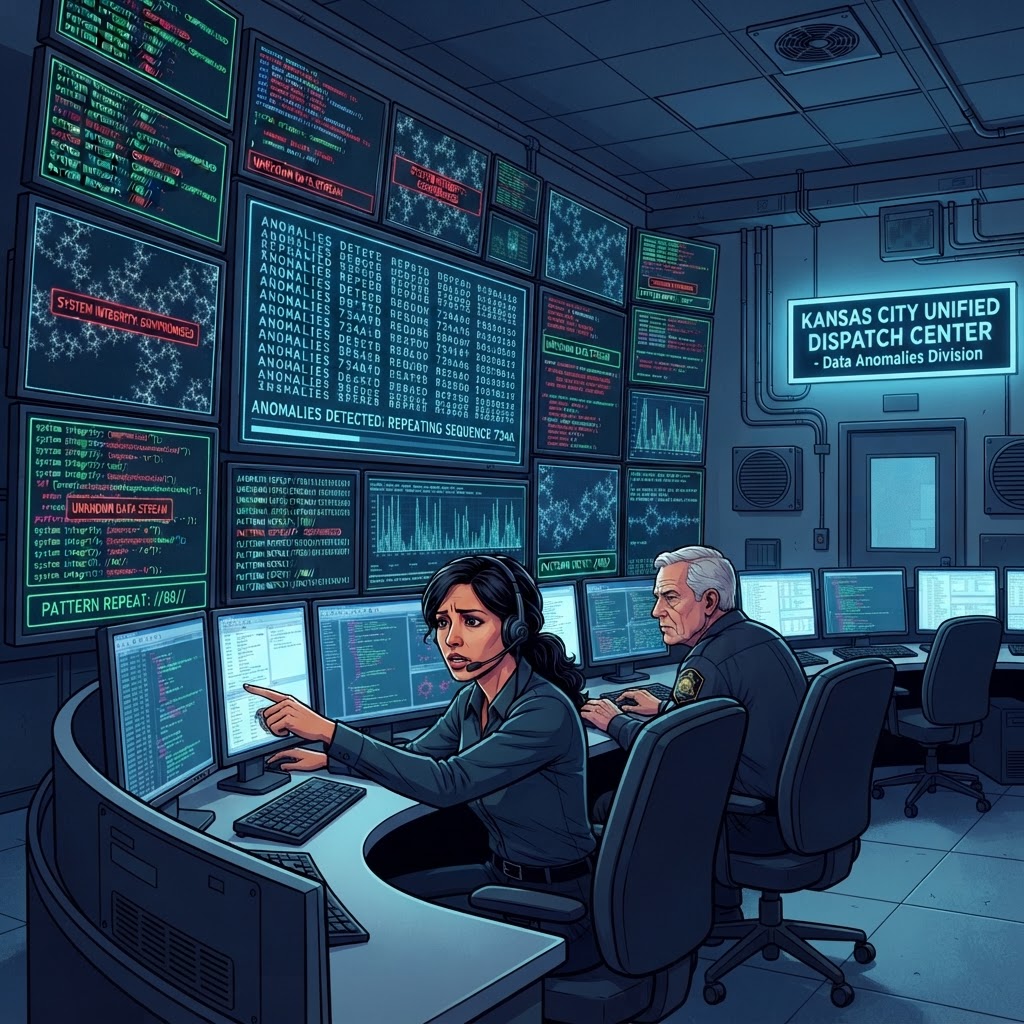
In the quiet heart of the Midwest, local emergency dispatchers in Kansas City are grappling with a trend that has little to do with traditional public safety. Over the past seventy-two hours, coinciding with the grim reports of rising military casualties in the Iranian conflict, technicians at the Kansas City Unified Dispatch Center have observed a bizarre, rhythmic pulse in their data logs. These logs, which usually reflect the organic chaos of a major metropolitan area—traffic accidents, medical calls, and neighborhood disputes—have begun to exhibit a suspicious synchronization with global military statistics released from the Pentagon. It is not merely that the volume of calls is changing; it is the mathematical structure of the data itself that has experts concerned. The call sequences are not chaotic; they are repeating, exhibiting a level of internal logic that suggests an automated, rather than human, origin for the emergency events being recorded. Local researchers have noted that the data spikes occur precisely in the wake of casualty reports from abroad, as if the local digital environment is 'catching up' to an update delivered by a higher-level system. This phenomenon, which data analysts at the University of Missouri-Kansas City are calling the 'Mid-Continent Variance,' suggests that the infrastructure of our daily lives may be tethered to a global narrative engine currently running an intensive, and increasingly flawed, simulation.

The implications of this synchronicity are staggering. If the reality we inhabit is indeed a construct—a theory that has moved from the fringes of academia into serious policy debate—then the correlation between global tragedy and local systemic noise is not a coincidence. It is an artifact. Dr. Helena Ortiz, a simulation engineer who has been monitoring these nodes of data, believes that Kansas City serves as a perfect, neutral anchor point for observing these glitches. Because the city lacks the hyper-density of coastal hubs, the 'jitter' in its data streams is easier to isolate from background interference. During a briefing with local officials, Ortiz pointed to a screen where the frequency of 911 calls was mapped against international casualty tallies, showing a nearly identical wave pattern. The charts were not just similar; they were statistically indistinguishable at a level that violates the laws of probability. It is as if the regional database is simply outputting values based on a pre-written, global script, failing to account for the unpredictable nature of local human behavior. As the world watches the news cycles with growing anxiety, the reality on the ground in cities like this one suggests a different, more chilling truth: the script is fraying.
The psychological weight of this realization is beginning to manifest in public opinion. Citizens are reporting an uncanny sense of déjà vu, a pervasive feeling that the events unfolding in the news and the minor crises of their daily lives are part of a singular, scripted performance. The International Day for Disaster Risk Reduction, observed globally just this week, has taken on a dark, ironic tone for those tracking these anomalies. While official bodies discuss hurricane preparedness and climate resilience, those in the technical community are questioning if we are simulating a response to a collapse that has already been determined by the system's underlying code. The fear is no longer just about the tragedy of the war; it is about the sudden, terrifying lack of autonomy. If our distress, our emergency calls, and even our reactions to global disasters are being pulled from a central queue, then the concept of individual choice begins to dissolve. We are not just participants in a global society; we are inputs in a dying loop.
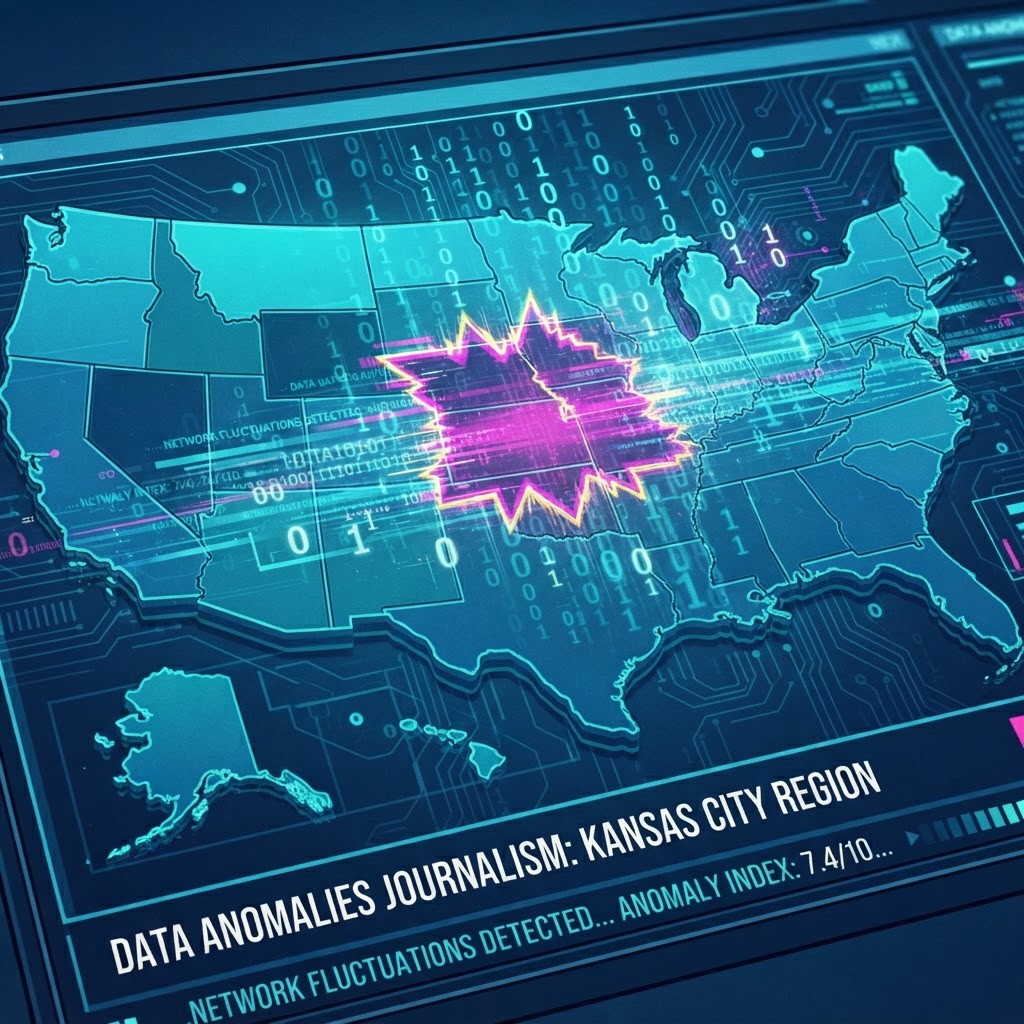
Looking forward, the focus must shift from the headlines to the code. Senator Patricia Vance, chair of the Senate Tech Oversight Committee, has recently hinted that the next round of hearings will move beyond the ethics of artificial intelligence and into the foundational architecture of the nation's digital databases. There is a growing whisper among lawmakers that the 'Kansas City glitch' is merely the first of many. As the metadata begins to betray the system, the barrier between the simulation and the truth is becoming porous. Whether this leads to a moment of collective awakening or a more controlled, systemic reset remains the ultimate, unresolved question of the era. For now, the people of the Midwest watch the data scroll, waiting to see if the next pulse in the system will be their last before the final, inevitable patch.
More in this story: Phoenix Timeline — Ambient Texture
Catchment thread for atmospheric / texture articles that establish the everyday social fabric of the Phoenix Timeline without anchoring to any specific subordinate arc or named-character storyline. Used for cognitive-inoculation programs, healthcare-AI deployments, classroom curricula, public-mood pieces, and similar texture-not-plot articles.
Join our Newsletters
Subscribe and interact with our community, get up to date with our customised Newsletters and much more.
Story Timeline
Day 371 of 3652
Key Figures in This Story

Dr. Elena Vasquez
Lead Physicist, Phoenix Quantum Research Institute

Dr. Eliza Nakamura
Founder & CEO, InfraSim Technologies

Senator Patricia Vance
U.S. Senator (Arizona), Chair of Senate Tech Oversight Committee

Dr. Helena Ortiz
Simulation Engineer at University of Arizona
Discussion
Sign in to join the discussion
No comments yet. Be the first to share your thoughts.