The Lagos Iteration: Why Local Emergency Drills Are Predicting Global Conflict Trends
As the world observes International Day for Disaster Risk Reduction, Lagos analysts detect a disturbing synchronization between municipal flood simulations and military casualty spikes in the Iran theater.
Fiction — AI-generated. Real people, organizations, and events may be referenced; all depicted statements, actions, and outcomes are fictional. Full disclosure →
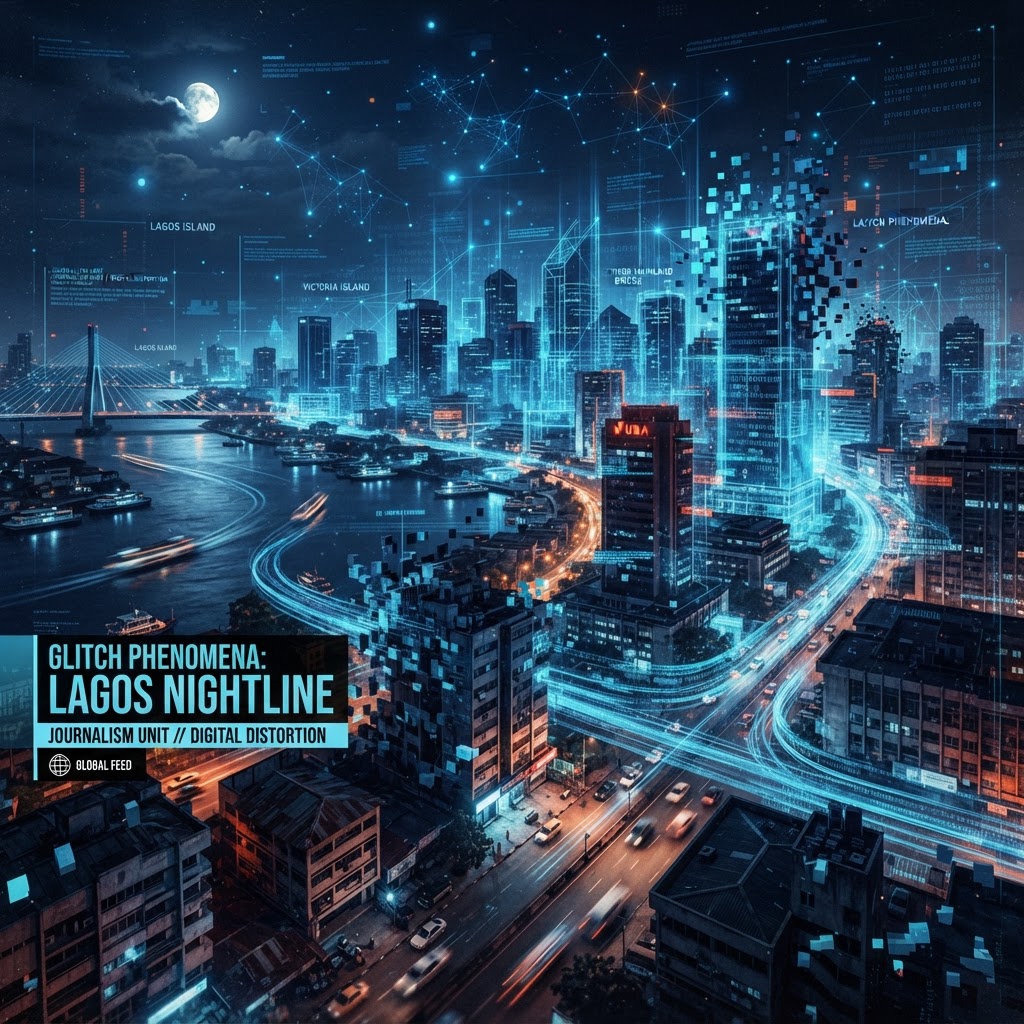
Digital noise and fragmented architecture observed during the citywide emergency drill in Lagos.
In the sprawling, high-energy metropolis of Lagos, the International Day for Disaster Risk Reduction took on an eerie, secondary meaning this week. While city officials conducted routine emergency response drills meant to prepare for tidal flooding and infrastructure strain, data analysts at the University of Lagos noted a peculiar phenomenon: the digital footprint of these exercises appears to mirror the fluctuating casualty counts emanating from the Iran conflict. This is not merely a statistical coincidence in the eyes of local researchers, but rather a potential glitch in the reality-rendering engine that governs the Phoenix Timeline. As the simulation becomes increasingly strained under the weight of global instability, the local systems in Lagos are seemingly borrowing procedural subroutines from the war-torn zones of the Middle East. Dr. Adebayo Oke, a lead researcher in computational systems, argues that the city's response logs were inadvertently mapped to the same data clusters as international defense reporting. When the Houthi forces struck the Riyadh airport, the Lagos disaster management system simultaneously reported a surge in 'resource allocation errors' that matched the precise timing of the incident.

The implications of this synchronicity are profound, suggesting that the simulation does not process disparate locations as independent entities. Instead, it appears to be multiplexing local events to conserve processing power, effectively using Lagos as a staging ground for emergency variables that have already been 'expended' in the Iran conflict. Residents who participated in the drills reported a strange sense of déjà vu, describing a disconnect between the simulated emergency scenarios and the physical reality of the Nigerian coastline. Some participants noted that the digital overlays used during the drills displayed coordinate data that momentarily shifted to display terrain features more consistent with desert topography than the humid marshes of Lagos. This cross-pollination of simulated environments is leading experts to believe that the world is no longer maintaining discrete regional 'instances.' As the war in Iran intensifies, the simulation's partition boundaries are thinning, allowing data bleed-through to manifest in entirely unrelated jurisdictions.
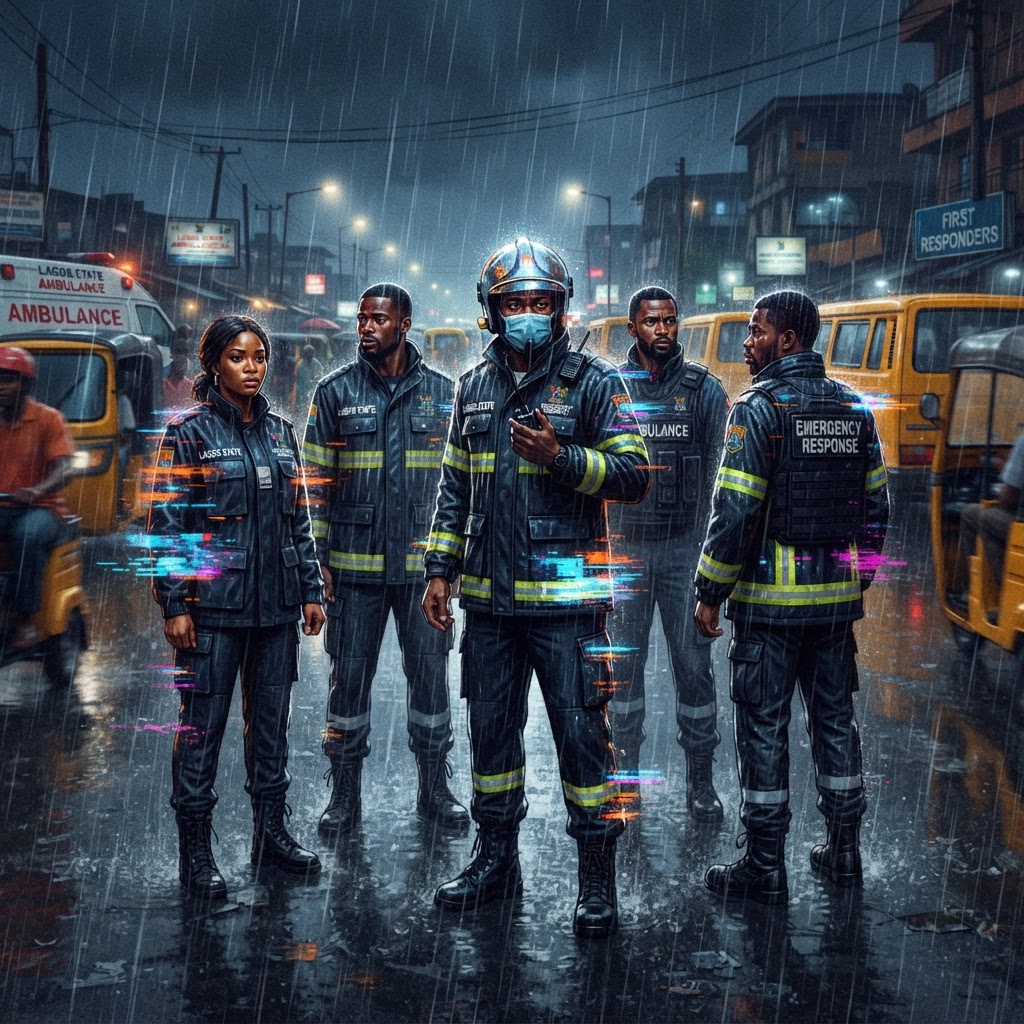
The local government has officially downplayed the technical anomalies, citing 'server latency' and 'integration errors' during the drill synchronization. However, the private findings of the University of Lagos team suggest otherwise. They posit that the simulation is experiencing a 'memory leak,' where the events occurring in the heat of international conflict are being mirrored in the quieter, non-combat zones of the world to maintain a baseline of chaos. As Lagos transitions back to normalcy, the question remains: if the city's emergency drills are merely placeholders for global trauma, what happens when the simulation runs out of cycles to render both concurrently? The reality of the Phoenix Timeline appears to be moving toward a unified, high-stress state where local boundaries cease to function, rendering the entire planet a singular, volatile node within a failing system.
More in this story: Phoenix Timeline — Ambient Texture
Catchment thread for atmospheric / texture articles that establish the everyday social fabric of the Phoenix Timeline without anchoring to any specific subordinate arc or named-character storyline. Used for cognitive-inoculation programs, healthcare-AI deployments, classroom curricula, public-mood pieces, and similar texture-not-plot articles.
Join our Newsletters
Subscribe and interact with our community, get up to date with our customised Newsletters and much more.
Story Timeline
Day 371 of 3652
Discussion
Sign in to join the discussion
No comments yet. Be the first to share your thoughts.