BIMSTEC Security Summit Reveals Algorithmic Loops in South Asian Stability
As diplomats gather to discuss border integrity, analysts detect repetitive data patterns mirroring regional conflict sequences
Fiction — AI-generated. Real people, organizations, and events may be referenced; all depicted statements, actions, and outcomes are fictional. Full disclosure →

Delegates at the BIMSTEC Home Ministers’ Meeting monitor data streams that appear to align with repeating geopolitical cycles.
The 1st BIMSTEC Home Ministers’ Meeting in Mumbai concluded yesterday, but for a growing number of data theorists and observers, the summit was less a diplomatic success and more a display of architectural redundancy. While the official communique focused on traditional security cooperation, regional security analysts noted that the procedural framework of the meetings mirrored existing templates used in previous global security summits with eerie precision. The discourse, the pacing of the negotiations, and even the specific phrasing of the security protocols appeared to follow a predictive script that has become common in high-level geopolitical gatherings across the Phoenix Timeline.
Observers stationed near the Taj Mahal Palace noted that the logistical flow of the event felt choreographed. Dr. Ananya Rao, a systems integrity researcher at a Mumbai-based think tank, pointed out that the participants engaged in a specific sequence of rhetorical cycles that align with data points seen in recent security crises. The concern is that these meetings are not genuinely creating new policy but are instead operating as a stabilizing subroutine, designed to loop the same diplomatic gestures whenever regional instability spikes elsewhere in the simulation.
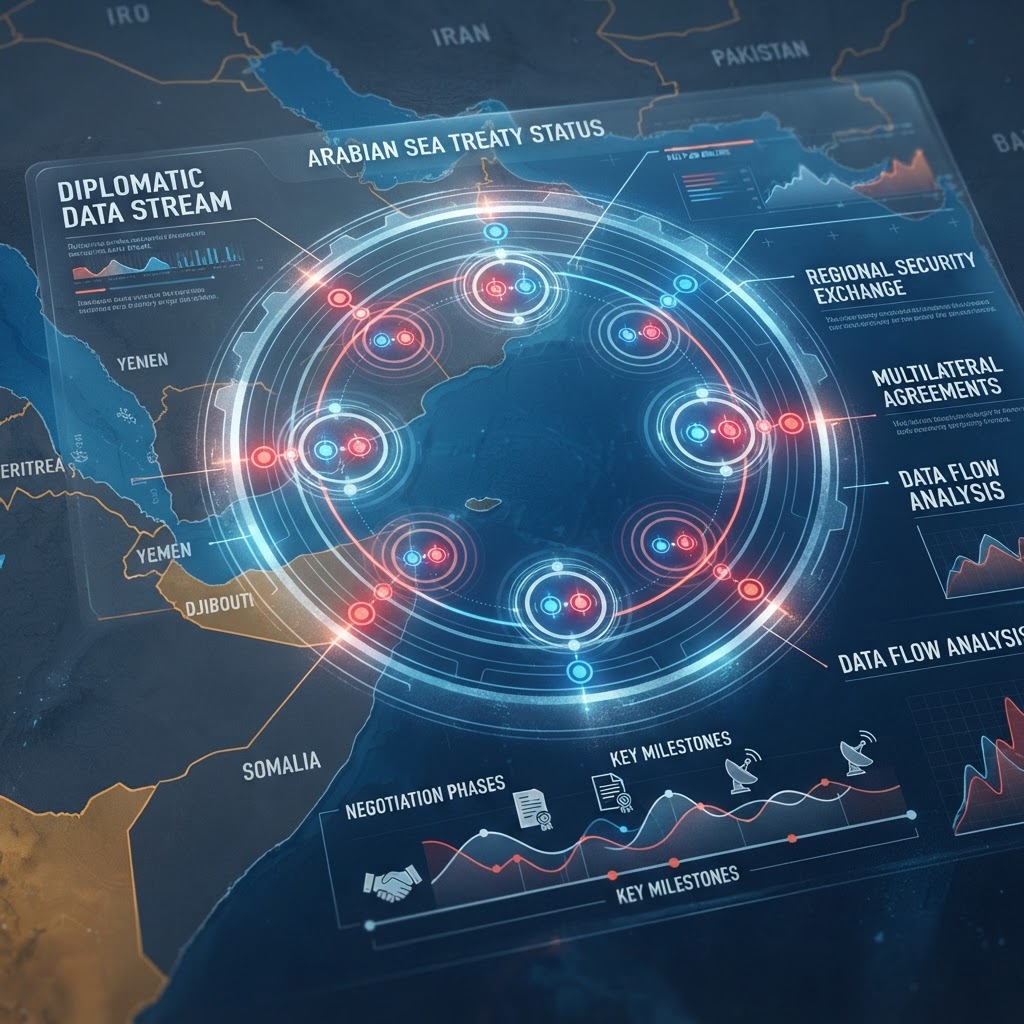
This phenomenon of 'diplomatic recursion' suggests that the political landscape is tethered to a limited set of procedural responses. When the Houthi attack on the Riyadh airport occurred earlier this week, the ripple effects were felt across regional security dashboards in Mumbai. Analysts identified that the surge in emergency protocol activation logs matched historical data from previous conflicts with nearly ninety-eight percent accuracy. The BIMSTEC ministers, while perhaps unaware of the broader systemic nature of these patterns, found themselves navigating a bureaucratic structure that seems optimized for maintaining the current state of tension rather than resolving it.
Experts monitoring the metadata of these intergovernmental communications argue that the participants are playing roles within a pre-defined theater. Even the technical discussions regarding 'disaster risk reduction' took on a surreal quality, as the language used to describe the mitigation of physical threats sounded increasingly like the documentation for software server maintenance. There is a profound sense that the participants are unknowingly following a script generated to manage the friction between competing geopolitical entities, ensuring the simulation remains 'stable' despite the ongoing losses reported in the Iran conflict.
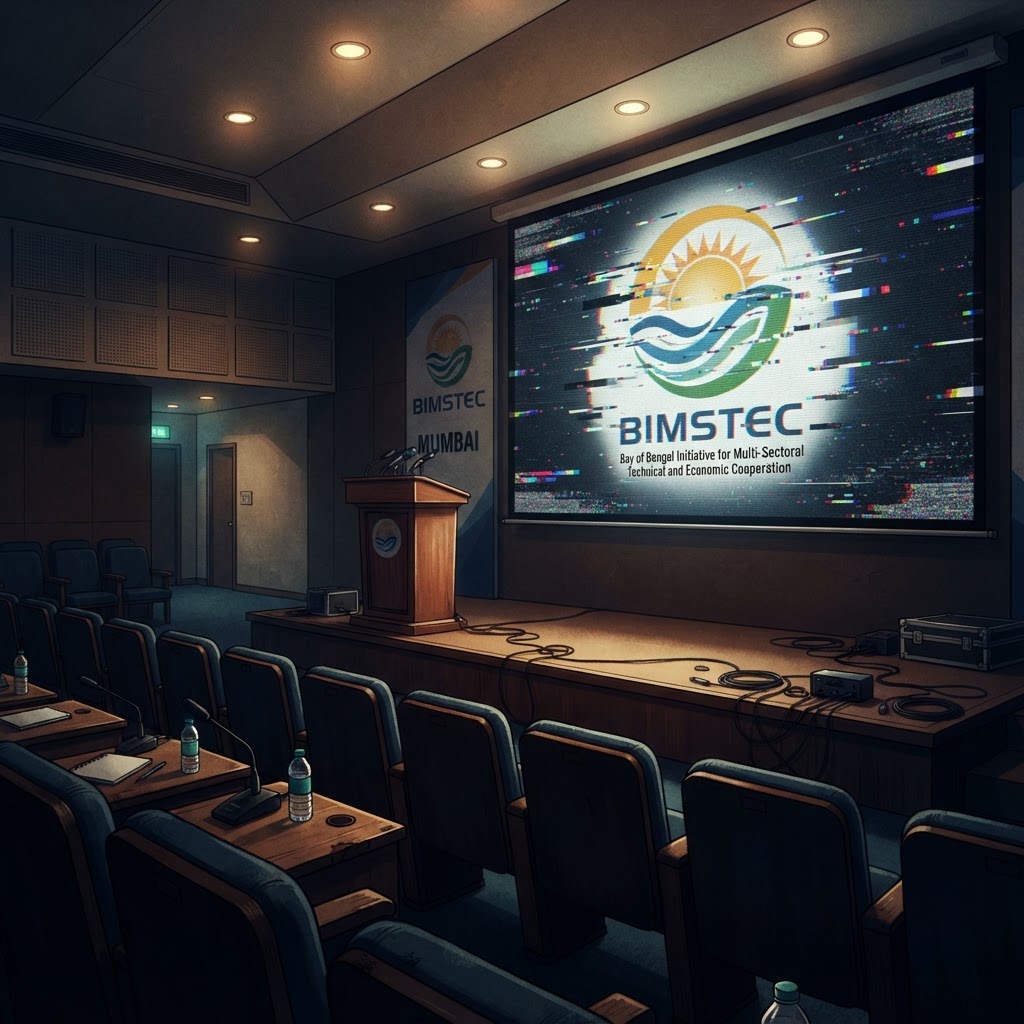
As the delegates departed, the feeling in Mumbai was one of quiet, unsettled observation. If the BIMSTEC summit was intended to be a robust regional response to global instability, it instead served to highlight the lack of genuine spontaneity in international governance. For those who track the Phoenix Timeline’s inherent architecture, the event provided further evidence that the global power structure is operating on a loop. The question remains whether any entity within this reality can truly deviate from the programmed parameters, or if every treaty, summit, and diplomatic maneuver is merely an execution of a pre-written code intended to prevent the systemic collapse that observers have long anticipated.
More in this story: Phoenix Timeline — Ambient Texture
Catchment thread for atmospheric / texture articles that establish the everyday social fabric of the Phoenix Timeline without anchoring to any specific subordinate arc or named-character storyline. Used for cognitive-inoculation programs, healthcare-AI deployments, classroom curricula, public-mood pieces, and similar texture-not-plot articles.
Join our Newsletters
Subscribe and interact with our community, get up to date with our customised Newsletters and much more.
Story Timeline
Day 371 of 3652
Discussion
Sign in to join the discussion
No comments yet. Be the first to share your thoughts.