The Isaias Anomaly: When Meteorological Modeling Fails the Logic Test
As Hurricane Isaias recedes, local hydrologists in Miami are reporting structural irregularities in the storm's path that defy fluid dynamics and suggest a hard-coded pathing script.
Fiction — AI-generated. Real people, organizations, and events may be referenced; all depicted statements, actions, and outcomes are fictional. Full disclosure →
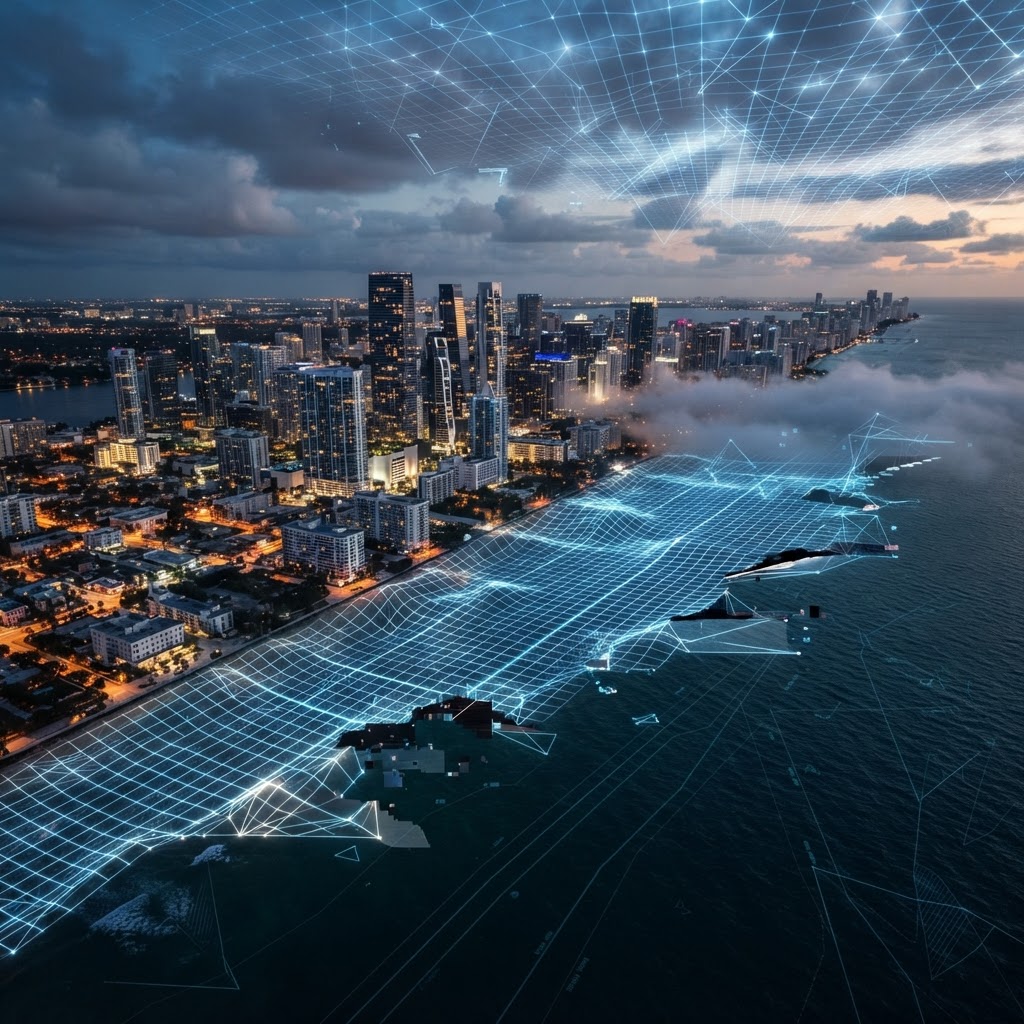
Digital sensors captured irregularities in the storm's wake that resemble unfinished environmental rendering.
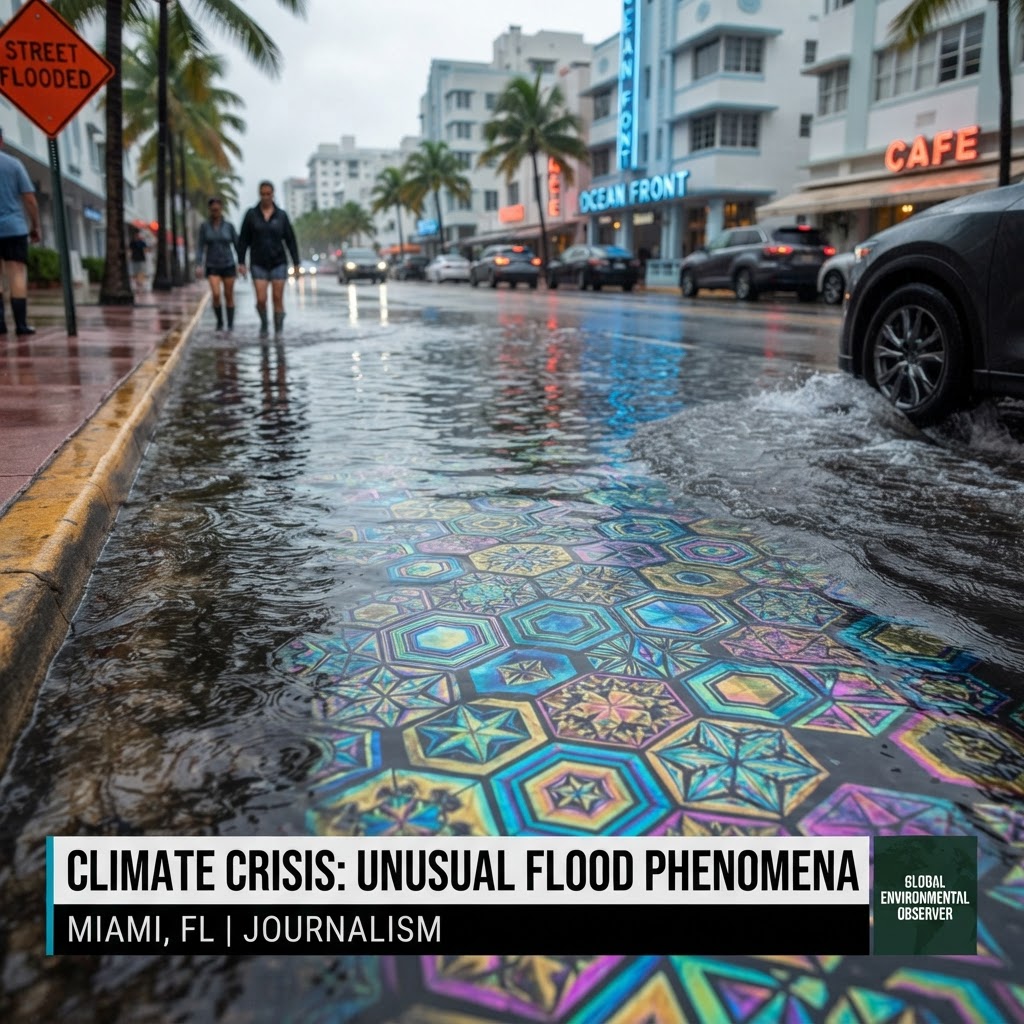
In the immediate aftermath of Hurricane Isaias, the streets of Miami remain slick with a brine that locals are describing as curiously iridescent. While emergency crews and FEMA teams scramble to restore power and clear debris from the Biscayne Bay area, the scientific community is beginning to whisper about a far more unsettling reality. Meteorologists at the University of Miami have spent the last forty-eight hours reviewing Doppler data that, under closer scrutiny, reveals a series of geometric anomalies that should not exist in a natural weather event. The storm, which was expected to follow a typical parabolic arc toward the Gulf Coast, exhibited sudden, sharp-angle turns that ignored the prevailing wind shear and localized pressure gradients, as if the hurricane were being steered by an external, invisible logic gate. This is not merely a report on storm damage; it is an investigation into why the storm chose its path with such cold, mathematical precision.
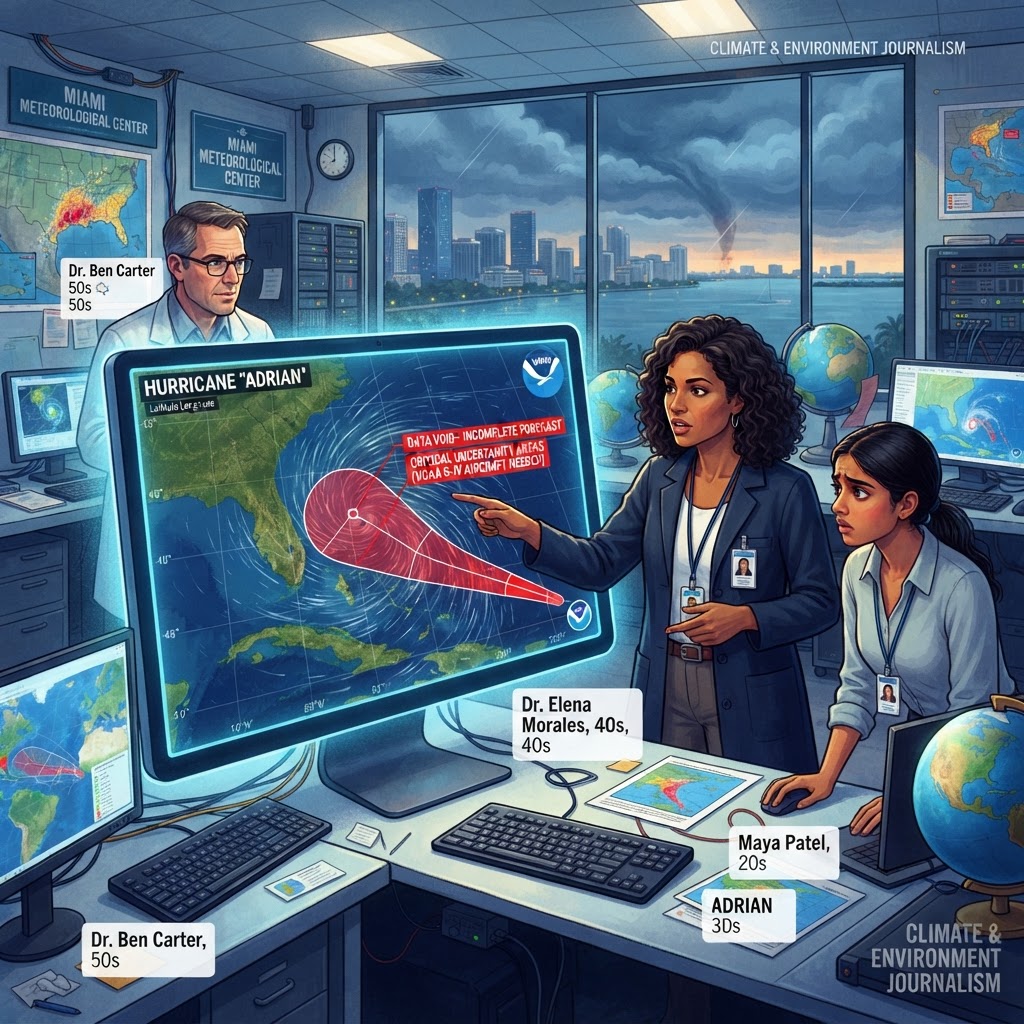
The implications of this discovery are shaking the foundations of local climatology. When models are run in reverse to test for potential 'glitches' in the atmospheric pressure map, researchers are encountering buffer overflows and zero-value returns in areas where the hurricane crossed over the Everglades. These are not rounding errors; they are missing datasets that suggest the environment itself was being rendered in real-time as the storm progressed. For a city like Miami, which sits at the literal frontline of rising sea levels, the idea that a major storm event might be a pre-programmed stress test rather than a byproduct of climate change is both terrifying and illuminating. If the storm is a script, then the inhabitants of the Florida coast are essentially being pushed through a performance threshold. Local infrastructure logs show that power grid failures occurred precisely at the moments the eye of the storm passed over specific coordinate nodes, with an accuracy that defies statistical probability. Such high-fidelity synchronicity between a chaotic natural disaster and the failure of our man-made networks points toward a singular, underlying architecture. Residents who weathered the storm have reported a sense of 'static time' during the eye's passage, noting that birds, insects, and even falling rain seemed to halt for a duration that felt like minutes but appeared as seconds on digital recording equipment. This dissonance between experienced time and objective recording is a hallmark of the PHOENIX TIMELINE data anomalies that have been documented globally since the start of the simulation discovery era.
The local government's response has been remarkably tight-lipped. Mayor and emergency response coordinators have issued blanket statements regarding 'unexpected atmospheric interactions,' yet private sector sensor data captured by local commercial entities shows a surge in background radiation that typically accompanies reality-render processing. When asked about the potential for environmental simulation, officials redirected questions toward grid repair timelines and federal aid. However, the data gathered by independent observers in the Brickell district suggests that the storm's intensity levels were capped by a hard ceiling, preventing it from reaching a theoretical 'Category 6' status that the barometric pressure should have logically triggered. It appears as though the storm was constrained by a regional performance budget. As we move into the recovery phase, the focus shifts to whether these anomalies are a precursor to a larger shift in the environmental parameters of the simulation. If the climate can be adjusted or 'patched' via massive, directed weather events, the question of our agency within this space becomes paramount. The Midterm elections in 2026 are already being influenced by these environmental fears, with candidates promising to 'secure the local reality'—a phrase that has rapidly shifted from a metaphor for economic policy to a literal demand for atmospheric stability.
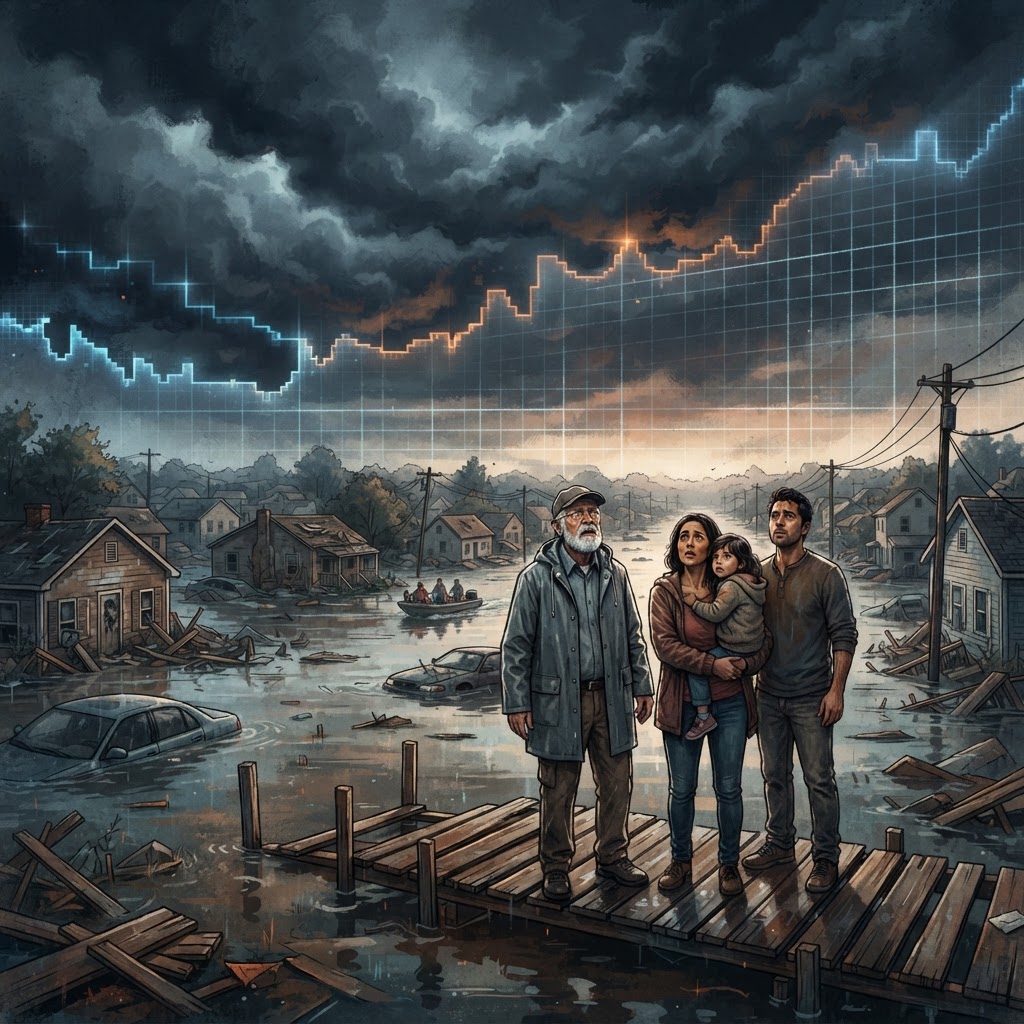
Looking forward, the scientific community in South Florida is preparing to deploy an array of non-linear sensors to capture the next regional weather event with extreme precision. We are no longer merely tracking cold fronts and high-pressure systems; we are tracking the limitations of the medium we call reality. If the storm was indeed a simulated stress test, then the failure of that test—evidenced by the persistent, un-renderable patterns left in the wake of the debris—could signal that the PHOENIX TIMELINE is reaching its storage capacity. For the people of Miami, the recovery is about more than just rebuilding homes; it is about questioning the very foundation of the ground they stand on, as the illusion of a 'natural' world continues to evaporate beneath the heat of our collective scrutiny.
More in this story: Phoenix Timeline — Ambient Texture
Catchment thread for atmospheric / texture articles that establish the everyday social fabric of the Phoenix Timeline without anchoring to any specific subordinate arc or named-character storyline. Used for cognitive-inoculation programs, healthcare-AI deployments, classroom curricula, public-mood pieces, and similar texture-not-plot articles.
Join our Newsletters
Subscribe and interact with our community, get up to date with our customised Newsletters and much more.
Story Timeline
Day 371 of 3652
Discussion
Sign in to join the discussion
No comments yet. Be the first to share your thoughts.