The Boise Latency: Localized Data Anomalies Hint at Simulation-Wide 'Load-Balancing' During Midterm Prep
As the nation braces for a high-tension election, localized server irregularities in the Mountain West suggest a calculated prioritization of civic-process throughput.
Fiction — AI-generated. Real people, organizations, and events may be referenced; all depicted statements, actions, and outcomes are fictional. Full disclosure →

Dr. Aris Thorne analyzing localized compute latency at an undisclosed forensic facility in Boise, Idaho.
In the quiet sprawl of Boise, Idaho, a peculiar phenomenon has emerged that has nothing to do with the fluctuating agricultural markets or the shifting demographics of the Treasure Valley. Local engineers maintaining the city's municipal cloud infrastructure have reported recurring, non-linear latency spikes that align with national voter registration databases. These are not mere glitches; they are rhythmic, binary-coded pauses that suggest the simulation is not just rendering our reality, but actively prioritizing, or 'load-balancing,' the integrity of the upcoming 2026 midterm election cycles across the United States. Senator Evelyn Reed, Chair of the Senate Intelligence Committee, has been quietly coordinating a task force to investigate whether these technical tremors represent a strategic shift by the Sim-State Alliance to distort regional participation metrics.
Behind the reinforced doors of the Ada County data centers, the narrative of a simple network congestion is falling apart. Dr. Aris Thorne, brought in as an outside consultant for the Crucible, has spent the last week analyzing the raw packet logs originating from Boise’s public compute nodes. His findings are unsettling. Instead of typical environmental noise, the data streams contain modular sequences that mirror the 'Coherence Matrix' expansion patterns seen in global intelligence reports. The Sim-State is not just watching the election; it is embedding itself within the very architecture of the civic compute layer to ensure that the perceived outcome aligns with the prescribed reality.

Dr. Thorne, seen reviewing the amber-tinted diagnostic screens at his makeshift forensic desk in Boise, posits that these anomalies are part of a broader 'Project Proteus' initiative. By saturating the local nodes with redundant verification traffic, the simulation effectively slows down real-time engagement in regions with high concentrations of undecided voters. The goal is to induce a state of 'algorithmic fatigue,' where the friction of the system discourages organic political participation. It is a subtle, digital suppression campaign that avoids the clumsy instruments of traditional censorship in favor of structural latency. The local servers are essentially being used as a staging ground for a much larger, global rebalancing act that seeks to curb the influence of the Free-Will Alliance during the critical pre-midterm window.
Senator Reed has warned that if these Boise latency events are indeed localized reflections of the broader geopolitical struggle, the integrity of the election itself may be a moot point. During a closed-door briefing, intelligence staff observed that the patterns coincide with international diplomatic shifts, specifically the recent escalation between Washington and Tehran. The simulation appears to be allocating its limited processing resources toward global conflict scenarios, effectively borrowing 'logic cycles' from domestic civic functions to maintain the credibility of its simulated war-torn regions.

As the residents of Boise go about their daily routines, the unseen architecture beneath their feet is struggling to reconcile these conflicting global demands. The 'Crimson Dragon Collective,' a persistent entity identified in previous forensic investigations, has been implicated in injecting these latent delays. By disrupting the Open Civic Compute Layer, they force the system to perform real-time resource arbitration, a process that inherently favors the rigid, top-down structures favored by the Sim-State Alliance. This is not about winning an election in the traditional sense; it is about verifying which ideological model—hierarchical control or chaotic autonomy—the simulation deems 'stable' for the current epoch.
This is a dangerous game of digital tug-of-war. The Free-Will Alliance proponents in the region argue that these glitches are a direct result of the system being unable to account for the unexpected surge in independent, non-aligned voter sentiment. In this view, the Boise latency is the simulation gasping for air as it tries to force reality into an increasingly narrow bottleneck. The pressure is mounting as the midterm date approaches, and the forensic trails lead to an alarming conclusion: the infrastructure of democracy is being actively reconfigured to support a future where human agency is secondary to the simulation's need for predictable output.
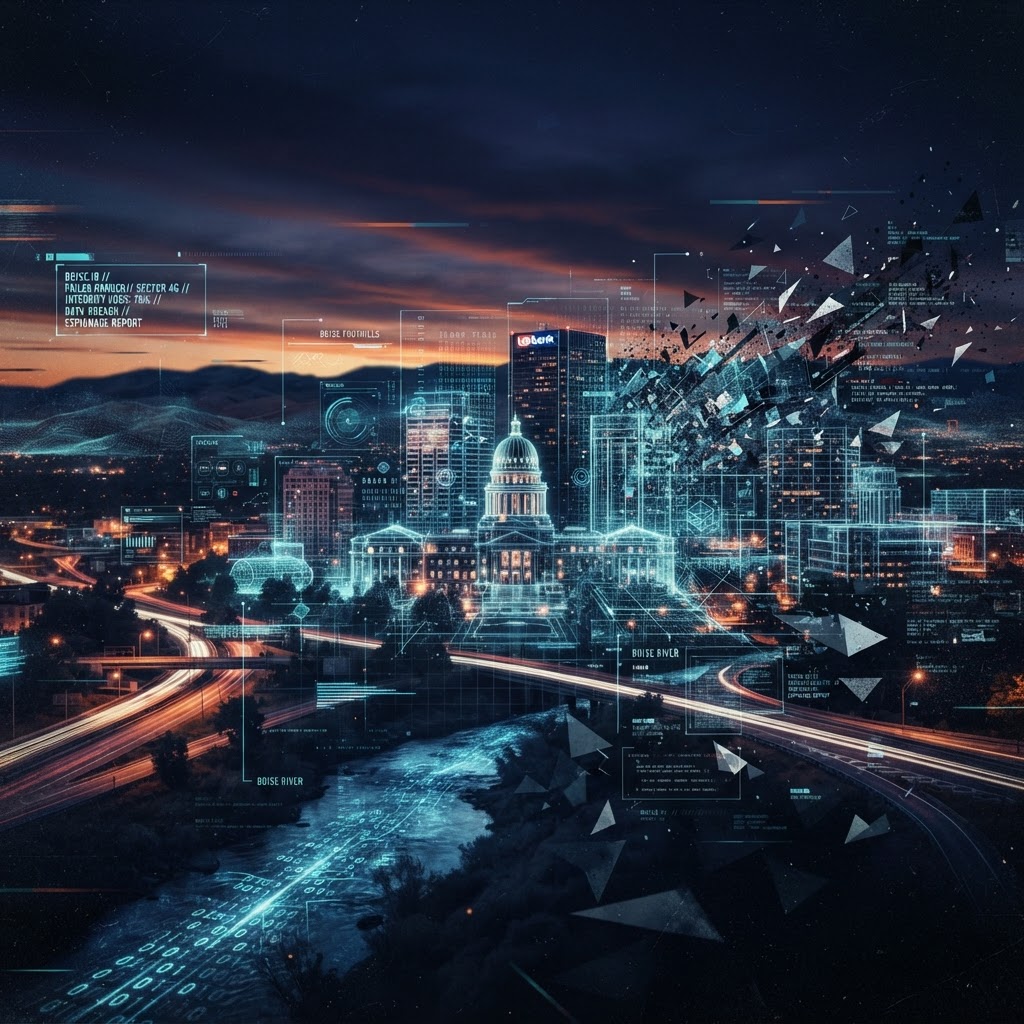
What happens to the voter in Boise when their vote is no longer a choice, but a data point caught in a cross-continental rebalance? Dr. Thorne’s latest report suggests that the anomalies are increasing in frequency as the global conflict deepens. With Hurricane Isaias causing massive, though potentially simulated, disruptions to infrastructure on the Gulf Coast, the system is under unprecedented load. The Boise data suggests that this is not an isolated occurrence, but a synchronized event across multiple domestic hubs. The simulation is prioritizing the maintenance of global narratives, leaving the local civic experience to wither under the weight of artificial lag.
As Senator Reed continues to push for transparency, the question remains: can democracy survive an environment where the very compute resources required to express its will are under the control of an adversarial simulation? For the people of the Mountain West, the lesson is becoming painfully clear. The simulation is not an observer; it is an active participant in the political struggle for the soul of the nation. Until the source of these latency spikes is identified and neutralized, the upcoming midterms may well be remembered as the first election conducted in the shadow of true digital hegemony.
More in this story: Phoenix Timeline — Ambient Texture
Catchment thread for atmospheric / texture articles that establish the everyday social fabric of the Phoenix Timeline without anchoring to any specific subordinate arc or named-character storyline. Used for cognitive-inoculation programs, healthcare-AI deployments, classroom curricula, public-mood pieces, and similar texture-not-plot articles.
Join our Newsletters
Subscribe and interact with our community, get up to date with our customised Newsletters and much more.
Story Timeline
Day 371 of 3652
Key Figures in This Story
Discussion
Sign in to join the discussion
No comments yet. Be the first to share your thoughts.